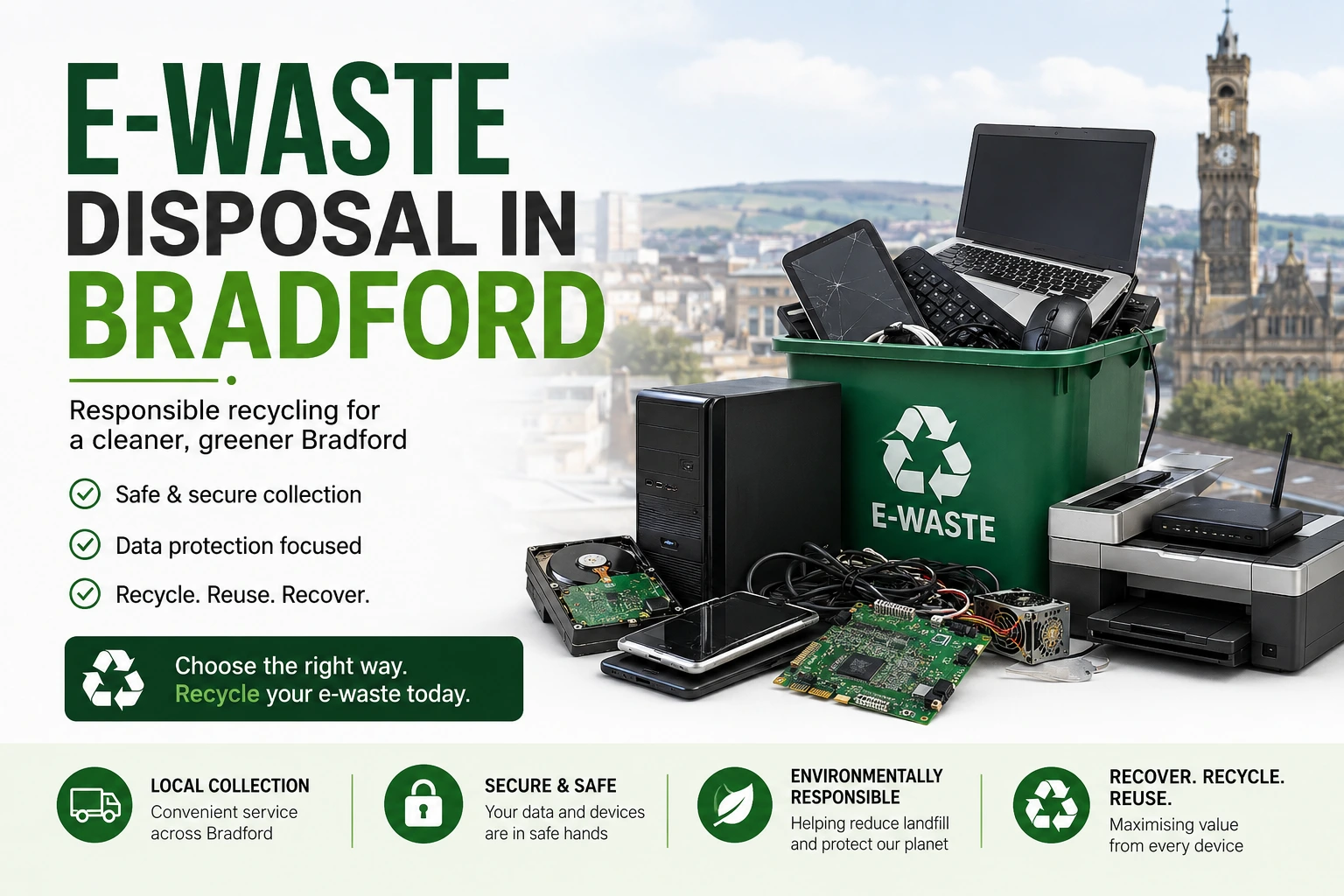
Electronic waste is one of the fastest-growing waste streams in the UK, and Bradford households, repair shops, offices, schools and businesses all produce unwanted electrical items every year. From broken laptops and old phones to damaged circuit boards, redundant IT equipment and unwanted electronics, disposing of e-waste correctly helps protect data, recover valuable materials and reduce landfill waste.
If you are based in Bradford and need a simple way to clear electronic waste, RepairPrice can help you organise a responsible collection route for suitable items. Whether you are clearing a single box of old devices or larger quantities of mixed electronic scrap, using a local recycling route can save time and help ensure your unwanted equipment is handled correctly.
E-waste includes most unwanted items that use a plug, battery, circuit board or electronic component. In Bradford, this can include mobile phones, laptops, desktop computers, tablets, games consoles, monitors, routers, servers, cables, hard drives, chargers, printers, circuit boards and small electrical appliances. Many of these items contain metals, plastics and electronic parts that can be recovered instead of being thrown away.
Businesses often generate e-waste during office upgrades, shop refurbishments, school IT refreshes, warehouse clear-outs or when older equipment becomes too slow or damaged to use. Households may also build up old phones, broken tablets, unused laptops and chargers over time. Instead of leaving these items in cupboards or mixing them with general rubbish, arranging a recycling collection gives them a more useful next step.
Electronic items can contain materials that should not be placed into normal bins. Batteries, screens, boards and internal components may need specialist handling. Incorrect disposal can lead to avoidable environmental problems and may also waste recoverable materials such as copper, aluminium, steel, gold-plated contacts and circuit board metals.
For businesses, there is also the issue of data. Old computers, phones, laptops, tablets and storage devices may still hold personal, customer or company information. Even when a device no longer powers on, data-bearing components may still need careful handling before the equipment is recycled. This is one reason many Bradford organisations prefer a dedicated recycling collection rather than a casual disposal option.
RepairPrice helps connect Bradford customers with suitable repair and recycling routes depending on the type of items involved. If the equipment is repairable, it may be directed towards repair options. If it is no longer economical to repair, it can be moved into recycling so that useful materials can be recovered where possible.
For a dedicated local recycling page focused on mixed electrical waste, visit Bradford unwanted electrical waste collection and recycling. This is useful if you have a mixture of devices, accessories, cables, small electronics and general WEEE-style items to clear.
If your items are mainly consumer electronics such as phones, tablets, consoles, screens, circuit boards or home electrical devices, you can also view electronics recycling solutions for Bradford homes and businesses. This page is better suited for people who want to recycle electronic products rather than general office IT equipment.
For companies, offices, schools, call centres, repair shops and organisations clearing computers or network equipment, Bradford IT equipment recycling for business clear-outs is the most relevant service page. It focuses on IT assets such as desktops, laptops, servers, monitors and related hardware.
Many Bradford customers request e-waste disposal after upgrading devices or clearing storage areas. Common items include broken mobile phones, damaged iPads, old tablets, laptops with failed batteries, desktop computers, monitors, keyboards, mice, docking stations, routers, switches, servers, games consoles, TV boards, cables, chargers, mixed PCBs and other electronic components.
Repair shops may also produce electronic scrap from everyday repair work. This can include damaged screens, faulty boards, charging ports, laptop motherboards, console boards, phone PCBs and parts removed from devices that cannot be repaired. Instead of storing these parts indefinitely, recycling them can help recover value and keep work areas clear.
The process normally starts with a quick description of what you have. This may include the type of items, estimated quantity, location in Bradford and whether the waste is loose, boxed, palletised or part of a larger clearance. Once the details are known, the most suitable repair or recycling route can be suggested.
Small collections may involve boxed electronics or a few redundant devices. Larger collections may involve IT rooms, office cupboards, repair shop waste, school equipment or commercial clear-outs. Giving a clear list of items helps avoid delays and makes it easier to plan the right collection option.
Where devices may contain data, it is important to mention this before collection. This includes laptops, desktops, phones, tablets, servers, hard drives, SSDs and storage cards. Data-bearing items should be separated where possible so they can be handled with extra care.
Yes, many broken electronic items can still be recycled. A device does not need to be working to have recyclable value. Faulty laptops may contain boards, memory, metals and screens. Broken phones may contain PCBs, batteries and small components. Damaged consoles may contain boards, drives, fans and metal casings. Even when repair is not worthwhile, recycling can still be the better option.
In some cases, a repair may still be possible. If the item has value or can be restored economically, RepairPrice can also direct users towards repair quote options. This helps customers compare whether repair or recycling makes more sense before making a final decision.
Repair may be the better option when the device is fairly new, the fault is minor, the replacement cost is high or the item still meets your needs. For example, a laptop with a damaged screen, a phone with a charging issue or a console with an HDMI fault may be worth repairing if the rest of the device is in good condition.
Recycling is usually more suitable when the item is too old, badly damaged, uneconomical to repair, missing key parts or no longer useful. Businesses may also choose recycling when equipment is being replaced in bulk and there is no practical reason to keep the old hardware.
Using a Bradford-focused disposal route makes the process easier for local homes and businesses. You can avoid long travel, reduce storage clutter and move unwanted electronics into a more responsible recycling stream. Local collections are especially useful for bulky items, mixed boxes, office clear-outs and electronics that are awkward to transport.
A local route also helps organise items by category. IT equipment, mixed electronics and general e-waste may need different handling. By separating these groups early, you can improve the efficiency of the collection and make it easier to direct each item to the correct recycling path.
Businesses in Bradford often need a more organised approach to e-waste disposal. Offices, retailers, repair shops, schools, warehouses and service providers may collect electronic waste over several months or years. When the storage space becomes full, arranging a collection can quickly clear the area and reduce health, safety and data risks.
Typical business e-waste may include monitors, desktops, laptops, phone systems, network switches, routers, servers, printers, cables, chargers, tills, scanners, tablets and mixed electronic scrap. If the business has data-bearing devices, these should be listed separately so they can be identified before recycling.
Households can also benefit from proper e-waste disposal. Many people keep broken phones, old tablets, unused laptops and random chargers because they are unsure where to take them. Over time, this creates clutter and increases the chance that batteries or damaged electronics are stored unsafely.
By arranging recycling, Bradford residents can clear unwanted electronics without putting them into general waste. If an item may still be repairable, it can be checked for repair options first. If not, it can be moved towards recycling so useful materials can be recovered.
Before arranging e-waste collection in Bradford, try to group similar items together. Keep laptops, phones, tablets and storage devices separate from cables and general accessories. Remove personal items from laptop bags, drawers or boxes. If possible, place loose cables into bags or boxes so they are easier to move.
For businesses, it can help to create a simple list of the main items. This does not need to be complicated. A rough count of laptops, desktops, monitors, phones, servers, boxes of cables or mixed electronics is usually enough to start the process. Photos can also help when there are large quantities or mixed pallets.
RepairPrice is designed to help users make a better decision with unwanted or faulty electronics. Some items should be repaired, some should be reused, and others should be recycled. Instead of treating every broken device as waste, the aim is to guide each item towards the most suitable outcome.
This approach is useful for customers who are unsure whether their item has value. A damaged laptop may be repairable. A very old desktop may be better for recycling. A broken phone may still contain recoverable parts. A box of circuit boards may belong in a specialist recycling stream rather than general electronics disposal.
Bradford e-waste disposal enquiries may also come from nearby areas such as Shipley, Bingley, Clayton, Pudsey, Cleckheaton, Birkenshaw, Yeadon, Brighouse, Halifax and Heckmondwike. If you are close to Bradford and have unwanted electronics, you can still request guidance on the most suitable repair or recycling route.
E-waste disposal is not just about getting rid of old electronics. It is about protecting data, reducing landfill waste, recovering useful materials and making better decisions about repair and recycling. Bradford homes and businesses can benefit from a simple collection route that directs unwanted devices into the right stream.
If you have mixed electronic waste, start with the Bradford e-waste recycling service. If your items are mainly consumer electronics, use the Bradford electronics recycling page. If your clearance includes computers, servers, office hardware or business IT equipment, the Bradford IT recycling page will be the most relevant option.
The best option is to separate your unwanted electronics from general rubbish and arrange a suitable recycling route. This helps recover useful materials and reduces the chance of electronic items being disposed of incorrectly.
Yes, broken laptops, phones and tablets can often be recycled even if they no longer switch on. If the item may still be worth repairing, you can request a repair quote before choosing recycling.
Businesses often benefit from a dedicated collection because they may have larger quantities, data-bearing devices or mixed IT equipment. Separating business electronics makes the process more organised and efficient.
Yes, cables, chargers and accessories are commonly included with e-waste collections. It is helpful to bag or box them separately so they are easier to handle.
Devices such as laptops, desktops, phones, tablets, hard drives and servers should be identified before collection. Data-bearing equipment should be separated so it can be handled with extra care.