

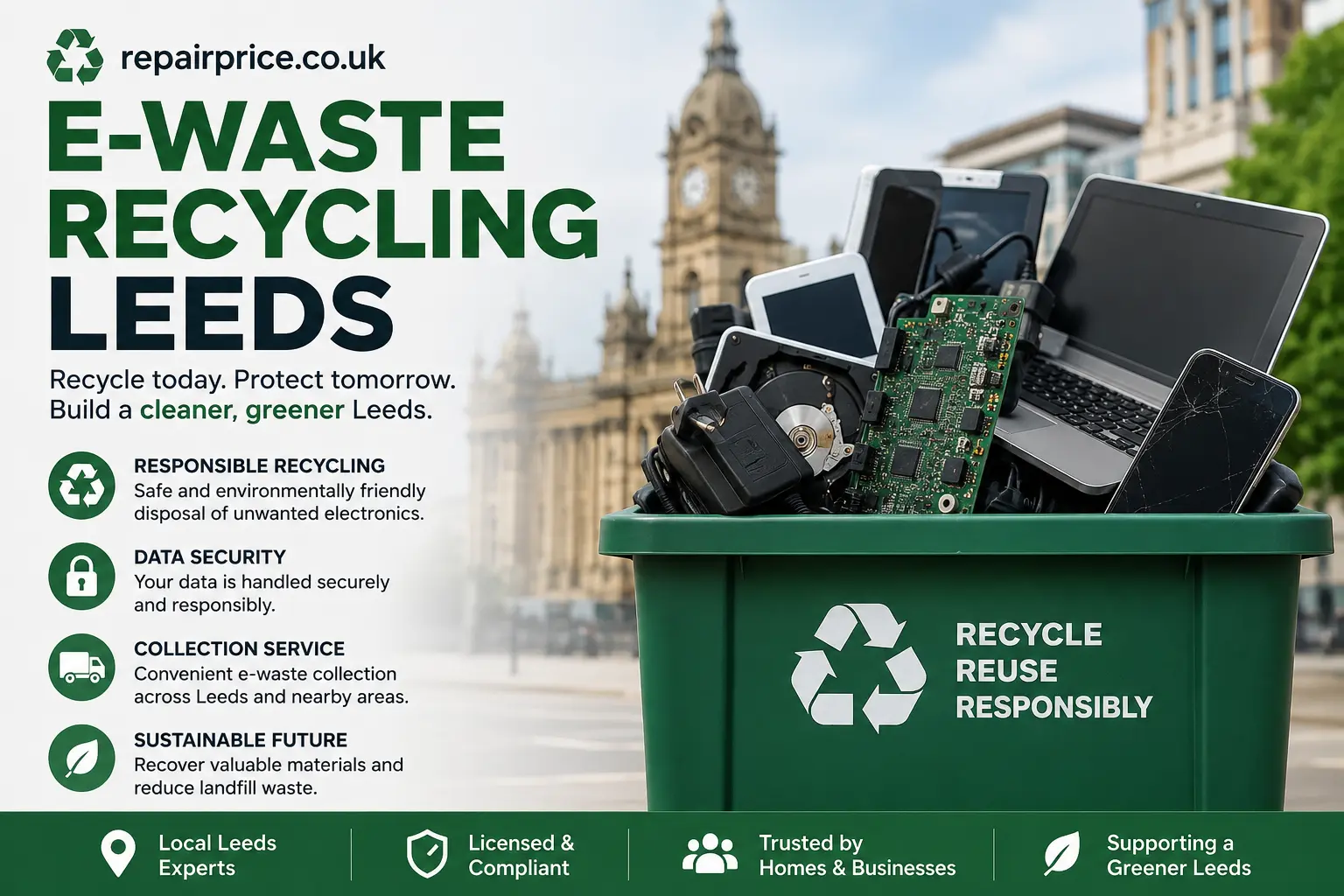
E-Waste Recycling Leeds: A Practical Guide to Responsible Electrical Disposal
Old electrical equipment can quickly become a problem when it is stored in cupboards, garages, offices or spare rooms. Unused phones, broken laptops, outdated televisions, damaged tablets, cables, chargers and computer components all take up valuable space and may contain materials that should not be placed in general household waste. This guide explains how e-waste recycling in Leeds works, what types of equipment can be recycled, when repair may be the better option and how to arrange a convenient recycling collection.
RepairPrice.co.uk helps households, landlords, offices and other organisations find practical options for unwanted electrical equipment. Whether you have one broken device or a larger collection of obsolete electronics, you can request information from suitable local providers through our dedicated Leeds electrical waste recycling service.
Book Your E-Waste Recycling Collection from Leeds on WhatsApp
What Is Electronic Waste?
Electronic waste, commonly called e-waste, includes electrical or battery-powered products that are no longer needed, no longer work correctly or have reached the end of their useful life. It can include small consumer devices, larger household appliances, office equipment, entertainment systems, computer hardware and electronic accessories.
Some electrical products can be refurbished, repaired or reused. Others may need to be dismantled so that reusable metals, plastics, glass and electronic components can be separated. Correct handling is important because electrical equipment may also contain batteries, circuit boards, data-storage components or other materials that require controlled processing.
Examples of commonly recycled e-waste include mobile phones, tablets, laptops, desktop computers, monitors, televisions, games consoles, printers, routers, keyboards, computer mice, speakers, cables, power supplies, chargers and small electrical appliances. Before arranging a collection, prepare a simple list of what you have, the approximate quantities and whether any items contain batteries or confidential data.
Why E-Waste Should Not Go in a General Waste Bin
Discarding electrical equipment with ordinary rubbish can prevent useful materials from being recovered. Devices frequently contain metals, plastics and components that may be suitable for recycling or reuse. Keeping these materials within a responsible recovery process can reduce unnecessary waste and support a more circular approach to electronics.
There are also practical concerns. Lithium batteries can be damaged when compacted or handled incorrectly, while computers and phones may still contain personal or commercial information. A responsible recycling route helps ensure that devices are assessed, sorted and directed towards the most appropriate treatment process.
For a broader explanation of electrical recycling routes, accepted items and preparation steps, read our guide on how Leeds residents can recycle unwanted electronics. You can also explore our article covering practical ways to clear and recycle electrical equipment in Leeds.
Should You Repair or Recycle Your Device?
Recycling is not always the first option. A device with a damaged screen, weak battery, faulty charging port, software problem or replaceable component may still have useful life remaining. Repairing equipment can sometimes be more cost-effective than replacing it, particularly when the device is relatively recent or otherwise works well.
Before recycling a smartphone, consider requesting a diagnosis through a local Leeds phone repair comparison. Issues such as broken displays, battery deterioration, charging faults, microphone problems and damaged buttons may be repairable.
Tablets can also develop faults that do not necessarily make them unusable. Cracked glass, unresponsive touchscreens, charging issues and battery problems can often be assessed through our tablet repair services available across Leeds.
A slow or damaged computer may require a replacement drive, additional memory, a charging-port repair, cooling maintenance or operating-system support rather than disposal. Compare options using the Leeds laptop fault and repair service before deciding whether recycling is the most sensible route.
Televisions should also be assessed carefully. Power faults, backlight issues, sound problems and connection failures may sometimes be repairable. The TV repair comparison page for Leeds households can help you explore repair possibilities before sending a television for recycling.
If repair costs are likely to exceed the realistic value of the item, replacement parts are unavailable or the equipment is too outdated for your needs, responsible recycling may be the better decision.
What Can Be Collected for E-Waste Recycling in Leeds?
Accepted equipment can vary between recycling providers, so it is important to describe your items accurately when making an enquiry. A typical household collection might contain old phones, laptops, tablets, televisions, games consoles, routers, chargers and assorted cables. A commercial collection may include desktop computers, monitors, printers, network equipment, servers, telephones and other office electronics.
Some providers may have minimum collection quantities or may only collect certain categories of equipment. Others may accept mixed loads. Providing photographs, model numbers and estimated quantities can make it easier for a recycling provider to assess the collection and explain any applicable charges or collection conditions.
For mixed household devices and smaller consumer electronics, visit the general device recycling service for Leeds. For a wider selection of electrical and electronic products, the Leeds electronics recycling information page offers another route for finding relevant services.
Preparing Electrical Equipment for Recycling
A small amount of preparation can make the recycling process easier and safer. Start by separating equipment into categories such as phones, computers, televisions, accessories, batteries and loose components. Keep power supplies and chargers with the relevant device where possible, particularly if an item may be suitable for reuse.
Remove personal belongings such as memory cards, SIM cards, discs, USB drives and paperwork. Where a device still works, sign out of accounts and perform an appropriate factory reset. Copy any files you need before deleting information because data recovery may not be possible after the equipment has entered the recycling process.
Business users should pay particular attention to data-bearing equipment. Computers, servers, phones and external drives may contain customer records, employee information, financial documents or confidential communications. Ask the recycling provider what data-handling procedures are available and whether documentation can be supplied when required.
Do not dismantle damaged lithium batteries yourself. If a battery is swollen, leaking, unusually hot or physically damaged, mention this clearly when requesting a collection. Store it away from heat and combustible materials while waiting for professional guidance.
How Much Does E-Waste Recycling Cost in Leeds?
The cost of electronic waste recycling depends on the equipment type, quantity, collection address, access conditions and the amount of handling required. Some reusable items may have recoverable value, while damaged, incomplete or difficult-to-process equipment may involve a collection or treatment charge.
| Type of E-Waste | Typical Examples | Possible Pricing Factors |
|---|---|---|
| Small personal electronics | Phones, tablets, smartwatches and chargers | Quantity, condition, batteries and collection distance |
| Computer equipment | Laptops, desktops, monitors and accessories | Data handling, volume, weight and reuse potential |
| Entertainment equipment | Televisions, consoles, speakers and media devices | Screen size, item weight, access and condition |
| Office electronics | Printers, phones, routers and network equipment | Number of items, loading requirements and documentation |
| Loose electronic components | Circuit boards, cards, drives and internal parts | Material type, sorting, contamination and total weight |
Prices should be confirmed directly with the provider before collection. Give clear details about quantities, item sizes, whether stairs are involved and whether parking or loading access is restricted. Accurate information helps reduce the risk of unexpected changes when the collector arrives.
Recycling Circuit Boards and Internal Computer Components
Circuit boards are found in phones, laptops, televisions, computers, routers and many other electrical products. They contain a mixture of metals, fibreglass, electronic components and other materials that require specialist processing. Loose circuit boards should therefore be kept separate from general rubbish.
Organisations upgrading computers or communications equipment may accumulate motherboards, expansion cards, power-supply boards, server boards, hard drives and other internal components. These materials can often be sorted by type before collection. For further information, use our dedicated circuit board recycling service in Leeds.
Avoid breaking, burning or chemically treating circuit boards. These methods can create unnecessary hazards and make responsible recovery more difficult. Keep components dry, place them in suitable containers and provide an estimated quantity when requesting a quote.
Household E-Waste Recycling in Leeds
Households often store old electronics because they are unsure whether an item still has value, contains personal data or can be accepted through a recycling service. Begin by testing each device and deciding whether it should be kept, repaired, donated, sold or recycled.
Create a separate box for chargers, cables and accessories. Matching these items with their original devices can improve their reuse potential. For equipment that no longer works, make a note of any obvious damage and whether batteries are removable.
When clearing a property, moving home or replacing several devices at once, a collection service may be more convenient than transporting large or mixed items individually. This is particularly useful for televisions, desktop computers, monitors and collections containing multiple devices.
Commercial and Office Electrical Waste
Businesses can generate e-waste during office moves, IT upgrades, equipment failures and changes to working practices. A typical office clearance may include computers, screens, printers, telephones, routers, switches, cables and storage devices.
Before arranging a commercial collection, create an inventory containing item descriptions, quantities, asset numbers and data-storage details. Separate reusable equipment from damaged products where possible. Ask the provider whether they offer collection records, itemised reporting or data-destruction services that match your internal requirements.
Access planning is also important. Explain whether equipment is stored on an upper floor, whether a lift is available and where the collection vehicle can park. Larger clearances may require equipment to be palletised or moved to a central loading area before collection.
E-Waste Recycling Around Leeds
Electrical recycling requirements are not limited to Leeds city centre. Residents and organisations in surrounding West Yorkshire communities may also need local recycling support. If your equipment is located outside Leeds, choose a location page that more closely matches the collection address.
For collections near Ossett, visit the Ossett service for unwanted electrical equipment. Users based closer to Normanton can explore electronic waste collection options in Normanton. Those in or near Pudsey can use the Pudsey e-waste recycling page to find more locally relevant information.
How to Choose an E-Waste Recycling Provider
Choose a provider based on the type of equipment you have rather than price alone. Ask what categories are accepted, whether collection is available, how data-bearing items are handled and whether damaged batteries or large screens require special arrangements.
For business equipment, ask whether the provider can supply appropriate collection or processing documentation. For household collections, confirm whether there is a minimum quantity, a call-out fee or any items that cannot be accepted.
A clear written description of the service can help prevent misunderstandings. Confirm the proposed collection date, price, accepted items and any preparation requirements before handing over equipment.
Common Mistakes to Avoid
One common mistake is disposing of every device without first checking whether it can be repaired. Another is leaving personal data on phones, laptops and storage devices. Users may also forget to declare damaged batteries, exceptionally heavy items or access restrictions when requesting a collection.
Do not mix electronic waste with liquids, food waste, building rubble or hazardous materials. Contaminated equipment may be difficult or unsafe to process. Keep electronics dry and protected while they are awaiting collection.
It is also sensible to avoid posting confidential device details publicly. Share serial numbers, asset records or photographs containing personal information only through an appropriate private enquiry channel.
Arrange an E-Waste Recycling Quote in Leeds
Before submitting your enquiry, count the items you want collected and prepare a brief description of their condition. Include your Leeds postcode, preferred collection period and details of any stairs, restricted access or parking limitations. Businesses should also state whether data destruction, asset reporting or collection documentation may be required.
Providing complete information allows recycling services to respond with more relevant guidance. It can also help them determine whether your equipment is suitable for reuse, material recovery or specialist treatment.
Request a Quote from Leeds E-Waste Recycling Services
Frequently Asked Questions About E-Waste Recycling in Leeds
Can broken electrical equipment still be recycled?
Yes, many broken electrical products can still be processed for reusable parts or recyclable materials. Acceptance will depend on the item type, condition and recycling provider.
Should I remove the battery before collection?
Only remove a battery when it is designed to be removed safely and you know how to do so without damaging it. Do not attempt to remove swollen, leaking or damaged batteries. Tell the provider about the battery when arranging collection.
Can televisions and computer monitors be collected?
Many recycling providers accept televisions and monitors, although collection costs may depend on screen size, weight, quantity and access. Always list these items clearly in your enquiry.
What should I do with personal data?
Back up any files you want to keep, sign out of accounts and reset the device where possible. Businesses should confirm the recycling provider's data-handling and destruction procedures before collection.
Can I recycle cables and chargers?
Cables, plugs, adapters and chargers are commonly included with electrical recycling collections. Keep working accessories with the matching device when possible because they may support reuse.
Is collection available for a single item?
This depends on the provider, item type and collection distance. Some services may have minimum quantities or call-out charges, so include the exact number of items when requesting a quote.
Give Unwanted Electronics a Responsible Next Step
E-waste recycling helps prevent unwanted electrical equipment from remaining in storage or entering unsuitable waste streams. By checking whether items can be repaired, protecting personal data and choosing an appropriate recycling route, Leeds households and organisations can manage old electronics more responsibly.
Start by separating your equipment, recording quantities and identifying any damaged batteries or data-bearing devices. You can then compare repair options for usable products or request collection support through the main Leeds e-waste recycling page. A clear enquiry will help local services understand your requirements and recommend the most suitable next step.