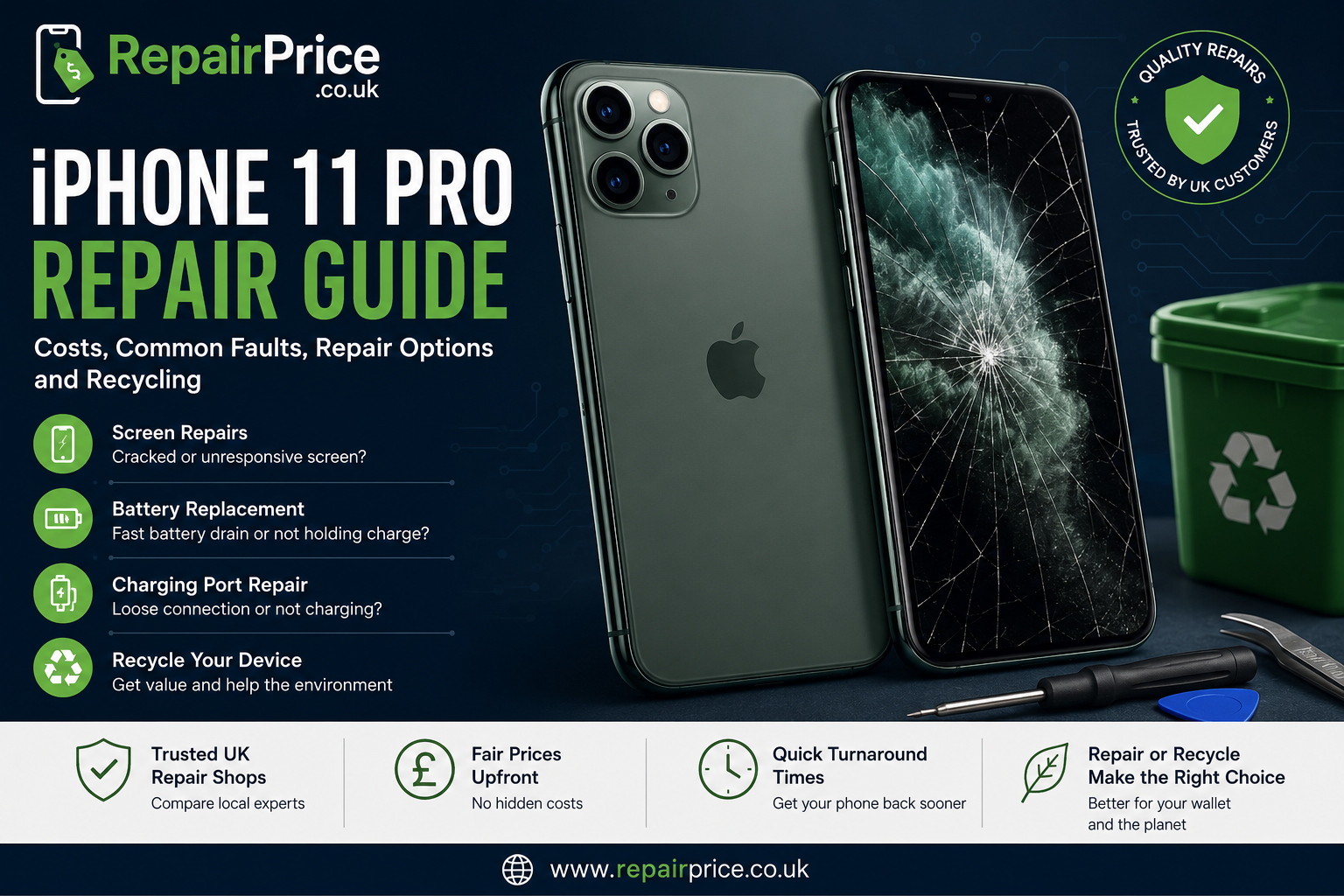
If your iPhone 11 Pro has a cracked screen, weak battery, damaged charging port, camera problem or another hardware fault, repairing the handset can often be more economical than replacing it. This iPhone 11 Pro repair guide explains the most common faults, what can affect repair prices, when professional diagnostics are worthwhile and when recycling may make more financial sense. Repair Price helps UK customers compare repair options so they can make a more informed decision before paying for work.
The iPhone 11 Pro remains a capable premium Apple handset, which means a successful repair can potentially extend its useful life considerably. Before purchasing another phone, it is worth comparing the likely repair cost against the handset's condition, age and remaining value. You can start by reviewing the dedicated iPhone 11 Pro repair price comparison page for model-specific repair options.
The price of an iPhone 11 Pro repair can vary depending on the damaged component, replacement part quality, technician, location and whether more than one fault is present. Comparing repair options before booking can help you understand the likely cost and avoid replacing a phone that may still be economical to fix.
In many cases, yes. An iPhone 11 Pro with a damaged screen, deteriorated battery or faulty charging connection may still have plenty of useful life remaining. Repairing one defective component can be significantly cheaper than purchasing a newer premium iPhone, particularly if the handset is otherwise working correctly and has sufficient storage for your needs.
The decision becomes more complicated when several expensive faults exist at the same time. For example, a handset with extensive liquid damage, display damage, battery problems and motherboard faults may require a larger investment. In that situation, compare the total repair cost with the phone's resale value and the cost of replacing it.
For a broader overview of Apple handset repair options, visit the UK iPhone repair service comparison and compare available solutions before deciding whether to repair, replace or recycle.
The iPhone 11 Pro can develop faults through accidental damage, normal component wear, moisture exposure or repeated charging cycles. Some problems are immediately obvious, such as a shattered display, while others can gradually become worse over time.
Typical repair enquiries include broken OLED displays, reduced battery capacity, charging problems, speaker faults, microphone problems, damaged rear cameras, Face ID-related faults, rear glass damage, button problems and liquid exposure. Accurate diagnosis matters because symptoms can sometimes have more than one possible cause.
A cracked or malfunctioning display is one of the most common reasons for repairing an iPhone 11 Pro. Screen damage can range from small cracks in the outer glass to complete OLED failure. Symptoms can include black areas, green or coloured lines, flickering, ghost touches, reduced touch response or a completely blank display.
Because the iPhone 11 Pro uses an OLED display, replacement costs can vary depending on the screen type and replacement component being offered. Before booking, ask what type of display is included in the quoted price, whether labour is included and whether the repair comes with a warranty.
You can compare broader pricing information through the iPhone screen replacement cost guide for the UK. Comparing prices and replacement specifications can help you understand why apparently similar screen repairs may have different quotations.
A small crack may initially appear cosmetic, but damaged glass can continue to spread. Cracks can also leave sharp edges and make the display more vulnerable to moisture and impact damage. If touch sensitivity starts behaving unpredictably or the OLED panel develops lines, dark spots or flashing, arranging a repair promptly may prevent the phone from becoming difficult to use.
If the display has separated from the frame or appears to be lifting, stop pressing it back into position. A swollen battery can sometimes push the screen upwards, and battery swelling should be assessed by a repair professional rather than ignored.
Battery degradation is expected as lithium-ion batteries age and accumulate charging cycles. An older iPhone 11 Pro may show noticeably shorter battery life even when the rest of the phone remains in good condition. Other signs can include unexpected shutdowns, rapid percentage drops, excessive heat or poor performance under heavy usage.
If battery deterioration is the main problem, replacement can be one of the most cost-effective ways to extend the phone's life. Before paying for another handset, compare current iPhone battery replacement prices and options and consider whether a new battery would restore enough everyday usability.
Battery problems should not automatically be diagnosed based solely on rapid power drain. Background apps, software activity, poor mobile signal and high screen brightness can also increase consumption. However, significant degradation combined with an ageing battery often makes professional testing worthwhile.
If your iPhone 11 Pro only charges when the cable is positioned at a particular angle, disconnects intermittently or does not detect a charging cable at all, the Lightning port may need cleaning, diagnosis or replacement. Pocket lint and compacted debris are common causes of poor cable contact, so a damaged port should not be assumed immediately.
A technician can determine whether the fault relates to debris, the charging assembly, battery, cable, charger or an internal board-level issue. See the iPhone charging port repair cost guide before arranging work so you can compare typical repair routes.
The iPhone 11 Pro has a multi-camera system, and faults can affect individual camera modules, protective lens glass or supporting components. Common symptoms include blurry images, failed focusing, shaking, dark spots, camera app errors or visible cracks over the rear lenses.
A cracked external camera lens should be addressed before dust and moisture can enter the camera area. If images remain blurry even when the outside glass looks clean, the internal camera module may require diagnosis or replacement.
Face ID problems can occur after impact damage, screen damage, moisture exposure or previous repair work. Because the front sensor system contains paired and sensitive components, not every Face ID fault can be solved through a straightforward part replacement. Professional diagnostics are particularly important before approving repairs involving the front sensor assembly.
If Face ID stopped working immediately after the phone was dropped or exposed to liquid, tell the technician exactly when the fault started. This information can help identify whether the problem is likely related to physical damage rather than software configuration.
Poor audio can originate from the earpiece speaker, loudspeaker, microphone, blocked mesh, charging assembly or internal connections. Before booking a repair, test calls using both normal handset mode and speakerphone. Also test voice recordings and video audio. These simple checks can help isolate whether the problem affects input, output or both.
If audio becomes distorted only at higher volume, the speaker itself may be deteriorating. If callers cannot hear you but voice recordings work normally, further diagnosis may be necessary instead of immediately replacing a microphone.
Liquid damage should be handled differently from a straightforward broken screen. Moisture can affect connectors and internal circuitry even when the phone initially continues working. Corrosion can develop after exposure and create additional problems later.
If your iPhone 11 Pro has been exposed to water or another liquid, avoid repeated charging attempts when the phone behaves abnormally. Do not rely on household drying methods as proof that the internals are safe. Professional inspection may reveal corrosion or shorted components that are not visible externally.
If you are deciding whether to repair your current handset or move to another model, comparing neighbouring generations can help. Owners who prefer a larger display may want to review repair information for the larger iPhone 11 Pro Max, while users with the standard model can compare costs through the iPhone 11 repair comparison page.
If you are considering upgrading rather than repairing, the iPhone 12 Pro repair and ownership page provides another useful comparison point. Looking at the likely repair cost of your existing device alongside the cost of upgrading can make the decision more practical rather than simply replacing the phone because it is older.
Start by identifying the primary fault and obtaining a realistic repair quotation. Then consider the phone's battery condition, storage capacity, cosmetic condition and whether any other major faults are developing. A handset requiring one screen or battery repair may be an excellent candidate for continued use, while extensive multi-component damage may change the calculation.
Also consider the replacement phone you would realistically purchase. Comparing a repair against the price of a brand-new flagship can make repair appear very attractive, but the comparison should instead be against the actual replacement device you would choose.
Repair Price can also help users investigate services in different parts of the UK. If you are searching around Derby, visit the Derby iPhone repair comparison page for local repair information and options.
Customers around South Yorkshire can explore iPhone repair services available around Doncaster, while those further north can review Durham iPhone repair information.
For users in Cambridgeshire, the Ely iPhone repair guide provides another route to finding suitable repair solutions. Customers in Devon can compare options through the Exeter iPhone repair page, and those in Gloucestershire can explore the Gloucester iPhone repair service guide.
Before handing over your device, back up important photographs, contacts and files wherever possible. Confirm the exact repair being quoted and ask whether the price includes parts, labour and VAT where applicable. It is also sensible to understand the repair warranty and what happens if additional faults are discovered during diagnostics.
Describe every known problem rather than only the most obvious one. For example, if the screen is cracked but the battery also drains unusually quickly, mentioning both issues can reduce the risk of needing separate diagnostic appointments later.
Once the phone has been repaired, a quality protective case and screen protector can reduce the likelihood of repeat impact damage. Avoid repeatedly bending or stressing charging cables, and keep the charging port clear of compacted debris. Battery lifespan can also benefit from avoiding prolonged exposure to excessive heat.
Repairing a device is most valuable when the restored handset is then kept in good working condition. Routine care can help maximise the value gained from the repair and delay the need for another phone.
Not every damaged iPhone 11 Pro should be repaired. If the handset has severe liquid damage, extensive motherboard failure, multiple broken components or a repair quotation that approaches its usable replacement value, recycling may be the more practical option.
Instead of storing an unusable phone in a drawer, explore the main device recycling service to see available options. You can also read the wider electronics recycling information hub for guidance on handling unwanted technology responsibly.
An iPhone contains more than glass, aluminium and a battery. Its internal printed circuit boards contain numerous electronic components and recoverable materials. When a handset is beyond economical repair, specialist recycling can help recover useful material from electronics that might otherwise remain unused.
Repair Price provides information about circuit board recycling and electronic PCB recovery for customers and businesses dealing with unwanted electronics. If you handle larger quantities of damaged or dismantled mobile devices, the scrap mobile phone board recycling price guide can help explain the potential value of separated phone boards.
The most economical outcome is not always buying a new phone. If your iPhone 11 Pro needs only a screen, battery, charging port or another manageable component replacement, obtaining repair quotations can be worthwhile. Extending the life of an existing handset can reduce the immediate cost of replacing it while keeping a functional device in use for longer.
Recycling becomes the stronger option when repair costs are disproportionately high, the device has serious internal damage or you have already decided to replace it. This creates a simple decision path: diagnose the fault, compare the repair price, judge the value of keeping the device and recycle it responsibly if repair is no longer worthwhile.
The cost depends on the fault, replacement component, repair provider and whether additional damage is discovered. Screen, battery, charging port, camera and motherboard repairs can all have significantly different prices, so comparing quotes is more useful than relying on a single generic estimate.
It can be. If the handset is otherwise functioning well and only requires one manageable repair, fixing it may cost considerably less than purchasing another premium phone. The decision should be based on the total repair cost, remaining device condition and your likely replacement cost.
Yes. Battery replacement is a common repair for ageing iPhones. If reduced battery capacity is the main reason you are considering replacing your handset, comparing battery replacement prices first can be worthwhile.
Charging problems can often be diagnosed and repaired, but the Lightning port should not automatically be assumed to be defective. Debris, cable damage, charger faults, battery problems and internal components can produce similar symptoms.
Sometimes, but the outcome depends heavily on the extent and location of the damage. Liquid can cause corrosion and board-level faults, making professional diagnostics important before significant repair expenditure is approved.
If professional repair is no longer economically sensible, consider recycling the handset rather than disposing of it with general household waste. Complete devices and internal electronic components may be suitable for specialist recycling routes.
A damaged iPhone 11 Pro does not automatically need replacing. Start by identifying the fault, compare repair quotations and evaluate the condition of the rest of the handset. Screen replacement, battery replacement and charging repairs can potentially restore a phone that would otherwise be replaced unnecessarily.
If repair costs become too high, the same device can move into a responsible recycling route instead. By comparing repair and recycling options through Repair Price, you can make a decision based on cost, condition and value rather than guessing whether your iPhone 11 Pro has reached the end of its useful life.