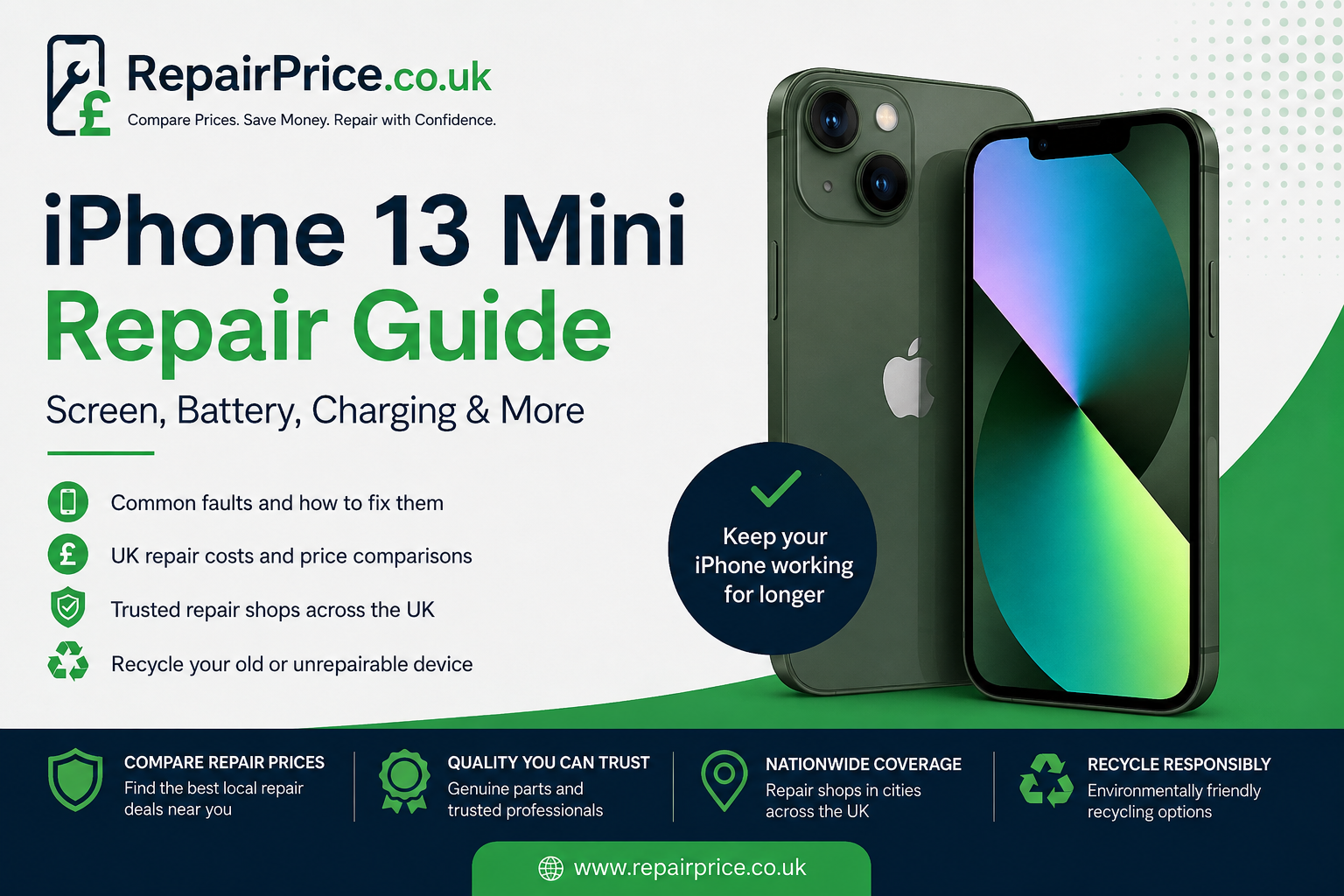
The iPhone 13 Mini remains a popular choice for people who want flagship-level performance in a genuinely compact handset. Its small size, OLED display, capable cameras and A15 Bionic processor make it practical for everyday use, but like any smartphone it can develop faults after drops, prolonged use, liquid exposure or charging problems. This iPhone 13 Mini repair guide explains the most common faults, when professional repair makes sense, how to compare repair options, and when recycling or selling the device may be the better financial decision.
If your phone is damaged, start by checking the dedicated iPhone 13 Mini repair and pricing page. It can help you move from researching a fault to comparing appropriate repair options rather than replacing an otherwise usable phone unnecessarily.
Repairing an iPhone 13 Mini can often extend its useful life considerably. A cracked screen, weakened battery or faulty charging port does not automatically mean the whole handset needs replacing. The important step is identifying the fault correctly and comparing the likely repair cost with the current value and overall condition of the device.
For many owners, yes. The iPhone 13 Mini still provides enough performance for browsing, messaging, photography, navigation, banking apps, streaming and everyday productivity. Because its compact form factor is no longer common among newer flagship smartphones, some owners may actually prefer repairing their current handset rather than moving to a substantially larger model.
The decision should be based on more than the age of the device. Consider whether the phone has one isolated problem or several developing faults. A handset with a cracked display but a healthy battery and working cameras may be an excellent repair candidate. A phone with extensive liquid damage, charging faults, damaged cameras and poor battery health may require a different calculation.
You can explore broader repair routes through the UK iPhone repair comparison service, which is useful if you are unsure whether your fault is specific to the screen, battery, charging system or another component.
Screen damage is one of the most common reasons an iPhone 13 Mini needs professional attention. A drop can leave the front glass cracked while the display remains visible, but more severe impact can cause black patches, coloured lines, flickering, touch sensitivity problems or a completely blank panel.
Do not assume that a usable display means the damage is only cosmetic. Cracks can worsen with continued handling and may allow moisture or debris to reach areas that were previously protected. Sharp glass around the edges can also make the phone uncomfortable or unsafe to use.
If the display is damaged, compare likely costs using the iPhone screen replacement cost guide. Understanding the expected price range before choosing a repairer makes it easier to decide whether repair represents sensible value for your particular handset.
Typical warning signs include cracks across the viewing area, unresponsive sections of the touchscreen, ghost touches, flashing, vertical lines, areas that remain black, distorted colours or a display that no longer illuminates correctly. A technician may need to inspect the handset where symptoms could also be related to internal connectors or impact damage.
A declining battery can make a perfectly functional iPhone feel much older than it really is. Common symptoms include rapid percentage drops, the phone shutting down before reaching zero percent, unusually frequent charging, reduced performance under heavy use or the battery struggling to last through a normal day.
Battery condition generally deteriorates gradually through repeated charge cycles and normal chemical ageing. Heavy gaming, constant navigation, frequent high-temperature use and intensive camera activity can make reduced endurance more noticeable.
If poor battery life is the main problem, check the UK iPhone battery replacement price guide. Replacing a worn battery can be substantially more economical than replacing an entire handset when the remaining components are still in good condition.
A battery repair is particularly attractive when the display, cameras, buttons, speakers and charging system are otherwise working properly. Restoring reliable battery performance can make the phone more practical again and may delay the expense and environmental impact of buying another handset.
Charging problems can be frustrating because several different issues can produce similar symptoms. The phone might charge only when the cable is held at an angle, connect and disconnect repeatedly, refuse to recognise certain cables or stop charging through the port altogether.
Before assuming the charging port has failed, test another compatible cable and power adapter. Also inspect the port for obvious lint or debris without inserting metal objects or using excessive force. Compact charging ports can accumulate pocket debris over time, preventing the connector from seating correctly.
If simple troubleshooting does not solve the problem, review the iPhone charging port repair cost guide before arranging an inspection. A professional diagnosis is especially useful when the handset also shows signs of impact or previous liquid exposure.
Not every iPhone 13 Mini problem involves the display or battery. Rear-camera focusing issues, blurred photographs, camera vibration, muffled speakers and unreliable microphones can all affect everyday usability. Some symptoms may follow physical impact while others develop gradually through contamination, moisture or component failure.
Testing the phone before requesting a quote can help identify the affected area. Record a short video using each camera, make a voice recording, test the loudspeaker, place a call and check whether the volume controls operate normally. Giving a repair shop precise symptoms can make the initial assessment more useful.
Visible damage is only part of the story after a hard drop. Inspect the front glass, rear panel, camera lenses and frame, then test the touchscreen across the full display. Confirm that Face ID, cameras, speakers, microphones, charging and wireless connectivity continue to operate correctly.
A bent or distorted frame deserves particular attention because it can complicate future repairs and may place pressure on internal components. If the phone becomes unusually hot, repeatedly restarts or develops new charging problems after impact, arrange an assessment rather than continuing to use it heavily.
The correct decision depends on repair cost, handset condition and what you want from your next phone. If you like the compact dimensions of the Mini, repairing it can be attractive because moving to another model usually means accepting a larger handset.
If you are considering a slightly larger alternative while staying within the same generation, compare the standard iPhone 13 repair and device options. It offers a larger format while retaining many characteristics associated with the same series.
Users considering a more premium model can also explore the iPhone 13 Pro repair and comparison page. Comparing repair costs across closely related models can help show whether keeping the Mini is financially preferable to purchasing another used or refurbished device.
If compact size is your main priority, the iPhone 12 Mini repair page provides another useful comparison. The earlier Mini generation can help put the cost and value of repairing an iPhone 13 Mini into context.
The cheapest quote is not automatically the best option. Compare what is included in the repair, whether diagnostic work is required, what type of replacement component is being offered, the expected turnaround and whether any workmanship or part warranty applies.
Describe the fault accurately when requesting prices. For example, saying that a phone has a cracked screen, functional touch input and no black spots gives a repairer more useful information than simply saying that the phone is broken.
If multiple faults exist, mention them together. A damaged display combined with a weak battery may alter whether repairing both components offers good value compared with recycling or replacing the handset.
Repair availability and pricing can vary between locations, making local comparison worthwhile. If you are in the East Midlands, you can start with iPhone repair options available around Nottingham.
Customers in Oxfordshire can use the Oxford iPhone repair comparison page to explore local repair routes for damaged Apple handsets.
For users in Cambridgeshire and surrounding areas, the Peterborough iPhone repair service page provides another route for comparing suitable repair options.
If you are based in Devon, explore iPhone repair services around Plymouth for local support with common faults such as screen, battery and charging problems.
Owners on the south coast can review Portsmouth iPhone repair choices, while customers further north can check iPhone repair providers serving Preston.
Some iPhone 13 Mini devices have accumulated several faults by the time they reach a repair shop. A broken OLED panel, damaged rear glass, failing cameras, weak battery and charging problems can produce a combined repair cost that is difficult to justify.
Extensive liquid damage can also change the calculation. Moisture-related corrosion may affect more than one component and can create faults that appear gradually rather than immediately. In these situations, ask for a diagnosis before committing to several individual repairs.
If the repair cost is approaching the amount you would be comfortable spending on another handset, compare both routes rather than automatically authorising the work. Your damaged iPhone may still have recycling or parts value even when returning it to normal use is no longer worthwhile.
An iPhone that is beyond economical repair should not simply be thrown away. Smartphones contain reusable metals, electronic components, circuit boards and other materials that can be recovered through appropriate recycling channels.
Start with the device recycling service if you have an unwanted or damaged phone that you would prefer to move out of storage. Recycling can be particularly appropriate for handsets with severe cosmetic damage, failed displays or multiple component faults.
You can also read the wider electronics recycling information hub to understand how unwanted technology can move into recovery and reuse channels rather than remaining unused in drawers or entering general household waste.
The internal circuit board is one of the most technically complex parts of an iPhone. It contains numerous components and valuable materials in a compact assembly. While consumers should not attempt to dismantle phones for material recovery themselves, damaged devices can enter specialist recycling streams where components and metals are processed appropriately.
For more information about this side of electronics recovery, see the circuit board recycling service. It explains the broader role that printed circuit boards can play within responsible electronic waste recovery.
If you are researching potential material values rather than arranging a normal handset repair, the mobile phone circuit board recycling price guide provides further information about scrap mobile boards and their place within the recycling market.
The most practical approach is usually to preserve a working device for as long as repair remains sensible. Replacing a cracked display, degraded battery or damaged charging component can extend the useful life of an iPhone 13 Mini without requiring the purchase of another phone.
Recycling becomes the stronger option when several major components have failed, liquid damage is extensive, the frame or internal structure is badly compromised, or repair costs exceed the value you personally place on keeping the handset.
This creates a simple hierarchy: diagnose the fault, compare repair prices, decide whether the repaired handset still meets your needs, and move it into a suitable recycling route when restoring it is no longer economical.
Once repaired, a few simple precautions can reduce the likelihood of paying for the same work again. A protective case with raised edges can help shield the display and cameras from direct impact, while a suitable screen protector adds another barrier against scratches and minor knocks.
Avoid exposing the handset to unnecessary heat and use reliable charging equipment. If charging behaviour changes, investigate the problem instead of repeatedly forcing or repositioning the cable. Early attention to a developing fault may prevent further wear around the port.
Battery longevity can also benefit from avoiding extreme temperatures and unnecessary prolonged heat exposure while charging or performing intensive tasks. Normal battery ageing cannot be prevented entirely, but sensible use can help maintain more consistent performance.
Before handing an iPhone 13 Mini to a repair provider, back up important information wherever possible. Confirm that photographs, contacts and other essential data are stored safely. Depending on the work being carried out, the repairer may also provide instructions concerning passcodes, Find My functionality or device testing.
Remove unnecessary accessories and make a note of the handset's existing cosmetic condition. If the device has several faults, write them down so the repairer can test each one rather than concentrating exclusively on the most obvious issue.
It often is, particularly when the handset is otherwise functioning correctly. Compare the cost of screen replacement with the value of keeping the phone and the price of a suitable replacement device before deciding.
A degraded battery can reduce everyday usability through shorter runtime, unexpected shutdowns and more frequent charging. If the rest of the handset remains in good condition, battery replacement may be a cost-effective way to extend its useful life.
Debris inside the port, cable wear or damage to the charging connector may prevent a secure connection. Try another compatible cable first and arrange professional assessment if the problem continues.
That depends on the extent of the damage. Liquid exposure can affect several internal areas, so diagnosis should come before committing to individual replacement parts. Where corrosion or multiple component failures are extensive, recycling may be more economical.
Yes. A handset does not have to be functional to enter an appropriate electronics recycling route. Damaged phones can still contain recoverable components and materials even when restoring them for normal use is impractical.
A damaged iPhone 13 Mini does not necessarily need replacing. Screen damage, battery deterioration and charging faults are all problems worth investigating before spending money on another handset. Start by identifying the symptoms, compare realistic repair costs and consider the overall condition of the device.
For a model-specific starting point, visit the iPhone 13 Mini repair comparison page. If the handset has reached the point where several major repairs no longer represent good value, move to one of RepairPrice.co.uk's recycling routes rather than leaving the device unused.
Repair when doing so extends the useful life of a dependable phone at a sensible cost. Recycle when the financial case for repair disappears. Following that approach helps you make a practical decision while ensuring an unwanted iPhone 13 Mini still has somewhere useful to go at the end of its working life.