Last updated: August 2026
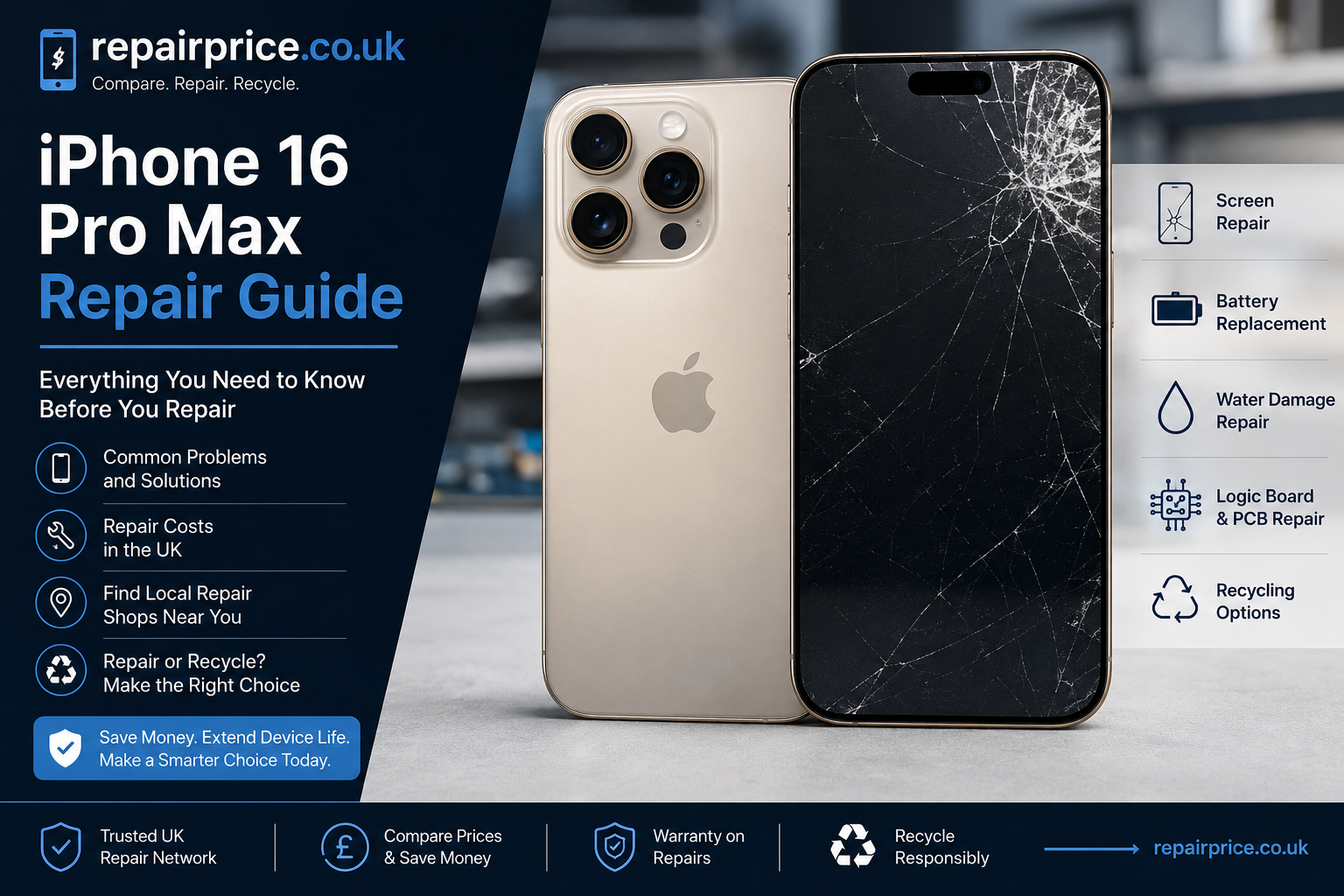
If your iPhone 16 Pro Max has developed a cracked screen, weak battery, charging problem, damaged camera, broken rear glass or liquid-related fault, understanding your repair options before choosing a service can help you avoid unnecessary expense. Repair Price helps UK customers compare independent repair services, explore common iPhone 16 Pro Max faults and decide whether repairing or recycling a damaged device offers the better long-term value.
The iPhone 16 Pro Max is a premium smartphone containing an advanced display, cameras, battery system, charging components and complex internal electronics. Because of this, repair costs can vary considerably depending on the fault, replacement part quality, labour required and the repair business carrying out the work. Comparing repair options before booking is particularly useful for expensive devices where even a relatively simple fault could otherwise lead to premature replacement.
Before authorising any repair, identify exactly what is wrong with the phone and compare suitable repair services. You can start with the dedicated iPhone 16 Pro Max repair and price comparison page, which provides a direct route into repair options for this specific model.
Not every damaged iPhone needs replacing. Many common problems affect individual components rather than the entire device. A broken display, degraded battery, damaged charging connection or faulty camera may be repairable while the remainder of the phone continues functioning normally. Diagnosing the fault accurately is therefore one of the most important steps before deciding what to do next.
Customers searching for a wider range of Apple repair options can also visit the main UK iPhone repair comparison service. This is useful where you are unsure of the exact model, need several repairs completed at once or want to understand the types of iPhone faults independent technicians commonly handle.
The large display is one of the most valuable components of the iPhone 16 Pro Max, but it is also one of the parts most exposed to accidental damage. Drops can cause cracked glass, black sections, coloured lines, flashing, touch problems or a completely blank display. A phone may continue ringing and receiving notifications even when the screen itself appears dead.
If only the screen has been damaged and the phone remains otherwise functional, a display repair can be considerably more practical than replacing the entire handset. However, customers should compare the type of replacement display being supplied because screen quality can affect brightness, colour reproduction, touch sensitivity and overall user experience.
For more information about display repairs and typical factors affecting pricing, see the UK iPhone screen repair cost guide. Comparing screen repair options is particularly worthwhile for premium Pro Max models because the value of the handset can justify repairing significant display damage.
Battery performance gradually declines as a smartphone ages and completes more charge cycles. Symptoms can include noticeably shorter battery life, rapid percentage drops, unexpected shutdowns, excessive heat or the need to recharge several times during normal daily use. Battery problems can sometimes be confused with software or charging issues, so diagnosis is important before a replacement is fitted.
A battery replacement may extend the useful life of an otherwise reliable iPhone 16 Pro Max. This can be particularly attractive if the display, cameras, housing and internal electronics remain in good condition. Instead of spending substantially more on another flagship phone, replacing a worn battery could restore practical everyday use.
Customers experiencing battery degradation can compare further information through the iPhone battery replacement cost service, which explains common battery symptoms and the considerations involved when arranging a replacement.
Liquid exposure can produce unpredictable symptoms. A device may appear normal immediately after contact with water before developing charging, camera, speaker, display or power problems later. Internal moisture can cause corrosion around connectors and electronic components, which means delaying diagnosis may allow the damage to become more extensive.
Avoid repeatedly attempting to charge or power on a phone that has suffered significant liquid exposure. Professional inspection can determine whether cleaning, component replacement or more advanced circuit-level work is appropriate. Depending on the extent of corrosion, successful repair is not always guaranteed, but early diagnosis can improve the chances of identifying repairable damage.
If your handset has been exposed to moisture, visit the iPhone water damage repair cost guide to understand possible repair routes and what may influence the final cost.
An iPhone 16 Pro Max that will not charge does not automatically require a new charging port. Dirt inside the connector, damaged cables, charging accessories, battery faults and internal board problems can all produce similar symptoms. Testing with known working accessories and carefully checking the charging connection can help narrow down the cause.
If basic checks do not resolve the problem, professional diagnosis becomes worthwhile. Replacing components without confirming the fault can increase repair costs unnecessarily. A technician can determine whether the issue involves the external connector, battery, charging circuitry or another internal component.
Camera faults can include blurred images, focusing problems, shaking, black camera previews or physical lens damage. Speaker and microphone problems may result in distorted audio, low volume or difficulty being heard during calls. These faults are inconvenient but do not necessarily mean the entire phone has reached the end of its useful life.
If the phone remains valuable and functional in other respects, replacing an individual camera, speaker or microphone assembly may provide better value than upgrading. Always compare the expected repair cost with the remaining market value and overall physical condition of the handset.
Damage to the back of an iPhone can range from cosmetic cracking to more serious housing deformation. Minor cosmetic damage may not prevent the phone from working, while severe impact damage can affect internal components, cameras, wireless charging or the structural integrity of the handset.
Where the housing is bent or heavily damaged, technicians may need to inspect the internal frame before confirming whether repair is economical. A complete assessment is particularly important after a major impact because visible exterior damage may not reveal every internal fault.
Repair prices can differ between businesses because technicians may use different replacement parts, warranties, diagnostic processes and labour structures. Comparing providers allows you to consider more than just the cheapest headline price. Ask what replacement part is being supplied, whether diagnostic fees apply, what warranty is included and whether the quoted figure includes labour.
Providing accurate information when requesting a quote can improve the quality of the responses you receive. Include the exact model, symptoms, whether the phone powers on, whether the display responds to touch and whether there has been any liquid or impact damage. Photos may also help a repair business understand extensive physical damage before inspection.
If you are comparing the cost of repairing several Apple devices, it can help to look at related models. Owners who have the smaller Pro version can use the iPhone 16 Pro repair comparison page for model-specific repair information.
Customers using the larger non-Pro model can instead explore the iPhone 16 Plus repair price page. Although the devices belong to the same generation, replacement parts and repair requirements can differ between models.
If you are deciding whether to repair your current handset or move to a newer generation, the iPhone 17 Pro Max repair information page can also help you compare the repair ecosystem surrounding the newer model.
Repair Price supports customers searching for independent repair options in different parts of the UK. Availability, turnaround times and pricing vary by location, so comparing services in your area can help you find a convenient option rather than automatically sending the device a long distance.
Customers on the south coast can explore iPhone repair services available around Portsmouth, while customers in Lancashire can compare independent iPhone repair options in Preston.
For customers in North Yorkshire, the Ripon iPhone repair comparison page provides a route to local repair options. Greater Manchester customers can investigate iPhone repair providers serving Salford.
Further south, customers can use the Salisbury iPhone repair service page, while those in South Yorkshire can compare iPhone repair services across Sheffield.
The decision depends on the cost of repair compared with the condition and value of the phone. A single screen or battery fault on an otherwise well-maintained handset may make repair an obvious choice. The calculation changes when a phone has several serious problems, such as extensive housing damage combined with display, camera and motherboard faults.
Before replacing the handset, consider how much useful life a successful repair could add. A premium device that continues meeting your needs after repair may offer better value than purchasing another high-end smartphone. Repairing also reduces the demand for new hardware and helps keep functioning electronic components in use for longer.
Repair is not always economically sensible. A severely damaged iPhone 16 Pro Max may require several expensive components, while extensive liquid corrosion or motherboard damage can make successful repair uncertain. If the total repair estimate begins approaching the value of a suitable replacement device, recycling should be considered rather than repeatedly paying for unsuccessful repairs.
You can start by visiting the device recycling comparison service to explore options for unwanted or damaged electronics. Customers who want broader information about responsible disposal can also read the UK electronics recycling information hub.
Recycling can recover useful metals, circuit assemblies and other materials while keeping unwanted electronics away from unsuitable waste streams. Even a phone that no longer switches on may contain components and materials that retain recycling value.
The internal logic board is one of the most technically complex parts of a smartphone. It contains processors, memory, connectors and numerous electronic components mounted onto a compact printed circuit board. When a handset cannot be economically repaired or reused, specialist electronic recycling processes may recover material from these assemblies.
Businesses and individuals handling larger quantities of electronic hardware can learn more through the circuit board recycling service. This provides further information about responsible PCB recovery rather than treating electronic boards as general waste.
For readers interested specifically in the potential recycling value of mobile phone boards, the scrap mobile phone board recycling price guide explains how phone circuit boards fit into the wider electronic scrap recycling market.
Your phone may contain photographs, messages, banking applications, authentication codes and other personal information. If the handset remains functional, back up important data before handing it to a repair provider. Apple account credentials and security features may also need consideration depending on the repair being performed.
If the device is being permanently recycled rather than repaired, remove your personal information where possible and sign out of associated accounts. Where a phone cannot be powered on, ask the recycling provider what data-handling procedures apply. Businesses recycling company-owned devices should consider formal data destruction requirements before equipment leaves their control.
Ask whether the quoted price includes replacement parts and labour, what grade or type of component will be installed, how long the repair is expected to take and whether a warranty is provided. You should also check what happens if additional faults are discovered during diagnosis.
The lowest advertised price is not always the lowest final cost. A slightly higher quotation may offer better value where it includes higher-quality components, clearer warranty protection or more comprehensive diagnostics. Comparing several repair businesses gives you more information before making that decision.
Smartphone repair pricing is not completely standardised across the UK. Businesses have different overheads, suppliers, repair methods and levels of technical expertise. This creates substantial variation in both price and service. Comparing repair options helps customers understand the market before committing to one provider.
Repair Price is designed to make that comparison process easier. Instead of treating replacement as the automatic solution when an expensive smartphone develops a fault, customers can investigate repair first and then move toward responsible recycling when repair no longer makes financial sense.
A cracked screen, worn battery, damaged camera, charging fault or broken housing does not necessarily mean your iPhone 16 Pro Max needs replacing. Start by identifying the fault, compare suitable independent repair options and consider the expected remaining life of the device after repair.
For model-specific information, use the dedicated iPhone 16 Pro Max repair page as your main next step. From there you can compare repair options and decide whether restoring the phone represents sensible value.
If repair costs become uneconomical, avoid leaving the damaged handset unused in a drawer or disposing of it with general waste. Move into the recycling route instead, where reusable components, circuit boards and recoverable materials can potentially be processed responsibly.
The best choice ultimately depends on the condition of your device, the repair quotation and how much longer you expect to use the phone. Comparing repair first and recycling second provides a practical way to maximise the useful life and residual value of an iPhone 16 Pro Max.