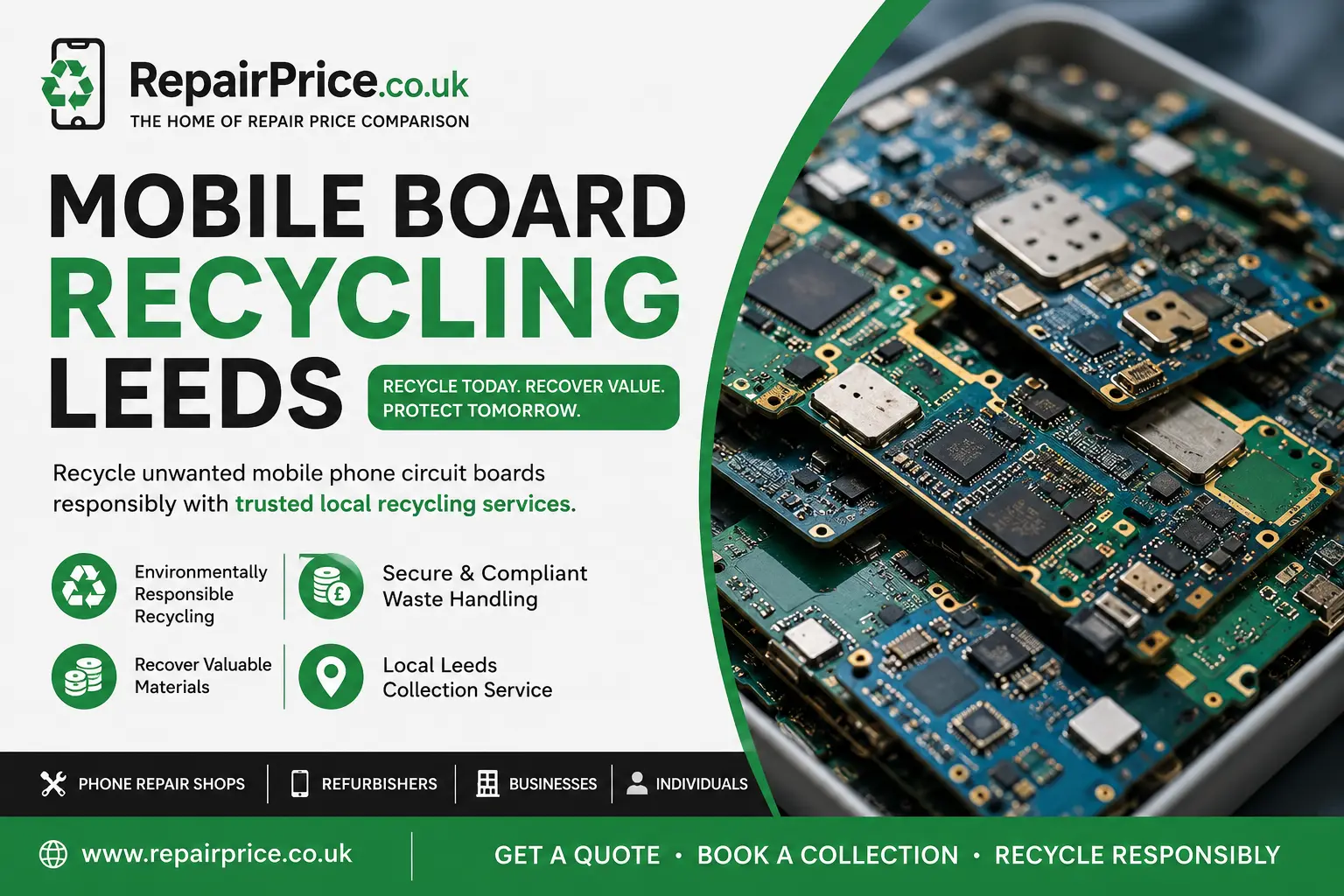
Old mobile phones, damaged smartphones and stripped handset components can contain circuit boards with recoverable metals and reusable materials. If you have unwanted mobile phone boards from repairs, refurbishment, device dismantling or business IT clear-outs, responsible recycling can help keep valuable electronic materials in circulation while reducing the amount of electronic waste being discarded. This guide explains mobile board recycling in Leeds, what types of boards may be accepted, how they should be prepared and where businesses, repair shops and individuals can find suitable recycling services.
RepairPrice helps users compare options for mobile phone circuit board recycling in Leeds. Whether you have a small quantity of damaged smartphone boards or larger volumes generated by a repair business, refurbishment company or electronics operation, starting with a specialist recycling service can make the disposal process much easier.
Mobile board recycling is the recovery and processing of printed circuit boards removed from mobile phones and smartphones. The main circuit board inside a handset connects many of the device's important components, including processors, memory, charging systems, wireless communications hardware and other electronic components. When a phone becomes uneconomical to repair, the board may still contain materials that are suitable for specialist recycling and recovery.
Rather than treating damaged mobile phone boards as general waste, they can be separated from other electronic components and sent into an appropriate recycling stream. Specialist recyclers may sort boards according to their type, composition, condition and volume before further processing takes place.
Mobile phone boards form part of the wider printed circuit board recycling market. If you also have boards from computers, industrial electronics or other equipment, our guide to PCB recycling services available across Leeds provides a useful next step.
Modern mobile devices contain a large number of materials packed into a relatively small product. When phones are dismantled, components such as batteries, screens, housings, cameras, connectors and circuit boards should ideally be separated into suitable recycling or reuse streams.
The circuit board is particularly important because it contains numerous electronic components and conductive materials. Specialist recycling processes can help recover useful material from these boards instead of allowing them to enter mixed waste streams.
Recycling can also help organisations improve how they manage obsolete electronics. Mobile phone repair businesses, refurbishment companies, schools, offices, telecommunications businesses and IT departments can all accumulate damaged or unusable devices. Separating mobile boards from other waste can make electronics recycling more organised and easier to document.
Mobile board recycling is not limited to large recycling companies. A wide range of organisations and individuals may generate unwanted boards. Phone repair shops frequently produce damaged or replaced logic boards as part of everyday repair work. Refurbishment companies may accumulate boards from devices that cannot economically be restored. Businesses replacing fleets of company smartphones can also generate devices that need to be dismantled, reused or recycled.
Other users can include schools, universities, charities, electronics traders, IT asset management businesses and individuals who have accumulated old devices. Quantities can range from a few boards to boxes or larger commercial batches.
If your waste includes complete electronic equipment rather than separated mobile boards, explore electronics recycling solutions for unwanted equipment in Leeds. Keeping different categories of electronic waste organised can help make collection and recycling more efficient.
Mobile board recycling services may handle boards removed from smartphones, older mobile phones and other compact communications equipment. This can include main logic boards, damaged smartphone motherboards, stripped mobile PCBs, boards recovered from broken handsets and mixed batches generated during phone dismantling.
The exact acceptance criteria can differ depending on the recycler. Some recyclers prefer boards to be separated from batteries, screens and plastic housings, while others may accept complete devices through a broader electronics recycling service.
If you also handle larger computer boards, visit our page covering computer motherboard recycling services in Leeds. Keeping mobile phone boards and computer motherboards separated can make identification and sorting considerably easier.
A mobile phone logic board is a type of printed circuit board, but it differs from many desktop computer or industrial circuit boards because mobile devices require extremely compact electronics. Components are densely positioned across the board so that processing, memory, communications and power management functions can operate within a small handset.
This means mobile boards should normally be handled as specialist electronic material rather than mixed scrap. Businesses producing several categories of boards can learn more about specialist circuit board recycling in the Leeds area.
Correct identification matters because different electronic boards can have different compositions. Separating categories before collection can help recyclers process incoming material more efficiently.
Before sending mobile boards for recycling, try to keep them dry, clean and separated from unrelated waste. Batteries should not normally remain loose among circuit boards because lithium batteries require appropriate storage and handling. Screens, casings, cables and other components can also be separated where practical.
Businesses producing regular quantities may find it useful to create dedicated containers for mobile phone boards. Separate containers can then be used for batteries, complete phones, computer circuit boards and other electronic components. This makes it easier for staff to follow a consistent recycling process.
Do not burn, crush or chemically process circuit boards yourself. Electronic recovery processes should be handled through suitable professional recycling channels.
Yes, physical damage does not automatically prevent a mobile phone board from being suitable for recycling. Boards with damaged connectors, failed charging circuitry, liquid damage, cracked components or other faults may still contain recoverable electronic materials.
The suitability of individual boards will depend on the recycler and the type of material involved. This is one reason why damaged boards should be separated rather than thrown into general waste simply because they can no longer function inside a phone.
If your recycling stock also contains processors or related computer components, see CPU and processor recycling options for Leeds customers for guidance on another valuable electronics category.
Phone repair businesses can generate a steady stream of electronic components. Screen replacements, charging faults, liquid damage repairs and board-level diagnostics can all result in parts that cannot be reused. Creating a dedicated recycling process can stop those components gradually accumulating in storage.
Repair shops can separate boards from batteries and general electronic parts as they complete repairs. Once sufficient material has accumulated, it can be prepared for collection or transferred to an appropriate recycling service.
This approach is particularly useful for businesses processing a high number of devices because small quantities can quickly become significant over time. It also helps distinguish reusable stock from components that have reached the end of their practical service life.
Companies replacing staff smartphones may discover that some devices are suitable for reuse while others are damaged, locked, obsolete or uneconomical to repair. Wherever practical, functional devices should be considered for reuse before recycling. Devices that cannot be reused can then move into an appropriate recycling stream.
Businesses handling larger technology clear-outs may also have laptops, tablets, networking hardware, monitors, servers and other electronics. For these mixed collections, business and commercial e-waste recycling in Leeds may provide a more suitable route than treating every component individually.
Separating electronic material into recognisable categories can make recycling more efficient. Mobile boards can be stored separately from computer motherboards, general printed circuit boards, processors and complete electronic equipment. This improves visibility over what a business has accumulated and can simplify conversations with recycling providers.
A simple labelled storage system can make a substantial difference. Containers marked for mobile boards, PCBs, processors, batteries and complete electronic equipment give employees clear instructions about where obsolete components should go.
Recycling requirements are not confined to central Leeds. Businesses and residents west of the city may find our information about mobile circuit board recycling around Pudsey useful when looking for a location-specific route for unwanted smartphone electronics.
This can be particularly relevant for local repair businesses, traders and organisations that accumulate damaged handsets but would prefer recycling options focused on their immediate area.
Businesses operating south-west of Leeds can also explore mobile phone board recycling services serving Batley. Using a relevant local page helps users identify recycling information tailored to the area where the electronic waste is being generated.
For organisations and individuals around Kirklees, our Heckmondwike mobile board recycling information provides another location-specific route. This can be useful when managing circuit boards generated from local phone repairs, device refurbishment or electronics clear-outs.
If the electronic equipment is located west of Leeds, visit our guide to recycling scrap mobile phone boards in Bradford. Using dedicated local recycling pages helps keep disposal enquiries connected with the area where collection or processing may be required.
Many businesses that accumulate mobile phone boards also generate other PCB categories. Laptop motherboards, desktop computer motherboards, graphics cards, server boards, telecommunications boards and industrial circuit boards should not necessarily be mixed together without first checking the requirements of the recycling service.
For mixed PCB material, the Leeds printed circuit board recycling service guide explains the broader recycling route, while our Leeds circuit board recovery information covers additional electronic board categories.
Recycling should form one part of a broader approach to electronics management. If a phone can be economically repaired, extending its useful life may be preferable to immediately dismantling it. Functional devices may also be suitable for reuse, resale or refurbishment.
When a device is beyond practical repair or reuse, responsible recycling becomes the next option. Components can then be separated and routed according to their material type. This hierarchy helps reduce unnecessary waste while ensuring end-of-life electronics are handled appropriately.
RepairPrice is designed to make it easier to connect with relevant repair and recycling options. Instead of treating electronic waste as one broad category, users can find dedicated pages covering mobile boards, printed circuit boards, motherboards, processors, complete electronics and wider e-waste recycling.
For users specifically looking to recycle mobile phone boards, the main Leeds mobile board recycling service page should be your next destination. It provides a focused route for enquiries relating to unwanted smartphone circuit boards and similar material.
Organisations producing electronic waste regularly can benefit from establishing a simple internal policy. Decide which devices should be repaired, which can be reused, which should be dismantled and which require specialist recycling. Staff should know where batteries, complete phones and circuit boards need to be stored.
Regular collections can prevent electronic waste from building up in workshops, offices and storage areas. Businesses with multiple categories of equipment may combine specialist mobile board recycling with broader electronics recycling arrangements, depending on the quantities involved.
Mobile phone boards are only one part of the electronic waste stream. Complete phones also include displays, batteries, cameras, speakers, plastics, metals and other components. Businesses dealing with whole devices rather than stripped circuit boards should consider whether a complete electronics recycling service would be more appropriate.
Our Leeds electronics disposal and recycling guide covers broader equipment categories, while the Leeds electronic waste recycling service is useful for organisations managing mixed obsolete electrical and electronic equipment.
Broken smartphone boards may still be suitable for specialist recycling even when they are no longer functional. Keep the boards separated from batteries and unrelated waste and check the acceptance requirements of the recycling provider.
Yes. Phone repair shops and refurbishment businesses can accumulate larger quantities of damaged boards over time. Separating them into dedicated containers can make bulk recycling easier to organise.
Batteries should normally be separated from circuit boards because lithium batteries require appropriate storage, transport and recycling procedures. Always follow the requirements provided by the recycling company handling your material.
You may have several board types available at the same time, but separating them before recycling is usually beneficial. Computer motherboards, mobile boards, processors and general PCBs can differ significantly in design and composition.
Yes. RepairPrice provides recycling information for surrounding locations, including Pudsey, Batley, Heckmondwike and Bradford, helping users find location-specific pages for their electronic recycling requirements.
If you have obsolete smartphone boards, damaged mobile logic boards or circuit boards generated through repair and refurbishment work, avoid allowing them to become mixed general waste. Separate the material, keep batteries apart and identify the recycling service most appropriate for the type and quantity of electronics you have.
For dedicated mobile circuit board enquiries, visit our specialist mobile board recycling page for Leeds. If your collection contains other electronic components, the related PCB, motherboard, processor and general e-waste pages linked throughout this guide can help you move each category into the most appropriate recycling route.
Using the right recycling pathway helps businesses, repair shops and individuals organise unwanted electronics more effectively while supporting the recovery of useful materials from devices that have reached the end of their practical life.