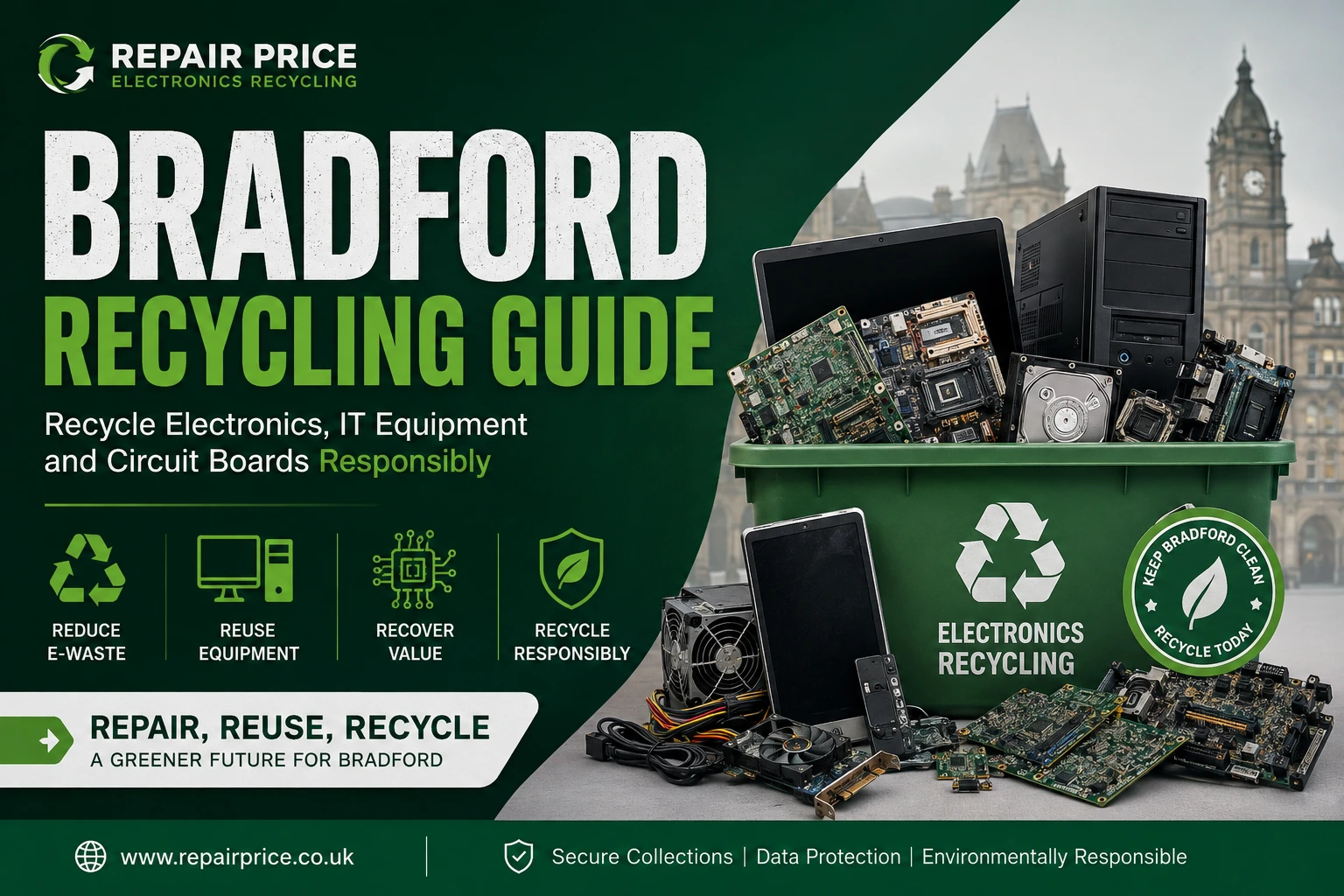
Recycling unwanted electrical equipment in Bradford can do more than simply clear space in your home, office, workshop or storage area. Old computers, laptops, electronic equipment, circuit boards, IT hardware and reusable components may still have value, while damaged or obsolete equipment can often be separated into materials suitable for responsible recycling. This Bradford recycling guide explains what can be recycled, how to prepare your equipment, why specialist recycling matters and how Repair Price can help you connect with suitable recycling services in Bradford and surrounding West Yorkshire locations.
If you already have unwanted electronics ready to clear, you can start with our dedicated recycling services for homes and businesses across Bradford. The service is designed to help users find a practical route for equipment that may be suitable for reuse, component recovery or responsible recycling rather than simply being thrown away.
Electronic equipment contains a mixture of plastics, metals, circuit boards, processors, memory, wiring and other components. When suitable equipment is reused or correctly separated for recycling, some of these materials can remain in circulation instead of being unnecessarily discarded. This makes proper recycling particularly important for computers, business IT systems, communication equipment and electronics containing printed circuit boards.
Recycling is also an opportunity to identify equipment that could still be repaired, refurbished or stripped for useful parts. A desktop computer that is no longer suitable for its original owner could contain working memory, processors, storage hardware, power supplies or circuit boards. Even when the full machine cannot be reused, individual parts may still have a useful destination.
This repair-first and reuse-first approach is one reason Repair Price connects recycling with repair and component recovery rather than treating every unwanted device as simple waste. The best route depends on the equipment, its condition, age, quantity and whether components can be recovered.
Bradford households, repair businesses, offices, schools, landlords, workshops and organisations can accumulate a wide range of unwanted electrical equipment. Common examples include desktop computers, laptops, monitors, networking equipment, servers, electronic accessories, mobile devices, power supplies, cables, memory modules, processors, motherboards and other circuit boards.
If your clearance consists mainly of electrical and electronic devices, see our Bradford electronics recycling options for unwanted electrical equipment. This page is particularly useful when you have a mixture of devices rather than one specific type of computer component.
For larger collections of discarded electronic equipment, our electronic waste recycling service covering Bradford provides a more focused route for equipment that has reached the end of its useful life. Separating e-waste from general rubbish makes it easier to identify reusable equipment and recover materials from items that cannot reasonably be repaired.
Businesses frequently replace computers and IT equipment before the hardware is completely unusable. Office upgrades, business closures, equipment refresh cycles and changes to working practices can leave organisations with desktops, laptops, servers, networking equipment and miscellaneous hardware taking up valuable storage space.
Our Bradford IT equipment recycling route for business hardware is designed for this type of clearance. Instead of placing obsolete technology into general waste, businesses can separate equipment and identify which items may have potential for reuse, parts recovery or specialist recycling.
Before arranging an IT clearance, create a basic inventory of the equipment you have. Record the approximate number of computers, laptops, servers, networking devices and boxes of components. If possible, separate complete working systems from damaged units and loose components. Providing clear information about the equipment can make it easier to determine the most appropriate recycling route.
Printed circuit boards are found inside computers, phones, servers, industrial electronics and many other devices. These boards contain numerous electronic components and should generally be treated differently from ordinary mixed waste. Repair businesses and organisations that dismantle electronics may accumulate significant quantities of boards over time.
If you have mixed boards from computers, electronics or dismantled equipment, visit our specialist Bradford circuit board recycling information. Keeping circuit boards separated from complete devices can simplify sorting and may help determine which type of recycling service is most suitable.
Businesses that repair phones, computers and electronic equipment are particularly likely to accumulate replacement boards. Rather than allowing damaged boards to fill drawers, boxes or workshop storage areas, creating a regular recycling process can keep the workspace organised while ensuring recoverable electronic material is directed into a more appropriate recycling stream.
The term PCB refers to a printed circuit board, but PCB recycling can cover many different board grades and equipment categories. Boards from computers, telecommunications equipment, servers, control systems and consumer electronics can vary significantly in size, construction and component density.
For larger volumes of mixed boards, use our Bradford PCB recycling service for printed circuit board collections. This is particularly relevant to repair shops, dismantlers, IT businesses and organisations that regularly remove boards from electronic equipment.
Whenever practical, keep PCB material reasonably clean and separate from general rubbish. Avoid mixing boards with liquids, food waste or unrelated materials. If you have several different categories of board, sorting them into separate containers can also make inspection and processing easier.
Computer motherboards are a major category of PCB waste generated by repair businesses and computer refurbishers. They are found in desktop PCs, workstations and other computing systems, and older or irreparable machines may leave businesses with substantial numbers of boards.
Our Bradford motherboard recycling service for obsolete computer boards provides a more specific route where your material consists primarily of computer motherboards rather than a mixture of electronic devices.
Before recycling a computer motherboard, consider whether the machine or any attached components remain reusable. Memory modules, processors and certain other removable parts may still be useful independently. Where reuse is practical, recovering working components before recycling the remaining board can extend the useful life of existing hardware.
Not every faulty electrical product needs to be recycled immediately. If an item can be economically repaired and continue functioning safely, repair may extend its useful life. If the equipment is working but no longer needed, reuse or refurbishment may be preferable. Recycling becomes more appropriate when equipment is obsolete, extensively damaged, uneconomical to repair or unsuitable for continued use.
A simple way to make the decision is to consider the condition and usefulness of the equipment first. Working devices should normally be assessed for reuse. Repairable devices may be suitable for repair. Machines with useful components can potentially become parts donors. Equipment with little practical remaining use can then move into an appropriate recycling route.
This hierarchy can be especially useful for businesses clearing large volumes of technology because a single collection may contain equipment belonging in several different categories. Separating these categories before collection reduces unnecessary disposal and helps direct each item toward a suitable outcome.
Preparing equipment before recycling can make the collection process easier. Start by grouping similar items together. Keep laptops with laptops, desktop computers together, circuit boards in suitable boxes and loose cables or accessories separately where possible. If you have a large quantity, estimate the number of units or containers before making an enquiry.
For computer and IT equipment that has stored personal or commercial information, consider your data responsibilities before the equipment changes hands. Drives and storage devices can contain documents, account information, photographs, customer records or business files. Organisations in particular should have a suitable process for handling data-bearing equipment before arranging disposal or recycling.
You should also avoid dismantling equipment unnecessarily unless you already have the experience and facilities to do so safely. Complete equipment can often be assessed more easily when important parts have not been randomly removed. Specialist dismantling is generally preferable for equipment containing unfamiliar components or potentially hazardous internal parts.
Households can accumulate old electronics surprisingly quickly. Previous laptops, damaged computers, unused phones, chargers, routers, cables and other equipment often remain in cupboards because owners are unsure whether the items still have value or where they should go.
Instead of placing electrical equipment into normal household rubbish, gather the unwanted devices together and identify their approximate condition. If some equipment still works, keep those items separate from completely damaged electronics. This gives reusable technology the best chance of being identified before the remainder is recycled.
If you have several items and want to determine the most suitable route, you can send details about the equipment, quantities and condition through Repair Price. Providing photographs or an accurate description may also help when dealing with mixed electronics or unusual equipment.
Commercial clearances can involve considerably larger quantities than household recycling. A business may need to remove dozens of computers after an upgrade, clear old networking infrastructure, recycle workshop components or dispose of redundant electronic equipment from storage.
For larger clearances, prepare an equipment list before requesting a collection. Include the number of computers, laptops, servers, monitors, circuit boards or other major categories wherever practical. Also explain whether equipment is loose, boxed, palletised or installed within racks or other systems.
A detailed description helps determine whether the collection should be handled primarily as reusable IT equipment, mixed electronics, PCB material or general e-waste. It also helps prevent delays caused by significant differences between the described equipment and the material presented for collection.
Repair businesses have slightly different recycling requirements because they generate components continuously. Replaced motherboards, damaged charging boards, broken phone boards, failed laptop components, processors, RAM and miscellaneous PCBs can accumulate after everyday repairs.
Creating dedicated containers for different material categories makes regular recycling significantly easier. Instead of mixing everything into one general waste container, repair shops can separate boards, reusable components and equipment destined for recycling as each repair is completed.
This also supports a circular approach to repair. Some components can be retained for future parts recovery, some devices can potentially be refurbished and the remaining non-reusable electronics can be directed toward recycling.
Repair Price also connects users with recycling information outside Bradford itself. If your equipment is located to the north of the city, our recycling services available around Shipley can help you find a more locally relevant route for unwanted electrical equipment and recyclable technology.
Using a location-specific page is useful when arranging a collection because access, collection volumes and travel requirements can differ between areas. When making an enquiry, provide the actual collection location rather than simply describing it as Bradford.
Residents and businesses toward the western side of Bradford can use our Clayton recycling options for electrical and electronic equipment. This can be particularly useful for households, small businesses and repair operations that want to keep collections focused on their local area.
As with Bradford collections, separating working equipment, damaged devices and loose circuit boards before arranging recycling can make the process more efficient.
If your equipment is closer to Pudsey or positioned between Bradford and Leeds, see our Pudsey recycling service for unwanted electronics and IT hardware. Location pages provide an additional route into the Repair Price recycling network while maintaining a clear connection between local collection enquiries and the type of equipment involved.
Businesses operating from multiple locations can also use different local pages for different collections rather than routing every enquiry through a single city page.
Users north-west of Bradford can find additional information through our Bingley electronics and equipment recycling page. Whether you are clearing domestic electronics, business IT equipment or workshop components, providing an accurate description of what you have is the best starting point.
For mixed collections containing both complete electronics and circuit boards, explain the approximate proportion of each. This can help ensure that specialist PCB material is recognised rather than treated as ordinary mixed equipment.
The exact recycling process depends on the type and condition of the equipment. Some items may be suitable for reuse or refurbishment. Others may be dismantled so reusable parts can be recovered. Equipment that cannot reasonably be reused can be processed so different material categories are separated for further recovery.
Circuit boards often require a more specialist recycling stream than complete electronic products because they contain a dense mixture of components and materials. This is why Repair Price provides separate Bradford pages covering complete electronics, e-waste, IT equipment, circuit boards, PCBs and motherboards instead of treating every category as identical.
Separating circuit boards can make a recycling collection easier to assess. A box containing computer motherboards is fundamentally different from a collection containing complete monitors, laptops, printers and miscellaneous accessories. Clearly identifying the category helps users reach the most relevant service page and provide the information required for an appropriate collection enquiry.
If you would like a deeper explanation of board recycling specifically, read our Bradford printed circuit board recycling guide for households and businesses. It explains how PCB recycling differs from general electronics recycling and why board type and condition can matter.
When requesting a recycling quote, provide as much useful information as possible without overcomplicating the enquiry. Include your Bradford or West Yorkshire location, the type of equipment, approximate quantity, condition and whether the items are boxed, loose or palletised. For unusual electronic equipment, a photograph can help clarify exactly what needs to be collected.
If the collection includes multiple categories, list them separately. For example, you might have ten desktop computers, five laptops, two servers and three boxes of circuit boards. This is much more useful than simply stating that you have a large quantity of electronics.
Good recycling begins before equipment reaches the recycling stage. Extending device life through repair, finding a new owner for working technology, recovering reusable components and separating specialist electronic materials can all reduce unnecessary waste. Recycling should remain an important final route for equipment that is no longer practical to reuse.
This is particularly relevant as homes and businesses use increasing numbers of electronic devices. Keeping unused technology in storage does not create additional value, while disposing of electronics incorrectly can prevent reusable devices and components from receiving another useful life.
By using the appropriate Bradford recycling service, you can identify whether your unwanted equipment belongs in general electronics recycling, IT recycling, e-waste processing, circuit board recycling or a dedicated PCB category.
Yes. Old desktop computers and laptops may be suitable for reuse, refurbishment, parts recovery or recycling depending on their condition. When arranging a collection, state whether the equipment is working, faulty, incomplete or completely obsolete.
Yes. Business clearances can include multiple computers, laptops, servers, network equipment and related electronics. Providing an approximate inventory can make it easier to determine the most suitable recycling route.
Yes. Printed circuit boards can be separated from complete electrical equipment and directed toward PCB or circuit board recycling. This is particularly useful for repair shops, refurbishers and businesses that dismantle electronic equipment regularly.
If equipment remains functional and suitable for continued use, reuse may be preferable to immediate material recycling. Repair Price encourages users to consider repair, reuse and parts recovery before moving equipment into its final recycling route.
Yes. Damaged and obsolete computer motherboards can be directed toward specialist motherboard or PCB recycling where they are no longer suitable for repair or reuse.
It is helpful but not always essential. Separating complete equipment, loose circuit boards, reusable components and accessories can make a mixed collection easier to describe and assess.
Yes. Repair Price provides recycling information covering Bradford and surrounding West Yorkshire locations including Shipley, Clayton, Pudsey and Bingley. Use the location page closest to where the equipment is actually being collected.
Include the collection area, equipment categories, approximate quantities, condition and any access information that could affect collection. For larger commercial clearances, an inventory or photographs can also be useful.
Whether you have a single unwanted computer, several boxes of circuit boards or a larger business IT clearance, choosing the right recycling route can help keep reusable equipment and recoverable components in circulation for longer. Repair Price connects Bradford users with dedicated routes for general electronics, e-waste, IT hardware, PCBs, motherboards and other recyclable electrical equipment.
Start with our main Bradford recycling collection and electronics recycling service to find the most appropriate next step. If your collection consists primarily of circuit boards or computer components, use the specialist PCB and motherboard recycling pages above so your enquiry is directed toward the most relevant service.
By separating equipment, providing accurate collection information and considering repair or reuse before final recycling, households and businesses across Bradford can take a more practical approach to managing unwanted technology while reducing the amount of useful electronic equipment that is unnecessarily discarded.