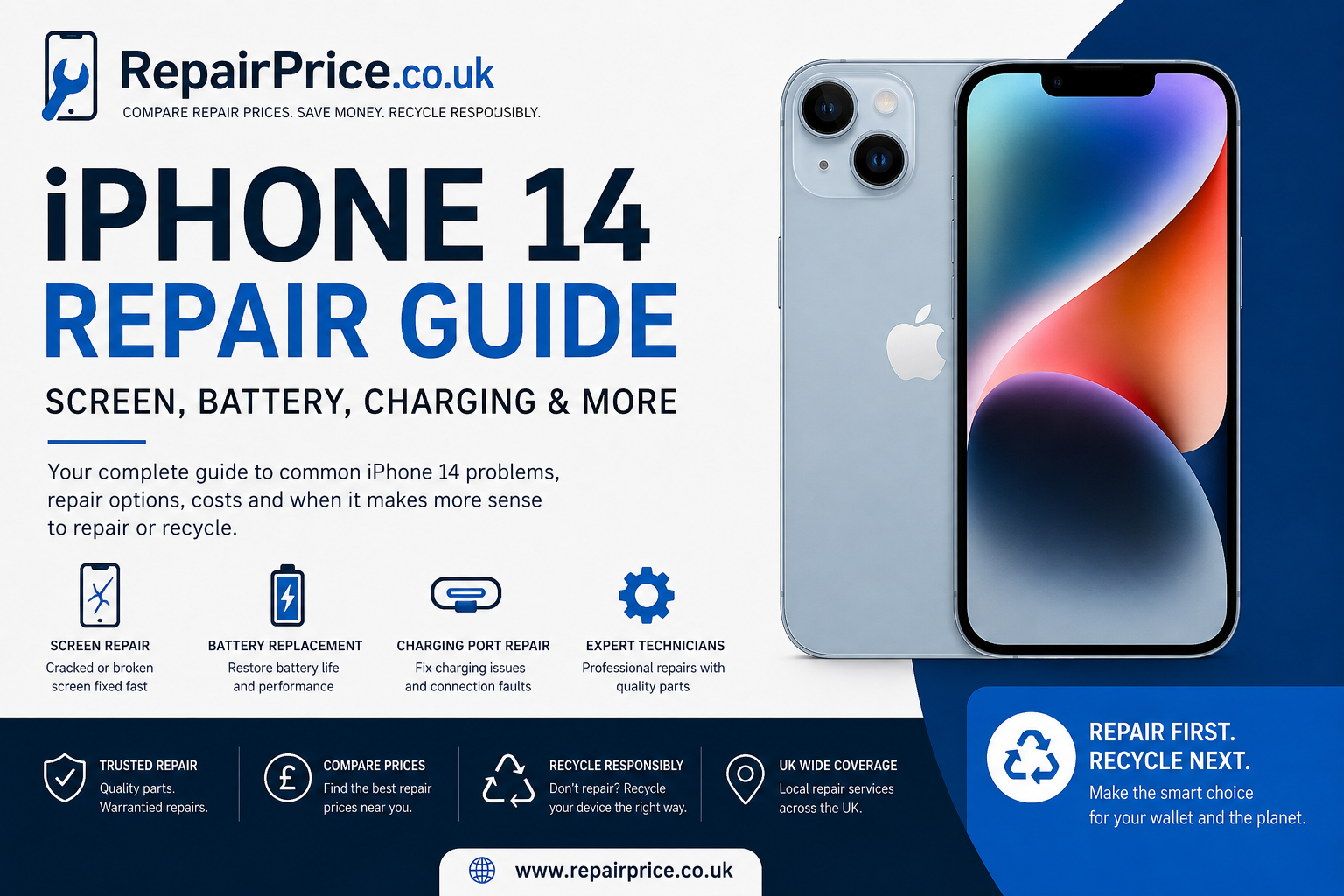
When an iPhone 14 develops a fault, deciding whether to repair, replace or recycle it is not always straightforward. A damaged display, rapidly draining battery, unreliable charging port or unexpected software problem can make an otherwise useful phone frustrating to use. This iPhone 14 repair guide explains the most common faults, what may be causing them, when professional diagnostics are worthwhile and what to consider before spending money on a repair.
If you already know your iPhone 14 needs attention, start by comparing your options through the dedicated iPhone 14 repair price and service page. Comparing available repair services can help you understand the likely work required before deciding whether to proceed.
The iPhone 14 can remain useful for years when the right fault is repaired. Physical damage and components that naturally wear over time do not necessarily mean the complete handset needs replacing. Screen damage, declining battery performance and charging difficulties are among the problems where a targeted repair may restore normal everyday use.
Repair decisions should be based on the overall condition of the device rather than the age of the model alone. An iPhone 14 with one damaged component and otherwise reliable performance can be a much stronger repair candidate than a handset suffering from several unrelated hardware faults, liquid damage and structural damage at the same time.
For a broader overview of available Apple handset services, visit the UK iPhone repair service directory. This can help you move from researching the fault to finding a suitable repair route.
A cracked iPhone 14 screen is one of the most visible reasons to arrange a repair. Damage can range from small fractures in the outer glass to serious display problems involving touch response, coloured lines, dark patches, flashing or a completely blank screen.
Even when a cracked display continues working, delaying a repair can make the phone less pleasant to use and may expose the device to further damage. Sharp glass edges can become uncomfortable, cracks can spread and impacts that damage the outer surface may also affect display or touch components underneath.
Before choosing a repair, check whether the fault is limited to cosmetic glass damage or whether there are additional symptoms. A phone that displays normally but has cracked glass presents a different repair situation from an iPhone with no image, intermittent touch response or obvious internal display damage.
For more information about pricing factors and what can influence the final amount, see the UK iPhone screen replacement cost guide. Comparing the likely repair cost with the current usefulness of the phone can help you decide whether restoring the display makes financial sense.
Battery deterioration usually happens gradually. You may first notice that the phone needs charging earlier in the day, loses power more rapidly under heavier use or performs less consistently when the charge level becomes low. Eventually, the inconvenience can become significant enough that battery replacement is worth considering.
Battery problems should not automatically be diagnosed from short runtime alone. Background applications, software activity, high screen brightness, weak network coverage and intensive tasks can also increase energy consumption. Checking battery information in iOS can provide useful evidence before arranging a hardware repair.
If the battery is clearly worn and the rest of the handset remains in good condition, replacement may extend the practical life of the phone without the expense of purchasing another device. Our iPhone battery replacement pricing guide explains the repair in more detail and can help you compare your options.
An iPhone 14 that charges intermittently does not always need a new charging port. Dust, pocket lint or compacted debris can interfere with the cable connection. A worn cable, damaged power adapter or another charging accessory can also produce similar symptoms.
Try a known working cable and suitable power source before assuming the handset is responsible. If different cables produce the same unreliable connection, the phone may require inspection. Avoid forcing objects into the charging port, because careless cleaning can damage the internal contacts.
Symptoms that may justify professional assessment include charging only when the cable is held at a particular angle, repeated connection and disconnection, failure to recognise compatible accessories or complete refusal to charge through the port.
Read the iPhone charging port repair cost guide for more information about diagnosing charging faults and deciding when repair is worthwhile.
Not every iPhone 14 repair involves the screen or battery. Camera problems can include poor focus, shaking images, a black camera preview or physical lens damage. Audio faults may affect call quality, media playback or voice recording, while microphone problems can make conversations difficult even when the phone appears to function normally in other respects.
Testing the problem across several applications can help determine whether the fault is hardware-related. For example, if sound fails only inside one application, software may be responsible. If the same speaker, microphone or camera problem occurs repeatedly across different applications, professional diagnosis becomes more useful.
Liquid exposure should be treated differently from straightforward component wear. Water or another liquid can affect several areas of the phone and corrosion may continue after the initial incident. A handset that appears to recover immediately can later develop charging, display, battery, camera or motherboard-related faults.
If an iPhone 14 has been exposed to significant liquid, avoid repeatedly connecting it to power simply to check whether it still works. Professional inspection may provide a better understanding of the extent of the damage and whether the handset remains economically repairable.
The best decision depends on repair cost, overall handset condition and what you need from your phone. If one repair restores a device that otherwise performs well, fixing it can be the more economical choice. If several expensive components are damaged simultaneously, comparison with replacement or recycling becomes increasingly important.
Owners considering another handset within the same generation can compare the larger-screen iPhone 14 Plus repair page or explore the iPhone 14 Pro repair options. If you are considering moving to a newer generation instead, the iPhone 15 repair and pricing page provides another useful point of comparison.
Do not judge the decision solely by the original purchase price. Consider what the phone is worth to you now, the expected repair cost, its storage capacity, battery condition, physical state and whether there are any additional faults that may require attention soon.
Repair availability and pricing can differ between locations, so comparing local options can be valuable. Customers looking for repairs in Essex can explore iPhone repair services available around Chelmsford or check Colchester iPhone repair choices before deciding where to take their handset.
Further north-west, customers can use the Chester iPhone repair comparison page to research local repair options. Users on the south coast can instead review iPhone repair services serving Chichester.
For customers in the Midlands, RepairPrice also provides dedicated information covering Coventry iPhone repair providers and iPhone repair options across Derby. Using location-specific pages can help narrow down suitable services while keeping your search relevant to where you live or work.
Before handing over your phone, back up important information wherever possible. Confirm that photographs, contacts, messages and other important data are stored somewhere secure. The exact preparation required may depend on the type of repair and the service provider, so follow any instructions supplied by the repair business.
It is also worth recording the existing physical condition of the handset. Note any cracks, dents, scratches or other visible damage before the repair. When comparing repair services, ask what the quote covers, whether parts and labour are included and whether any warranty applies to the completed work.
There comes a point where repairing an extensively damaged phone may no longer make financial sense. A handset with a broken display, failing battery, damaged frame, charging problems and motherboard faults could require several separate repairs. In that situation, recycling may offer a more practical route than continuing to invest in the device.
Before throwing an unwanted phone away, explore the device recycling and trade-in options available through RepairPrice. A damaged handset may still contain reusable components or recyclable materials even when it is unsuitable for continued everyday use.
You can also visit the broader electronics recycling information centre to understand how unwanted electrical devices can be moved into an appropriate recycling stream instead of being left unused in a drawer or discarded with general waste.
Smartphones contain complex printed circuit boards populated with connectors, chips and other electronic components. When a handset reaches the end of its useful life, specialist recycling processes can recover materials from electronics that would otherwise be wasted.
Repair businesses, recyclers and organisations handling larger quantities of electronic equipment can learn more through the circuit board recycling service. This is particularly relevant where damaged electronics are beyond economical component-level repair.
For businesses or recyclers dealing specifically with mobile phone boards, the scrap mobile phone circuit board recycling price guide provides additional information about this specialist material stream.
A sensible device lifecycle starts by determining whether the phone can be kept in use. Repairing a straightforward fault may reduce the need to replace a handset prematurely and can extend the useful life of existing electronics. Screen replacements, battery changes and charging repairs are therefore worth investigating before assuming that a damaged iPhone 14 has reached the end of its life.
When repair becomes uneconomical, recycling provides the next route. This approach makes it possible to separate repairable devices from genuinely end-of-life electronics and direct each handset toward the most appropriate outcome.
RepairPrice is designed to help users research repair costs, compare repair routes and consider recycling when a device is no longer worth fixing. Instead of treating every fault as a reason to buy another phone, you can investigate the individual problem and make a decision based on the condition and value of your handset.
For model-specific information, return to this complete iPhone 14 repair guide whenever you need to review the main repair choices. From here, you can continue to the dedicated iPhone 14 page, explore individual screen, battery and charging services, compare local options or move into the recycling pathway.
It can be. If the phone remains in good overall condition and needs only one reasonably priced repair, fixing it may be more economical than replacing the handset. The decision becomes less attractive when several expensive faults are present at the same time.
Yes. Cracks may spread after further pressure or impacts, and severe damage can eventually affect touch operation or the display underneath. Getting the damage assessed can help determine whether the problem is cosmetic or whether a full display repair is required.
No. Software activity, applications, screen usage and network conditions can also influence battery consumption. Check the phone's battery information and usage before deciding that replacement is necessary.
A damaged cable, debris inside the port or wear to the charging connection may be responsible. Testing another suitable cable is a useful first step. If the problem continues, professional inspection can help identify whether cleaning or repair is required.
Possibly, but the outcome depends on how much liquid entered the handset, which components were affected and whether corrosion has developed. Because liquid damage can affect several areas at once, proper diagnostics are particularly important.
If the estimated repair cost is no longer sensible compared with the condition and value of the handset, consider recycling it rather than disposing of it with household waste. Phones can contain components and electronic materials that may be suitable for specialist processing.
If your iPhone 14 has a broken screen, weak battery, unreliable charging connection or another hardware problem, begin by identifying the fault and comparing the available repair routes. A focused repair can often be preferable to prematurely replacing an otherwise usable handset.
Where repair is no longer economical, move the device into an appropriate recycling route instead. Whether you decide to repair your iPhone 14, compare it with another model or recycle an end-of-life handset, RepairPrice gives you a pathway from initial diagnosis through to the next practical step.