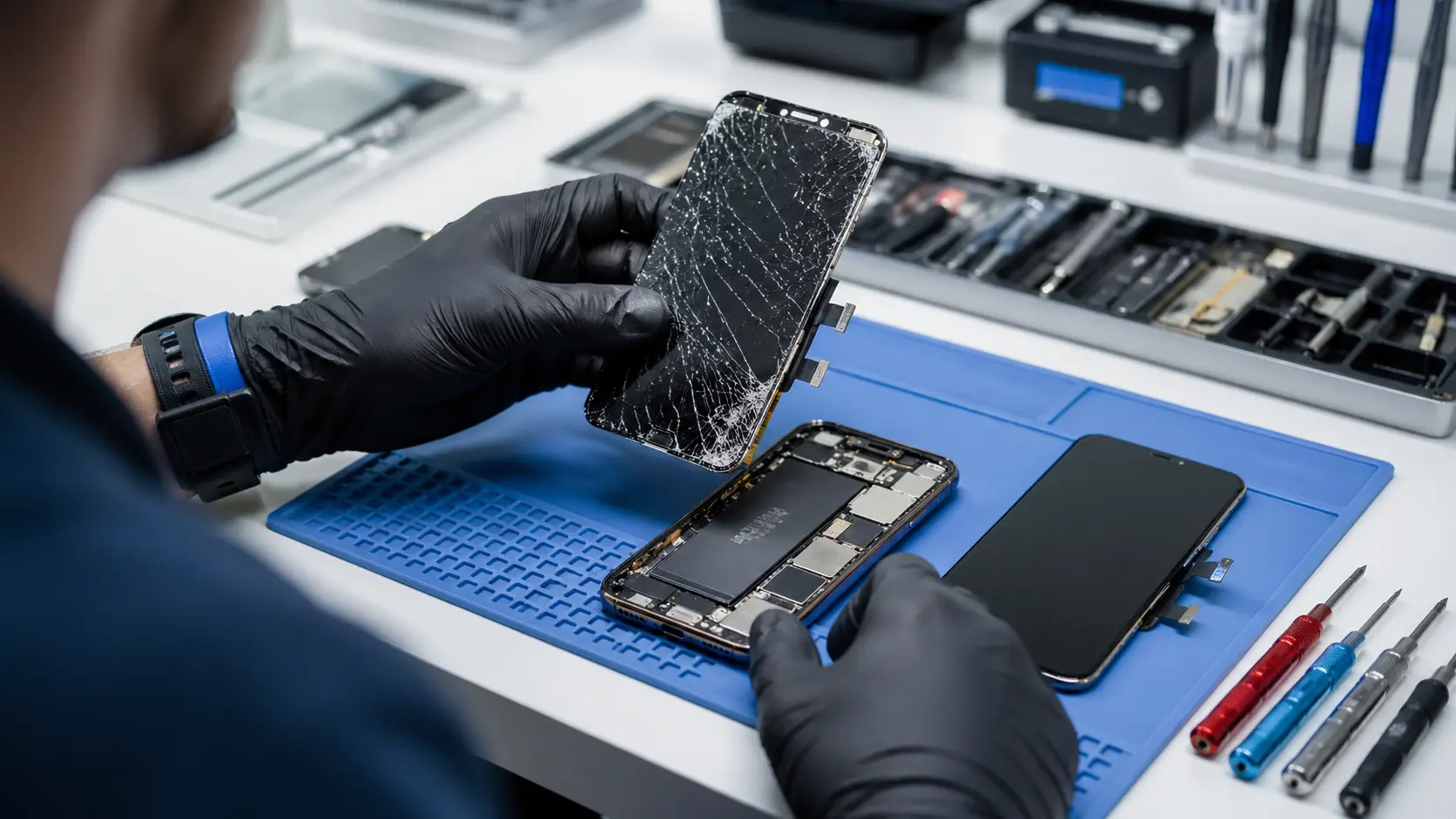
A cracked iPhone screen can turn a perfectly usable device into something frustrating, risky and expensive-looking overnight. In 2026, the good news is that many iPhone screen repairs are still far cheaper than replacing the phone entirely. The final price depends on your iPhone model, whether the display is LCD or OLED, the quality of the replacement screen, your location and the type of repair provider you choose.
Across the UK, many iPhone screen repair prices usually sit between £40 and £250, with older models often costing less and newer OLED models costing more. This guide explains what affects the cost, how to compare quotes, when a repair is worth it, and how broken phones, faulty boards and leftover parts can be routed into responsible electronics recycling instead of sitting unused in drawers.
For model-specific pricing, you can also compare live options through our dedicated UK iPhone screen repair cost comparison page.
The average iPhone screen repair cost in 2026 varies widely because Apple has used different display technologies across its models. An older iPhone with an LCD display is usually cheaper to repair than a newer iPhone with an OLED or Super Retina display. The newer the phone, the more likely it is that the replacement part, fitting process and calibration checks will increase the price.
As a general UK guide, budget repairs for older iPhones may start from around the lower end of the market, while premium screen replacements for newer iPhones can sit much higher. Some repair shops offer low-cost compatible screens, while others provide higher-grade displays designed to offer better brightness, colour accuracy and touch response.
When comparing prices, do not look at the quote alone. A slightly cheaper repair may not always be better if it uses a lower-quality screen, has no warranty or excludes labour. A proper quote should explain what part is being fitted, how long the repair takes and whether testing is included after installation.
Screen repair costs rise when the display is more advanced, parts are harder to source or the repair requires more careful handling. Newer iPhones with OLED displays, Face ID hardware close to the screen area and tighter waterproofing seals often cost more than older LCD models.
The highest repair prices are usually linked to newer Pro, Pro Max and premium iPhone models. These devices often have brighter panels, thinner bezels and more expensive replacement assemblies. A cracked front glass may look simple from the outside, but the display underneath can include touch layers, OLED components and sensors that all need to work correctly after repair.
For users comparing mobile repairs beyond Apple devices, our wider phone repair hub helps you explore screen, battery, charging port and water damage repair routes across different brands.
Several factors can move your final quote up or down. The biggest is the iPhone model, because part costs vary heavily between generations. The second is the type of screen used. A cheaper compatible display can reduce the upfront cost, while a premium compatible or genuine-style screen may deliver better visual quality and durability.
Location can also affect the price. Repair shops in busy areas may charge more because of rent, staffing and demand. However, competitive local markets can also create better prices, especially where several repair shops operate nearby. Turnaround speed matters too. Same-day repairs, while convenient, can sometimes cost more than postal or scheduled repairs.
The condition of the phone also matters. If the frame is bent, the battery is swollen, the screen has separated from the housing or liquid damage is present, the technician may need to carry out extra work before fitting a new screen safely.
Some users search for “glass replacement” because the visible crack is on the front surface. However, many modern iPhone screens are bonded assemblies. That means the glass, touch layer and display panel are often repaired together rather than separately.
If your screen is damaged but the phone still works, it is usually best to compare quotes quickly. Cracks can spread, moisture can enter the device and broken glass can make everyday use unsafe.
A screen repair is often worthwhile when the phone is still fast, the battery is healthy and the total repair cost is far below the cost of replacing the device. For example, spending a smaller amount on a screen replacement can make sense if the iPhone still receives software updates, holds charge well and meets your daily needs.
Replacement may be worth considering if the phone has multiple faults, such as a cracked screen, weak battery, damaged charging port and water damage. In that case, the combined repair bill may approach the value of the device.
A useful approach is to compare the repair quote against the second-hand value of your model. If the repair cost is less than the value you would regain by keeping or reselling the phone, repair may still be the smarter financial choice.
Users trying to reduce repair spend can also read our guide to finding the cheapest phone repair options in the UK.
London users often have access to a wide range of repair choices, from walk-in phone shops to specialist repair centres, collection services and postal repair options. This can make pricing more competitive, but it also means quotes can vary significantly from one provider to another.
Before booking, check whether the quoted price includes the screen part, labour, VAT where applicable, diagnostic checks and warranty cover. It is also worth asking how long the repair will take and whether your phone will be tested before return.
For city-specific repair options, visit our London iPhone screen repair comparison page and review local choices before committing.
A screen replacement can make your iPhone look new again, but battery performance affects how useful the repaired phone feels afterwards. If your battery drains quickly, shuts down unexpectedly or struggles to last a full day, it may be worth comparing battery replacement at the same time.
Although this guide focuses on iPhones, many users compare repair decisions across household devices. If you also own a Samsung device with poor battery life, you can check Samsung battery replacement cost options to understand whether a battery refresh is more cost-effective than buying a new phone.
Not every device is worth repairing. Some iPhones are too damaged, locked, liquid-damaged or old to justify the screen replacement cost. However, that does not mean they should be thrown away. Inside phones, laptops, tablets and electronics are circuit boards, metals and components that can be recovered through proper recycling channels.
Repair shops, refurbishers, businesses and households often collect damaged devices, faulty boards and leftover parts over time. Instead of storing them indefinitely, those materials can be sorted and sent into specialist recycling streams.
For businesses and repairers handling damaged electronics in volume, our scrap motherboard recycling UK service helps route unwanted boards and electronic scrap into a more useful recovery process.
The best outcome is usually repair first, recycling second. If an iPhone can be repaired safely and affordably, extending its life reduces the need to buy another device. If repair is not economical, recycling prevents useful materials from being wasted.
This repair-to-recycling route is especially important for repair shops. Screens, batteries, damaged housings, faulty logic boards and unsalvageable devices can build up quickly. With the right recycling process, these items can be separated from general waste and directed into more responsible handling.
For businesses, landlords, schools, offices and repair providers in the capital, our London e-waste recycling collection page explains how unwanted electronics can be collected and processed.
Before accepting a repair quote, ask a few practical questions. Is the replacement screen compatible with your exact iPhone model? Does the quote include fitting and testing? Is there a warranty? Will Face ID, brightness, touch response and speaker function be checked after repair?
You should also back up your phone before handing it over. Most screen repairs do not affect data, but backing up protects your photos, messages and files in case the phone has hidden damage.
Many households delay repairs until several devices have faults at once. A cracked iPhone, a laptop with a weak battery and an old tablet with a damaged screen can all feel like separate problems, but comparing repair costs together can help you prioritise what is worth fixing.
If you are also deciding whether to fix a computer, read our guide on whether it is worth repairing a laptop. The same logic often applies: compare repair cost, device age, resale value, performance and replacement price before making a decision.
Repair Price is designed to help users compare repair information before they spend money. Instead of guessing whether a quote is fair, you can check typical repair categories, explore local options and understand when repair makes financial sense.
The aim is not only to help users find screen repairs, battery replacements and phone repair services, but also to encourage better end-of-life handling for devices that cannot be fixed. Repair keeps working devices in use. Recycling helps recover value from devices and parts that have reached the end of their practical life.
For more repair guides, pricing explainers and comparison content, browse the Repair Price blog homepage.
In 2026, iPhone screen repair remains one of the most common and practical ways to extend the life of a damaged phone. The right repair can restore touch response, improve visibility, remove cracked glass and make the device safer to use.
The key is to compare quotes properly. Look at the screen type, warranty, part quality, repair speed and local availability before booking. If the phone is still valuable and performs well, repair is often the more cost-effective option. If it is beyond economical repair, responsible recycling gives the device a better final destination than a drawer, bin or landfill route.
Whether you are fixing one iPhone, comparing household repairs or managing damaged electronics from a repair business, a repair-first and recycle-next approach can save money, reduce waste and recover value from unwanted technology.