Last updated: August 2026
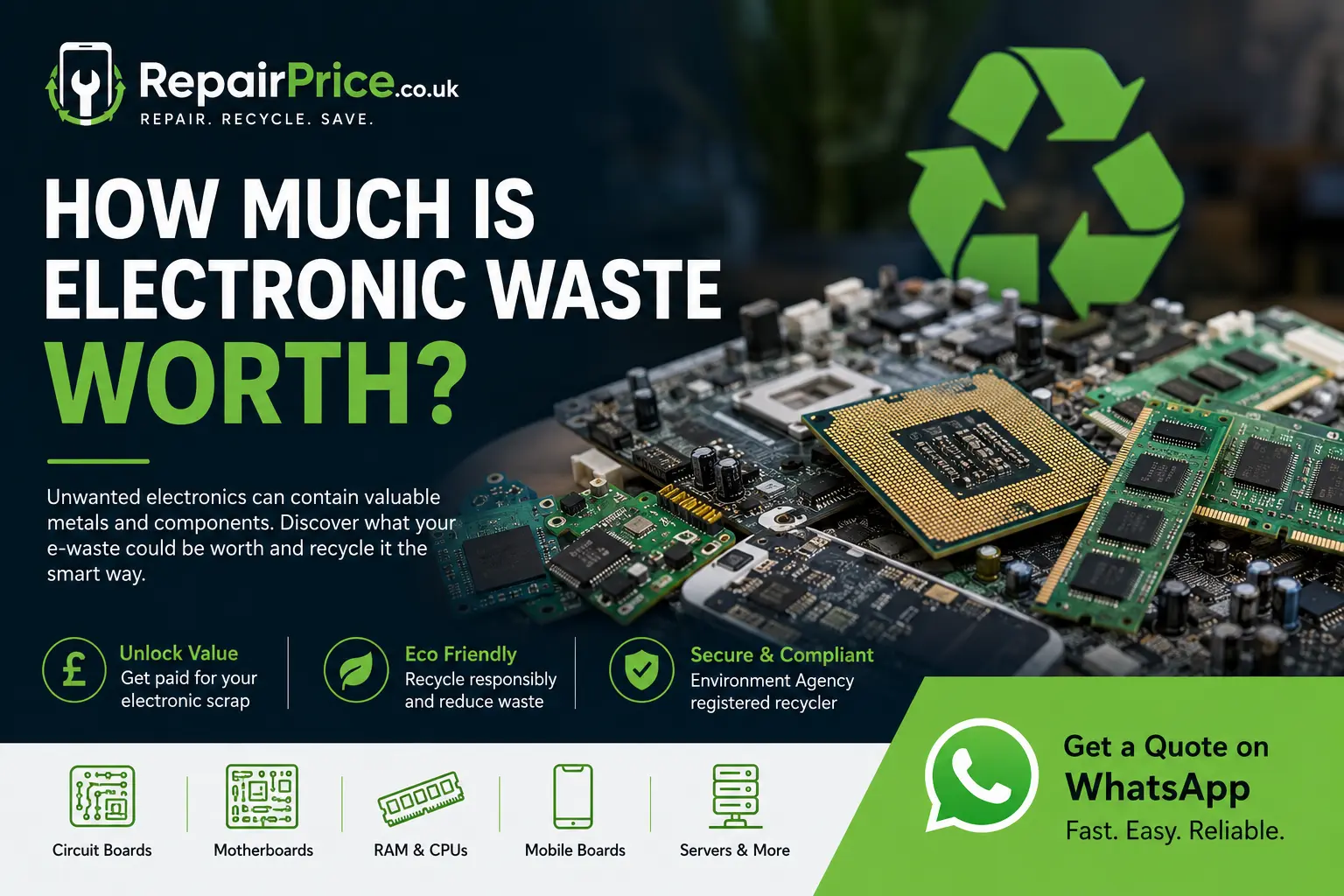
Old computers, circuit boards, servers, laptops, networking equipment and other unwanted electronics can contain recoverable metals and reusable components with genuine recycling value. However, the amount electronic waste is worth varies considerably depending on the type of equipment, the grade of the circuit boards, the quantity available and the concentration of valuable materials inside it.
If you have electronic equipment waiting to be cleared from a home, workshop, office, warehouse or IT department, understanding how e-waste is valued can help you separate higher-value material from ordinary electrical scrap. This guide explains what affects electronic waste prices in the UK, which components can be worth separating and how to find suitable recycling routes for different grades.
For current guidance before sorting or selling your material, check our latest UK e-waste recycling prices. This is a useful starting point for comparing different categories of electronic scrap and understanding why one load may be considerably more valuable than another.
There is no single price that can be applied to all electronic waste. A box containing high-grade computer circuit boards, CPUs and RAM is very different from a mixed load containing cables, plastic housings, low-grade power boards and complete appliances. The value therefore depends on exactly what you have.
Higher-value electronic scrap generally contains a greater concentration of recoverable metals and components. Printed circuit boards can contain copper and small quantities of precious metals, while processors, memory modules and selected telecommunications boards may have a higher value per kilogram than low-grade electrical equipment.
Anyone comparing potential returns should therefore look beyond the total weight. Ten kilograms of one electronic scrap category may be worth considerably more than a much heavier quantity of another category. Identification and grading are important parts of the recycling process.
Electronic waste value is influenced by several factors, including the type of device, circuit board grade, recoverable metal content, contamination, condition, quantity and current recycling market. Prices can change as demand for copper and precious metals changes, which is why old price lists should not automatically be treated as current valuations.
Material that has already been separated into recognisable categories can also be easier to assess. Mixing high-grade boards with low-value electrical scrap can make accurate grading more difficult. Businesses handling regular quantities of obsolete electronics may therefore benefit from separating circuit boards, processors, memory, mobile boards and other valuable components before requesting a recycling quotation.
Some of the most interesting e-waste categories are components removed from computers, servers, telecommunications equipment and other professional electronics. These products often contain densely populated circuit boards and components manufactured using copper, gold, silver, palladium and other recoverable materials.
For a wider recycling route covering different types of unwanted electrical equipment, visit our UK electronics recycling service. If your material consists mainly of populated PCBs, our scrap circuit board price guide provides more specific information about board grading and potential value.
| Electronic Waste Type | Typical Value Potential | Main Factors Affecting Value |
|---|---|---|
| Computer Motherboards | Medium to High | Age, board type, component density and grade |
| Server Motherboards | Medium to High | Board size, generation and component density |
| RAM Memory | Medium to High | Gold contacts, chip density and memory type |
| CPUs and ICs | Medium to High | Processor type, age, construction and precious-metal content |
| Mobile Phone Boards | High | Dense components and precious-metal concentration |
| Server Backplanes | Medium to High | Connector density, size and board grade |
| Low-Grade Power Boards | Low to Medium | Copper content, transformers and board construction |
| Mixed Electrical Equipment | Varies | Composition, preparation, weight and recyclable content |
The classifications above are general guidance rather than fixed purchasing prices. Individual loads should be assessed according to their actual material and current recycling conditions.
Computer motherboards are one of the better-known categories of electronic scrap. Their recycling value comes from the combination of copper tracks, connectors, integrated circuits and small amounts of precious metals contained within the board and its components.
Different generations and types of motherboard can receive different grades. Desktop, laptop, server and industrial boards should not automatically be assumed to have the same recycling value. For a more focused comparison, see our scrap motherboard recycling value guide.
Separating motherboards from steel cases, power supplies, plastic housings and other low-value material can also make it easier to identify exactly what is being offered for recycling.
Old RAM modules are small but potentially interesting recycling items because of their gold-plated edge contacts, integrated circuits and printed circuit board construction. Businesses replacing large numbers of computers or servers can sometimes accumulate significant quantities of obsolete memory.
Rather than leaving memory modules installed in redundant computers, recyclers may grade them separately. Our UK scrap RAM price information explains the factors that can influence the recycling value of different memory types.
Mobile phone boards can be particularly interesting because a large number of components are concentrated onto a relatively small PCB. Although an individual board weighs very little, larger quantities of separated mobile boards can represent a higher-grade electronic recycling stream.
If you are clearing damaged, dismantled or obsolete phones, compare the material using our mobile phone circuit board recycling prices rather than assuming the boards have the same value as ordinary mixed PCBs.
Servers and enterprise IT equipment can contain large backplanes and connector boards. Their construction differs from ordinary consumer electronics, and some boards can contain a substantial number of connectors, sockets and copper tracks.
Businesses, IT departments and data-centre clearance operators dealing with this type of material can use our server backplane recycling price guide to learn more about separating and grading these boards.
One of the biggest mistakes when estimating electronic waste value is treating every PCB as the same product. Circuit boards vary enormously. A densely populated telecommunications board may have a completely different recycling profile from a simple power-supply board.
Our circuit board recycling service provides a route for businesses and individuals handling PCB material, while the printed PCB recycling value guide explains how printed boards can be assessed according to their construction and components.
Processors and integrated circuits are another category worth separating from general electronic scrap. Older ceramic processors, modern CPUs and loose integrated circuits can have significantly different recycling characteristics, so simply weighing all processor material together may not provide an accurate indication of value.
For more detailed information about this specialist category, visit our CPU and IC recycling price guide. It explains why processor construction, generation and material composition can influence recycling classifications.
Complete electronic equipment contains materials that may have very different recycling values. A computer, for example, can contain a motherboard, RAM, processor, hard drive, cables, power supply, steel chassis and plastic casing. Valuing the entire unit purely by its total weight can therefore hide the higher-value categories inside it.
Where practical and appropriate, separating valuable electronic components can make a load easier to classify. Our dedicated motherboard scrap price information can be used alongside the main e-waste guide when comparing different recycling categories.
Businesses can accumulate electronic waste surprisingly quickly. Office upgrades, IT refresh programmes, server replacements, warehouse clearances and equipment failures can leave computers, network devices, circuit boards and other electronics occupying valuable storage space.
Instead of treating everything as worthless waste, organisations can identify potentially recyclable categories and request an assessment. Larger quantities may be particularly suitable for organised collection or recycling arrangements.
The important point is to establish what equipment is present before disposal. A mixed pallet of redundant IT equipment may contain reusable devices, recyclable base metals and higher-grade electronic components. Correct sorting can help prevent potentially valuable PCB material from disappearing into a general mixed-waste stream.
Businesses and households in West Yorkshire can find dedicated information through our Bradford electronic waste recycling service. The page covers local options for dealing with unwanted electrical and IT equipment while providing a route into specialist recycling services.
Bradford businesses upgrading computers, communications equipment or other electronics should consider separating higher-grade circuit boards from ordinary electrical scrap before requesting a valuation.
For material originating in Leeds, our Leeds e-waste collection and recycling information provides a more locally focused route. This can be useful for offices, repair businesses, IT companies and organisations clearing redundant electronic equipment.
Companies and individuals looking to recycle unwanted electronics in Greater Manchester can visit our Manchester electronic waste recycling page. Separating circuit boards and other higher-grade components before arranging recycling can make the material easier to describe and assess.
For South Yorkshire collections and recycling enquiries, see our Sheffield e-waste recycling information. Businesses clearing old IT equipment can use the service information alongside our national pricing guides to understand the different material categories they may have.
Customers in Calderdale can find relevant recycling information through our Halifax electronic recycling service. This provides a local route for unwanted electronics while connecting users with broader information about PCB and component recycling.
If your electronic scrap is located in or around Wakefield, visit our Wakefield e-waste recycling page. Understanding whether your material consists of complete equipment, mixed electronics or separated high-grade boards can help when requesting recycling information.
Whether equipment should be dismantled depends on the type and quantity of material, the recycling arrangement and whether dismantling can be completed safely and appropriately. Businesses should not automatically dismantle electrical equipment simply to increase its apparent value.
Where boards have already been removed during legitimate repair, refurbishment or equipment processing, keeping different PCB categories separate can make identification easier. Motherboards, RAM, CPUs, mobile boards and server boards should ideally not be mixed unnecessarily if they are going to be valued as individual recycling grades.
The value inside electronic scrap ultimately comes from recoverable materials. Circuit boards can contain copper alongside much smaller concentrations of gold, silver, palladium and other metals. Industrial recycling processes are designed to separate and recover these materials at scale.
If you want to understand this process in greater detail, read our circuit board metal recovery guide. It explains why PCB composition matters and how the metals contained in electronic boards contribute to recycling value.
Before requesting a quotation, identify the main types of equipment or components you have. Separate clearly different material categories where possible, estimate the quantity or weight and provide an accurate description. For larger commercial loads, information about pallets, containers or approximate total volume may also be useful.
A clear description such as "desktop motherboards", "server boards", "RAM modules" or "mixed computer circuit boards" is more useful than simply describing everything as electronic waste. Photographs may also help a recycler understand the type and condition of material before collection or delivery arrangements are discussed.
Recycling should not automatically be the first option for every electronic device. Equipment that remains repairable or reusable may have greater value as a working product than as scrap material. Repair can also extend the useful life of electronics and delay the environmental cost associated with manufacturing replacements.
When a device is damaged beyond economical repair, obsolete, incomplete or unsuitable for reuse, recycling becomes an important next step. This creates a practical hierarchy: reuse working equipment where appropriate, repair equipment where economically sensible and recycle material that has reached the end of its useful life.
Electronic scrap markets are not static. Commodity prices, refining costs, demand, board grades and processing conditions can all affect valuations. A figure seen months or years ago may therefore provide a poor indication of what the same material is worth today.
For this reason, use the current UK electronic waste price guide as the central pricing page before making decisions about a larger quantity of material. Specialist component guides can then be used to investigate particular categories in greater detail.
No. Some electronic waste has a meaningful recycling value, while other equipment may have low material value or require processing that affects what can be paid. The type, quantity, grade and condition of the material all matter.
It depends on the equipment. In computers and servers, components such as certain circuit boards, CPUs and RAM can be more interesting to recyclers than steel cases or plastic housings. Specialist telecommunications and mobile phone boards can also fall into higher-value PCB categories.
Potentially. If you regularly generate circuit boards through legitimate repair, refurbishment or equipment dismantling, accumulating separated grades may make recycling more practical. Their value depends heavily on the board type and quantity.
Many scrap motherboards have recycling value because they contain copper, connectors, integrated circuits and small quantities of precious metals. However, the grade and price can vary between desktop, laptop, server and specialist boards.
RAM can have recycling value due to its PCB construction, integrated circuits and gold-plated contacts. Larger quantities are generally more practical to process and should be kept separate from ordinary low-grade electronic scrap when possible.
Many processors have recycling value, but different CPU generations and construction types can receive different classifications. Older ceramic processors, for example, should not automatically be treated as equivalent to every modern processor.
Yes, complete computers can enter suitable electronic recycling streams. Before recycling, consider whether equipment can be reused or repaired and ensure that any data-bearing devices are handled appropriately.
Start by identifying the equipment or component category, estimating the quantity and comparing it with current recycling information. For mixed or larger loads, request an individual quotation rather than relying solely on a generic per-kilogram figure.
Electronic waste should not automatically be treated as worthless rubbish. Computers, servers, circuit boards, processors, RAM and telecommunications equipment can contain recoverable materials that make responsible recycling worthwhile. The key is understanding what you have, separating relevant grades and comparing the correct recycling category.
RepairPrice.co.uk helps users move from research to action by connecting electronic waste information with recycling price guides and specialist services. Whether you have a small quantity of old computer components or a larger commercial clearance, begin with our UK e-waste price comparison guide and then explore the specialist pages that match your material.
By identifying valuable components before they enter a general waste stream, you can make more informed recycling decisions, improve material separation and help recover useful resources from electronics that have reached the end of their working life.