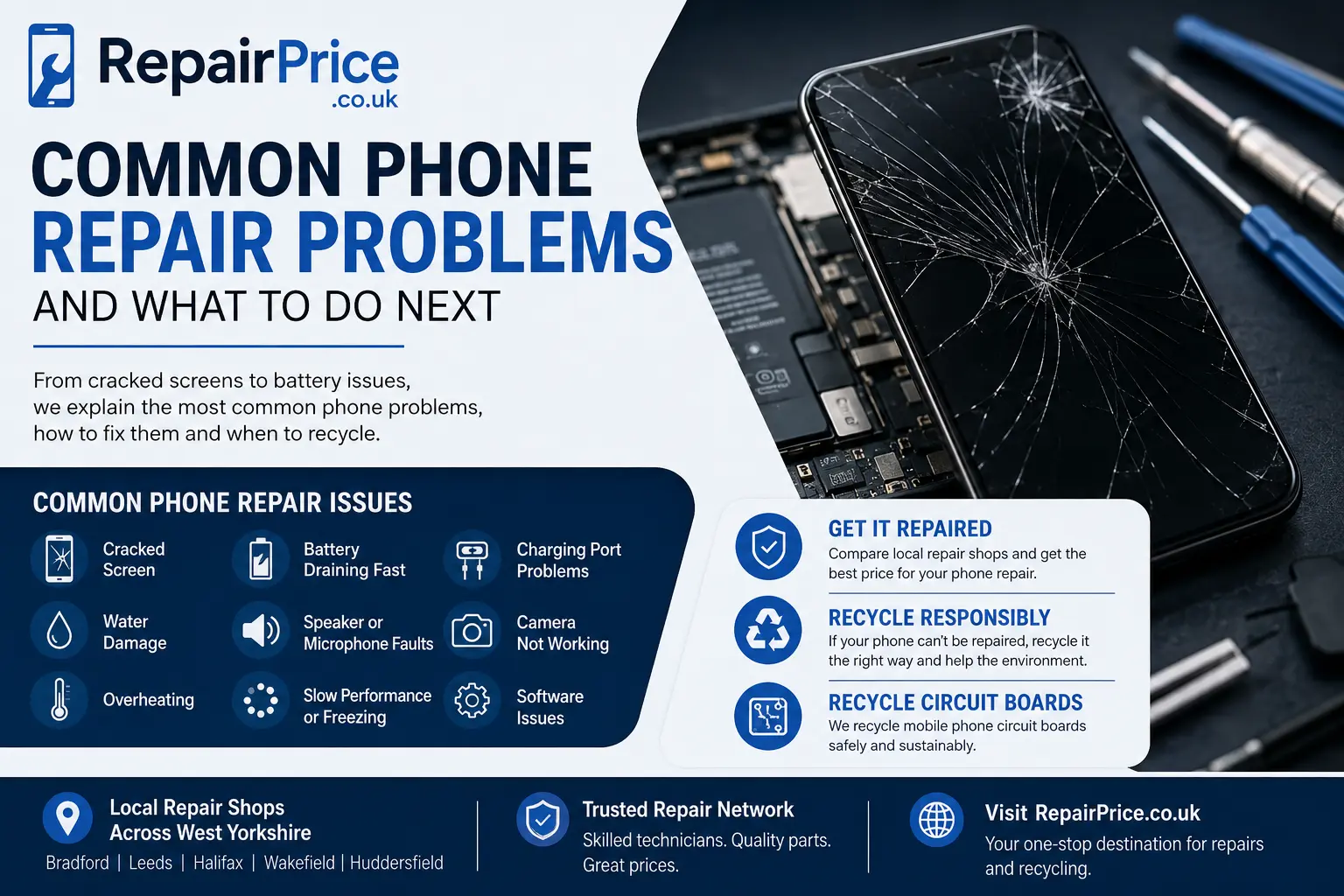
Most phone faults start small. A faint crack, a battery that drains too quickly, a loose charging cable or a screen that freezes can quickly turn into a bigger issue if ignored. This guide explains the most common phone repair problems, what usually causes them, when repair is worth it, and when recycling may be the better option.
A damaged phone can affect far more than convenience. Many people rely on their mobile for work, online banking, travel, family contact, photos, authentication apps and business messages. When a fault gets worse, the risk of data loss, extra repair cost or complete device failure increases.
RepairPrice helps users compare repair options through local repair shops. Instead of guessing whether your device needs a screen, battery, charging port or board-level inspection, you can start with a clear repair enquiry and get directed towards the right service.
For general repair support, visit our main mobile phone repair service page.
Screen damage is one of the most common phone repair problems. A phone may still work after a drop, but cracks can spread, touch response can fail, black spots may appear, and moisture can enter through the damaged glass.
Common screen symptoms include lines across the display, flickering, ghost touch, delayed touch response, dead areas on the screen, lifted glass, or a completely black display even when the phone powers on.
If your screen is damaged, avoid pressing hard on the glass or using cheap adhesive covers as a long-term fix. A proper screen inspection helps confirm whether only the glass/display is affected or whether the frame, battery or internal connectors have also been damaged.
For a full breakdown of pricing and repair considerations, read our phone screen repair cost guide.
Battery problems are another frequent repair issue. If your phone loses charge quickly, shuts down at random percentages, becomes hot during normal use or only works when plugged in, the battery may be worn or failing.
Modern phone batteries degrade over time. Heavy app usage, fast charging, heat exposure and age can all reduce battery health. A weak battery can also make a phone feel slow because the device may reduce performance to prevent sudden shutdowns.
Battery replacement can often extend the useful life of a phone, especially when the screen, camera and main functions still work well. For more detail, see our phone battery replacement guide.
A phone that only charges at a certain angle, charges slowly, keeps disconnecting, or does not recognise the charger may have a charging port issue. Dust, pocket lint, worn connectors, liquid damage or repeated cable movement can all affect charging performance.
Before assuming the port is broken, try a different cable and plug. If the problem continues, the charging socket may need cleaning, repair or replacement. Forcing the cable into the phone can make the damage worse.
For more information, visit our phone charging port repair guide.
Liquid damage can be unpredictable. A phone may work immediately after contact with water, tea, coffee or rain, then fail hours or days later. Corrosion can spread across internal connectors, charging components and the circuit board.
If your phone gets wet, power it off, remove accessories and avoid charging it. Do not use heat from a hairdryer, radiator or oven because heat can damage the battery, screen and seals. A repair shop can inspect the device and check whether cleaning, parts replacement or board-level repair is possible.
If the device is beyond economical repair, it should not be thrown into household waste. Use a responsible option such as mobile phone recycling or our main electronics recycling service.
If callers cannot hear you, sound is muffled, the loudspeaker crackles or audio cuts in and out, the issue could be caused by blocked speaker grills, damaged microphones, software settings, water exposure or internal component failure.
Cleaning the outside of the phone carefully may help if dust is blocking the speaker. However, if sound problems continue during calls, recordings or video playback, a repair inspection is recommended.
Camera faults can include blurry images, shaking focus, black screen errors, cracked camera glass or camera app failure. The cause may be physical impact, software conflict, damaged lenses or internal camera module failure.
Camera glass damage should be repaired quickly because dust and moisture can enter the lens area. This may turn a simple glass replacement into a more expensive camera module repair.
A phone may become warm during gaming, video recording or charging, but regular overheating during normal use can indicate a battery issue, charging fault, software problem or internal damage.
Overheating should not be ignored. Stop using the phone if it becomes too hot to hold, avoid charging it unattended and get the device checked. A failing battery can be a safety risk and should be handled properly.
Not every phone problem is caused by damaged hardware. Slow performance can come from low storage, outdated software, too many background apps, corrupted files or an ageing battery. However, if the phone freezes after a drop or repair, there may also be internal damage.
Before booking repair, back up your data where possible, update the software and remove unused apps. If the fault continues, a repair shop can check whether the issue is software-related or linked to a failing component.
Different phone brands can have different repair needs. iPhones commonly need screen, battery, charging and camera repairs. Samsung phones may involve OLED screen faults, back glass damage or charging issues. Google Pixel phones can develop battery, display or camera problems. Realme phones may need charging port, screen or battery support.
You can explore brand repair options through our iPhone repair service, Samsung phone repair page, Google phone repair service and Realme phone repair page.
Repair is often worth considering when the phone is still modern, the data is important, the device has no major motherboard damage, and the repair cost is lower than replacing the phone. A screen, battery or port repair can often give a device a longer useful life.
Repair may be less suitable when the phone has multiple major faults, severe liquid damage, no resale value or a repair cost close to replacement value. In that case, recycling can be the more practical and responsible choice.
If you are looking for nearby repair options, RepairPrice supports local phone repair searches across West Yorkshire. You can compare help for phone repairs in Bradford, mobile repairs in Leeds, phone repair shops in Halifax, Wakefield phone repair services and Huddersfield mobile repair support.
Many households have more than one damaged device. If your phone is not the only item needing attention, you can also compare tablet repair services, laptop repair support and smartwatch repair options.
If a phone is beyond economical repair, recycling is the next step. Old phones can contain reusable materials and circuit boards that should be handled correctly. Keeping broken phones in drawers delays recovery of useful components, while throwing them away can create unnecessary electronic waste.
RepairPrice helps users move from repair to responsible disposal when needed. Start with repair if the device can be saved. If not, use phone recycling, general electronics recycling or specialist mobile phone circuit board recycling.
Use a strong case, fit a quality screen protector, avoid charging in very hot areas, keep the charging port clean, update your software and back up your data regularly. These simple habits can reduce the chance of sudden failure and make recovery easier if something does go wrong.
It is also worth acting early. A small crack, loose charging port or tired battery is usually easier to deal with than a phone that has completely stopped working.
Common phone repair problems do not always mean the end of your device. Screen damage, battery issues, charging faults, camera problems and sound faults can often be repaired. The best next step is to describe the fault clearly, compare repair options and decide whether repair or recycling gives the best value.
RepairPrice makes that process easier by connecting users with repair routes, related services and recycling options when a device has reached the end of its life.