

UK Electronics Recycling Guide: How to Recycle Electrical and Electronic Waste
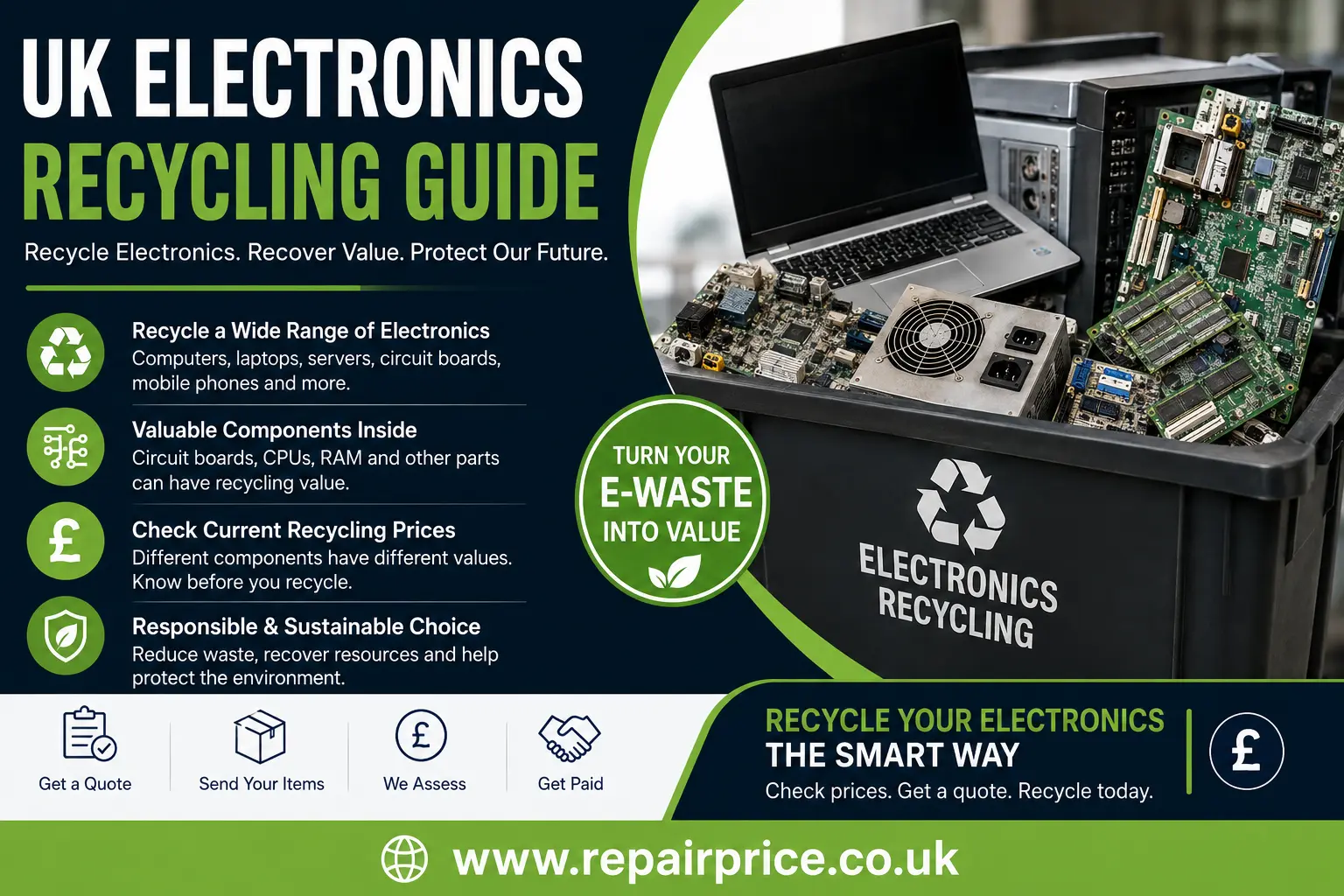
Old computers, laptops, circuit boards, servers, mobile phones and other electronic equipment can retain recycling value long after they have stopped being useful. Instead of storing unwanted technology or disposing of it with general waste, businesses and individuals can separate recyclable electronics and send them through an appropriate recycling route. This UK electronics recycling guide explains what can be recycled, which components may have value, how electronic waste is assessed and where to find recycling services across the UK.
Electronic recycling is particularly important for equipment containing printed circuit boards, processors, memory, connectors and other recoverable materials. The condition, quantity and grade of the equipment can influence its recycling potential, so identifying what you have before requesting a quotation can make the process much easier.
If you already have electronic equipment ready for recycling, RepairPrice.co.uk can help you explore suitable recycling options and relevant UK price guides.
WhatsApp Us About Your Electronic Waste
What Is Electronics Recycling?
Electronics recycling is the process of collecting, sorting and processing unwanted electrical and electronic equipment so reusable components and recoverable materials can be separated from waste. Depending on the equipment, recycling may involve dismantling complete devices, grading circuit boards, separating processors and memory, or preparing larger quantities of electronic material for specialist processing.
Common recyclable electronics include desktop computers, servers, networking equipment, laptops, mobile phones, telecommunications hardware, printed circuit boards, motherboards, RAM modules, processors and various types of commercial IT equipment.
For a broader overview of available recycling routes, visit our UK electronics recycling service and see how unwanted equipment can be moved into a more appropriate recycling stream.
Why Should Old Electronics Be Recycled?
Electronic equipment contains a mixture of plastics, metals, circuit boards and specialist components. Throwing complete devices into general waste can mean potentially recoverable materials are lost. Recycling provides an alternative route that allows useful material to be separated and processed.
For businesses, recycling can also help clear storage rooms, warehouses, workshops and IT departments containing obsolete equipment. Older servers, desktops, telecom hardware and redundant circuit boards can quickly accumulate when systems are upgraded.
Before assuming unwanted equipment has no value, it can be useful to compare the material against current electronic waste recycling price information. Different categories of electronic scrap can have significantly different recycling values.
Which Electronic Items Can Be Recycled?
A wide range of electronic equipment can potentially enter specialist recycling streams. The exact recycling route will depend on the device, its components and whether it is being recycled as complete equipment or dismantled material.
- Desktop computers and workstations
- Laptops and notebooks
- Computer servers
- Networking and telecommunications equipment
- Mobile phones and smartphones
- Printed circuit boards
- Computer motherboards
- Processors and integrated circuits
- RAM and memory modules
- Server backplanes and back panels
- Electronic control boards
- Other redundant IT and electronic equipment
Why Circuit Boards Matter in Electronics Recycling
Printed circuit boards are one of the most important categories within electronic recycling because they contain numerous components and conductive materials. However, not every board has the same recycling value. Boards can differ considerably according to their original application, age, component density, connector content and overall grade.
If you have loose boards rather than complete electronic devices, our scrap circuit board price guide provides more focused information about identifying and recycling different board types.
For quantities of separated PCB material, you can also review our printed circuit board recycling price information before requesting an assessment.
Motherboards Can Be Separated for Recycling
Computer motherboards are commonly recovered from desktop PCs, workstations and other computer systems. They may contain processor sockets, memory slots, expansion interfaces, integrated circuits and numerous other electronic components.
Motherboards should normally be identified separately from low-grade power boards and miscellaneous electronic boards because their composition can differ. If you are dismantling computers in quantity, separating similar motherboard types can also make assessment easier.
See our dedicated motherboard recycling value guide for more information about this category.
Recycle RAM and Computer Memory Separately
RAM modules are small, easy to store and commonly recovered during computer and server upgrades. Businesses replacing large numbers of machines may accumulate substantial quantities of memory over time.
Instead of mixing RAM with general electronic scrap, keeping memory modules together can simplify grading and valuation. Different generations and module types can also have different characteristics.
Our scrap RAM recycling price guide explains how unwanted computer memory can be prepared for recycling.
CPU and Integrated Circuit Recycling
Processors and integrated circuits are another specialist category that can be recovered from computers, servers and electronic hardware. Processor construction has changed considerably between generations, so older and newer CPUs should not automatically be assumed to have the same recycling value.
If you have processors removed from redundant systems, use our CPU and IC recycling price information to understand how this material is categorised.
Mobile Phone Circuit Board Recycling
Mobile phones contain compact, densely populated circuit boards. When devices are no longer suitable for repair, refurbishment or reuse, their internal boards may enter specialist electronics recycling streams.
Businesses handling quantities of damaged or obsolete handsets can benefit from separating complete phones, batteries and circuit board material before recycling. Visit our mobile phone board recycling guide for information specifically related to this material.
Server Back Panels and Backplanes
Server recycling can produce components that differ from ordinary desktop computer scrap. Backplanes and server back panels are examples of specialist circuit board material recovered when enterprise hardware is dismantled.
If your business is clearing racks, servers or data-centre hardware, identifying these boards separately may make grading easier. Our server backplane recycling price page provides further information.
How Is Electronic Waste Value Calculated?
There is no single price that applies to every piece of electronic waste. Recycling value can depend on the category of equipment, circuit board grade, component content, quantity, contamination and current downstream material markets.
A box of mixed low-grade electronic boards, for example, should not automatically be valued in the same way as separated computer motherboards, RAM or processors. Sorting material before requesting a quotation can therefore help recyclers understand exactly what is being offered.
If you want to understand the factors that can influence recycling value in more detail, read our related article explaining how much electronic waste can be worth.
Preparing Electronics Before Recycling
Good preparation can make the recycling process more straightforward. Businesses dealing with large quantities of equipment should consider creating separate categories for complete devices, circuit boards, processors, RAM, server boards and other electronic components.
Avoid unnecessarily damaging circuit boards or mixing electronic material with unrelated general waste. Where possible, record approximate quantities and take clear photographs before requesting a recycling quotation. This gives the recycling service more useful information for an initial assessment.
Electronics Recycling in Sheffield
Businesses and households in South Yorkshire looking to dispose of unwanted electronic equipment can explore local recycling options through our Sheffield electronics recycling information. This is particularly useful for computers, IT equipment and other electrical devices that are no longer economical to keep.
Quote from Sheffield Repair shops
Electronics Recycling in Wakefield
For unwanted computers, electronic devices and recyclable IT equipment in West Yorkshire, our Wakefield recycling service guide provides a local route into the wider RepairPrice.co.uk recycling network.
Quote from Wakefield Repair shops
Electronics Recycling in Manchester
Manchester businesses replacing office computers, servers and other IT infrastructure can use our Manchester electronics recycling page to explore recycling options for redundant technology.
Quote from Manchester Repair shops
Electronics Recycling in Halifax
Residents and organisations around Calderdale can find recycling information through our Halifax electronic equipment recycling service. Recycling can be considered when older equipment has reached the end of its useful repair or reuse life.
Quote from Halifax Repair shops
Electronics Recycling in Leeds
Companies upgrading IT equipment across Leeds may need a practical route for redundant computers, networking equipment and electronic hardware. Visit our Leeds electronics recycling page for location-specific recycling information.
Quote from Leeds Repair shops
Electronics Recycling in Bradford
For electronic equipment located in Bradford and surrounding areas, our Bradford recycling service page provides information about recycling unwanted devices rather than leaving obsolete technology in storage.
Quote from Bradford Repair shops
Repair, Reuse or Recycle?
Recycling should not automatically be the first option for every electronic device. Equipment that can still be repaired economically may remain useful, while working devices may potentially be reused. Recycling becomes particularly relevant when equipment is obsolete, severely damaged, uneconomical to repair or no longer suitable for its intended purpose.
This creates a practical hierarchy: consider continued use first, investigate repair where appropriate, explore reuse where possible and use responsible recycling for equipment that has genuinely reached the end of its useful life.
Electronics Recycling for UK Businesses
Businesses can generate electronic waste during office moves, IT upgrades, server replacements, warehouse clearances and infrastructure projects. Even relatively small organisations can accumulate redundant desktops, laptops, switches, routers, cables, boards and components over several upgrade cycles.
Separating these materials can make a significant difference when requesting recycling information. Rather than describing everything simply as "old computers", businesses can identify quantities of complete PCs, servers, motherboards, memory modules, processors and loose circuit boards.
This additional detail can make it easier to determine which recycling route is appropriate and whether particular categories should be valued separately.
Do Not Assume All Electronic Scrap Has the Same Value
One of the most important lessons in electronics recycling is that different components can have very different recycling characteristics. A low-grade control board is not necessarily equivalent to a computer motherboard, and a motherboard should not automatically be grouped with processors or memory.
Understanding these distinctions is why dedicated recycling price guides can be useful. They allow you to compare individual categories before combining everything into one mixed electronic waste load.
Start Recycling Your Unwanted Electronics
If you have unwanted computers, circuit boards, processors, memory, mobile boards, servers or other electronic equipment, begin by identifying what you have and separating the main categories. Check the relevant recycling price guides, record approximate quantities and prepare clear photographs where appropriate.
RepairPrice.co.uk provides information covering general electronics recycling as well as specialist categories including e-waste, printed circuit boards, motherboards, processors, RAM, mobile boards and server components. Using the relevant category page can help you move from general research to a more specific recycling enquiry.
For complete electronic equipment, start with our electronics recycling services in the UK. For separated boards, compare the latest UK circuit board recycling prices and select the specialist material guide that most closely matches your equipment.
UK Electronics Recycling Guide: Frequently Asked Questions
Can old computers be recycled?
Yes. Old desktop computers, laptops, servers and related IT equipment can contain recyclable components. Depending on condition, equipment may first be considered for repair or reuse before recycling.
Are computer circuit boards worth recycling?
Yes. Circuit boards contain recoverable materials, but their value can vary according to board type, grade, component density and current recycling markets. Separating different board categories can help with assessment.
Should I remove RAM before recycling a computer?
If you are processing multiple computers, separating RAM can make it easier to identify and grade the material. Memory modules have their own recycling category and can be assessed separately from complete motherboards.
Can mobile phone circuit boards be recycled?
Yes. Mobile phone boards are a specialist electronic scrap category. Complete phones, batteries and circuit boards may require different handling, so separating material can simplify the recycling process.
Can businesses recycle old servers?
Yes. Redundant servers can contain recyclable boards, processors, memory and backplanes. Businesses clearing multiple servers should provide information about quantities and equipment types when making an enquiry.
Where can I check electronic waste recycling prices?
Use the RepairPrice.co.uk e-waste and component-specific recycling guides to compare different electronic scrap categories. Prices and valuations can vary, so obtain an assessment for the actual material you intend to recycle.
Recycle Electronics Through RepairPrice.co.uk
Whether you are clearing a single collection of obsolete electronics or managing larger quantities of redundant business IT equipment, sorting the material correctly is an important first step. Identify complete devices, separate specialist components where practical and use the appropriate recycling guide to understand how each category is handled.
From general electronic waste to motherboards, RAM, processors, mobile boards and server backplanes, RepairPrice.co.uk helps connect your research with the relevant recycling service and price information. Start with the category that best matches your equipment and request further information when you are ready to recycle.