

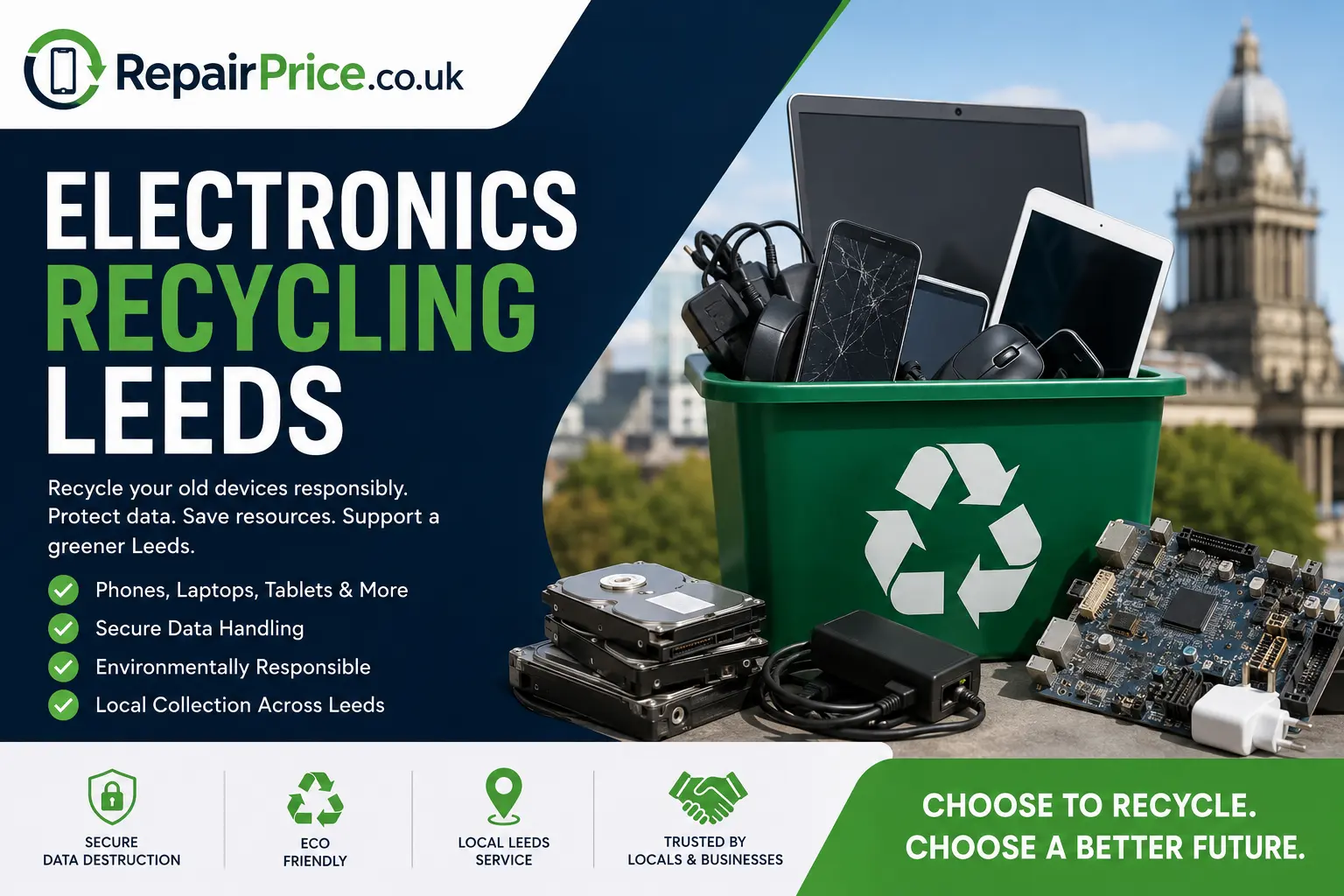
Electronics Recycling Leeds: A Practical Guide to Reusing, Repairing and Recycling Your Devices
Old electronics can quickly build up in homes, offices, rental properties and storage areas. Mobile phones, laptops, tablets, televisions, chargers, cables, computer parts and small electrical devices are often kept because people are unsure whether they still have value, can be repaired or need specialist recycling. This electronics recycling Leeds guide explains how to make the right decision, protect personal data and choose a responsible route for unwanted technology.
Before placing an electrical item in general waste, it is worth checking whether it can be repaired, reused, donated, sold for parts or processed through an appropriate recycling service. Our detailed guide to recycling electronics in Leeds helps local households and businesses understand the available options and move unwanted equipment into a more useful recovery stream.
Book Your Leeds Electronics Recycling Collection on WhatsApp
Why Responsible Electronics Recycling Matters
Electrical devices contain a mixture of plastics, metals, circuit boards, screens, batteries, wiring and reusable components. When equipment is discarded incorrectly, recoverable materials may be lost and batteries or damaged components can create avoidable environmental and safety risks. Responsible recycling separates these materials so that suitable parts can be recovered, processed or reused.
Recycling also reduces unnecessary demand for newly extracted raw materials. Copper, aluminium and other metals used inside electronic products may be recovered through specialist treatment processes. Although not every item can be restored or reused, a structured recycling route gives the device a better chance of being handled appropriately than placing it in a household rubbish bin.
For a broader explanation of different waste categories, collection options and responsible disposal methods, read our electronic waste recycling guide for UK devices.
What Electronics Can Be Recycled in Leeds?
Many common household and workplace electronics may be suitable for recycling. Examples include smartphones, tablets, laptops, desktop computers, monitors, televisions, games consoles, routers, printers, keyboards, computer accessories, cables, chargers, power supplies and selected small electrical appliances.
Businesses may also need to clear larger quantities of office equipment, including old workstations, monitors, telecommunications hardware, networking equipment and redundant computer components. These collections may require additional planning because equipment can contain company data, user accounts or storage drives that should be addressed before the items leave the premises.
For a local service covering a wider range of unwanted household and business items, visit our Leeds recycling collection and device clearance page.
Repair or Recycle: Which Option Is Better?
Recycling should not always be the first choice. A device that appears unusable may only need a replacement screen, battery, charging port, power supply or internal component. Repairing a suitable product can extend its working life, reduce replacement costs and prevent an otherwise serviceable device from entering the waste stream too early.
The best decision depends on the age of the equipment, the severity of the fault, the availability of parts, the expected repair price and the value of the device after repair. A relatively recent laptop with a failed battery may be worth repairing, while a severely damaged and outdated computer with several faults may be a stronger recycling candidate.
If you are uncertain, compare the likely repair cost before arranging disposal. Local specialists listed through our Leeds mobile phone repair comparison service can help assess cracked screens, charging issues, battery faults and other common handset problems.
For computers that will not start, overheat, run slowly or have damaged keyboards and screens, explore laptop repair options available across Leeds before deciding that the machine has reached the end of its useful life.
Damaged iPads, Android tablets and other touchscreen devices may also remain economical to restore. You can compare suitable services through our Leeds tablet repair shop matching page.
Televisions with sound faults, power problems, backlight failures or damaged connections may require professional diagnosis. Review your options using our local Leeds television repair search before sending a large display for recycling.
How the Electronics Recycling Process Works
The exact process varies according to the type, condition and quantity of equipment. Items are normally assessed to determine whether they can be reused, repaired, dismantled for components or passed into material recovery. Working equipment may have greater reuse potential, while damaged devices may need to be separated into batteries, circuit boards, casings, screens, cables and other material groups.
Some equipment can be refurbished or used for spare parts. Other items require specialist treatment because they contain batteries, storage media, displays or electronic boards. Keeping items dry, complete and safely stored before collection can make handling easier and reduce the risk of further damage.
Our companion article on what happens after electronic devices are collected provides a step-by-step explanation of sorting, reuse assessment, dismantling and material recovery.
Preparing Your Devices Before Recycling
Before handing over a phone, laptop, tablet or computer, back up any files you want to retain. Photos, documents, account information and business records should be copied to a secure location before the device is reset or removed from service.
Sign out of online accounts, remove memory cards and SIM cards, disconnect the device from activation services and complete a factory reset where possible. A basic reset may not meet every business data-security requirement, so organisations managing sensitive records should follow an appropriate data-destruction policy.
Remove accessories that you intend to keep, such as cases, docking stations or specialist power adapters. However, chargers, cables and power supplies that are no longer required can often be included with the recycling request. Keep damaged batteries separate and avoid crushing, bending or puncturing them.
Recycling Phones, Laptops, Tablets and Televisions
Different devices create different handling requirements. Phones and tablets are compact but may contain lithium-ion batteries and personal information. Laptops combine batteries, storage drives, circuit boards and reusable components. Televisions are larger and can contain fragile screens, internal boards and substantial plastic or metal housings.
When several types of electronics need to be cleared together, provide an accurate description of the items and their condition. Mention whether batteries are swollen, screens are broken, equipment has been stored outdoors or any devices contain confidential data. Clear information helps determine the most suitable collection or drop-off arrangement.
For a service focused specifically on electrical products rather than general reusable materials, see our specialist electronics recycling service in Leeds.
For mixed electrical waste, broken accessories and obsolete devices that are no longer suitable for repair, review the options on our Leeds e-waste collection and recycling page.
Circuit Board and Computer Component Recycling
Circuit boards are found inside phones, computers, televisions, control systems, networking equipment and many other electrical products. They contain a complex combination of metals, fibres, resins and electronic components, which means they should be handled through an appropriate specialist route.
Businesses, repair shops and IT departments may generate separate quantities of printed circuit boards, computer cards, motherboards and electronic components. These should not be mixed with ordinary office waste. Dedicated processing can improve material separation and reduce the chance of recoverable components being lost.
For individual boards, computer hardware and electronic assemblies, use our Leeds circuit board recovery and recycling service.
Electronics Recycling for Leeds Businesses
Businesses often replace devices in batches rather than one item at a time. Office moves, equipment upgrades, company closures and IT refresh projects can create significant quantities of monitors, laptops, desktops, phones, printers and network hardware.
Before arranging a collection, prepare an inventory showing the device type, approximate quantity, condition and location. Identify anything that contains storage drives or sensitive company information. Separate reusable equipment from damaged stock where practical, and make access arrangements for heavy or bulky items.
A clear inventory can make the collection more efficient and help determine whether the equipment is best suited for reuse assessment, component harvesting or material recovery. Businesses should also retain any collection or disposal records required by their internal policies.
Electronics Recycling Near Leeds
Recycling requirements are not limited to Leeds city centre. Households, landlords, repair businesses and commercial premises throughout West Yorkshire may need local support for unwanted electrical devices.
For collections and recycling enquiries west of Leeds, view our Bradford device recycling and clearance service.
Customers based to the south can find relevant options through our Wakefield electronics and household recycling page.
For unwanted devices in the LS28 area and nearby communities, use our Pudsey electrical item recycling service.
Common Mistakes to Avoid
One common mistake is throwing small electronics into general household waste because the item appears insignificant. Chargers, phones, batteries, cables and accessories may be small, but they still contain materials that should be separated from ordinary rubbish.
Another mistake is recycling a device without backing up files or removing personal accounts. Even when a device no longer starts, it may still contain accessible storage. Consider the sensitivity of the data before allowing the equipment to leave your control.
Do not dismantle devices unless you have the correct experience and equipment. Internal components may contain sharp edges, stored electrical charge or damaged batteries. Keeping equipment intact is generally safer for household customers.
Finally, avoid assuming that every broken device is beyond repair. Comparing a repair quotation first may reveal that a simple component replacement can restore the product and postpone the cost of buying a replacement.
How to Get a Recycling or Repair Quote
Start by preparing a short list of the electronics you need to clear. Include the brand, device type, approximate age, known faults and quantity. For computers and phones, state whether data removal is required. For televisions or bulky equipment, include the screen size and collection location.
If an item may still be economical to fix, request a repair comparison before choosing recycling. When the equipment is obsolete, extensively damaged or no longer useful, arrange a recycling enquiry with accurate details so the appropriate route can be considered.
Get a Quote from Leeds Repair and Recycling Shops
Choose a More Responsible Route for Unwanted Electronics
Electronics recycling in Leeds is not simply about getting rid of old equipment. It is an opportunity to recover useful materials, extend the life of repairable devices, reduce unnecessary waste and handle personal or business technology more responsibly.
Begin by deciding whether each device can be repaired or reused. Back up important data, remove accounts and accessories, describe the equipment accurately and choose a service suited to the type of electronics involved. Repairable products can be directed to relevant local specialists, while obsolete or damaged items can move into electronics, e-waste or circuit board recycling channels.
Whether you have one broken phone, several outdated laptops, an unwanted television or a full office equipment clearance, taking a structured approach can make the process safer and more efficient. Use the local service links throughout this guide to compare repair options, request recycling assistance and keep unwanted electronics out of general waste.