

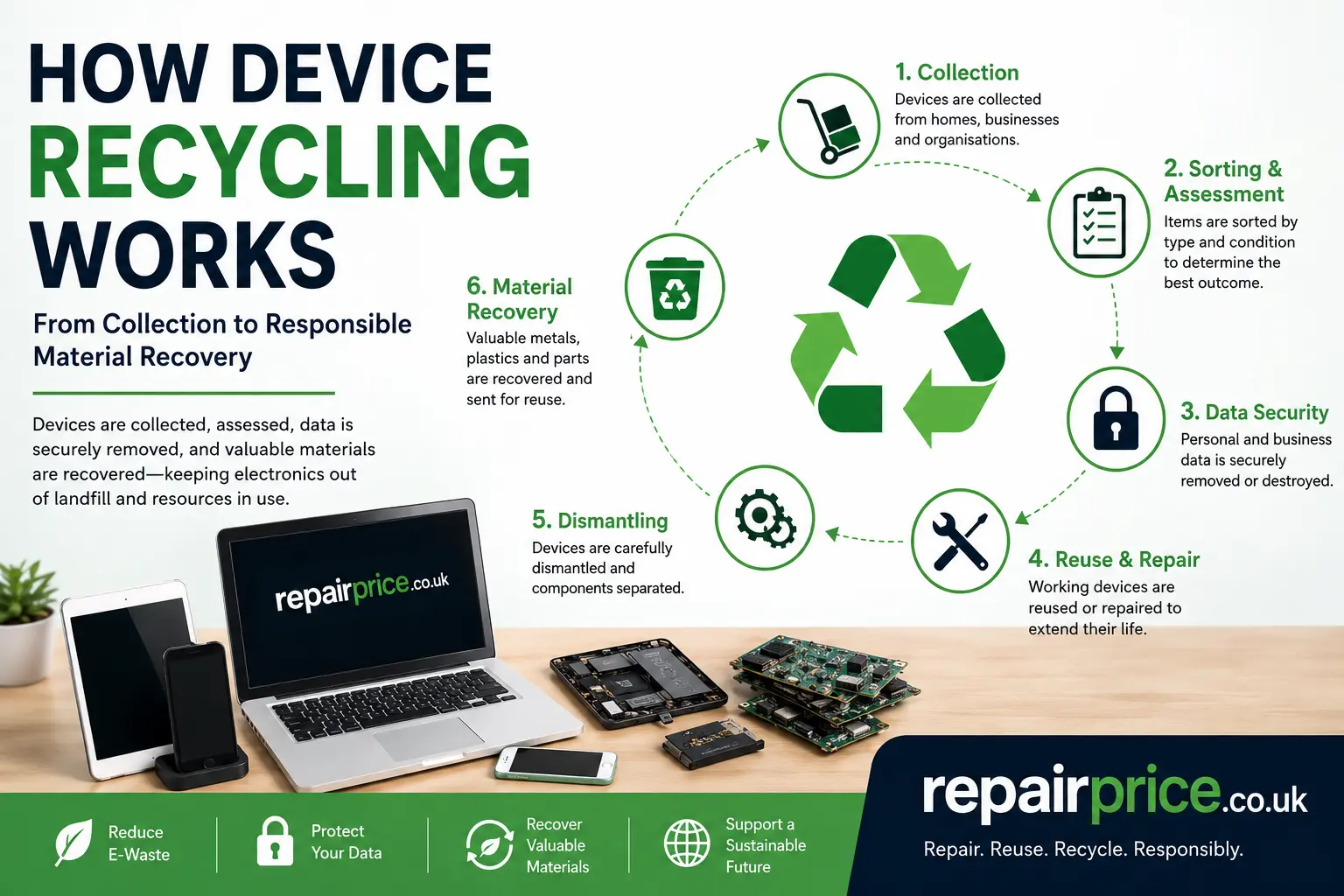
How Device Recycling Works: From Collection to Responsible Material Recovery
Device recycling is the process of collecting unwanted electrical equipment, checking whether it can be repaired or reused, protecting any personal information stored on it, and separating its valuable materials for responsible recovery. Phones, tablets, laptops, consoles, televisions and other electronic devices contain metals, plastics, batteries, circuit boards and components that should not be placed in ordinary household waste.
Understanding how device recycling works can help you make a better decision about equipment you no longer use. Some devices may still be repairable, while others may be suitable for refurbishment, parts recovery or specialist electronic waste processing. The aim is to extend the useful life of equipment wherever practical and recycle the remaining materials safely when repair is no longer worthwhile.
RepairPrice.co.uk helps customers compare repair options and find responsible routes for unwanted electronics. Whether you have one broken phone, several old laptops or a collection of mixed devices, the first step is to identify what you have, whether it contains personal data and whether it can still be repaired or reused.
Arrange a Device Recycling Collection
Before disposing of old electronics, describe the devices, their condition and the quantity available. This helps determine whether they should be assessed for repair, collected for reuse or transferred into a specialist recycling stream.
Book Your Device Recycling Collection on WhatsApp
Step One: Devices Are Collected and Recorded
The recycling process begins when unwanted devices are gathered from homes, offices, repair businesses or other organisations. Depending on the type and quantity of equipment, devices may be delivered directly, prepared for collection or grouped with other electronic items.
Each collection should be reviewed so that different device categories can be handled correctly. A smartphone with a swollen battery requires a different process from a desktop computer, television or box of loose circuit boards. Recording the type and condition of each item makes the next stages safer and more efficient.
Customers with mixed electronic equipment can start through the main electronic device recycling service. This central recycling hub helps direct phones, tablets, laptops and other devices into the appropriate assessment and recovery route.
Step Two: Equipment Is Sorted by Device Type and Condition
After collection, devices are sorted according to what they are, their physical condition and whether they may still have useful value. Sorting is important because not every electronic item should be dismantled immediately.
A working device may be suitable for reuse. A faulty device may only need a replacement screen, battery, charging port or internal component. Equipment that is badly damaged, obsolete or uneconomical to repair may be directed towards parts harvesting or material recovery.
Mobile devices can be separated through a dedicated responsible phone recycling route. Apple tablets can be assessed through the iPad recycling and recovery service, while other portable devices can enter the tablet recycling process.
Computers require their own handling because they may contain removable storage drives, batteries, memory, processors and larger circuit boards. Old notebooks and business equipment can be directed through the specialist laptop recycling service.
Step Three: Repair and Reuse Are Considered First
Responsible recycling does not always mean immediately breaking a device into raw materials. Repairing and reusing equipment can preserve more of the energy, labour and resources already invested in manufacturing it.
A phone with a cracked screen may still have years of useful life remaining. A tablet that will not charge could have a damaged charging connector rather than a failed main board. A slow laptop may benefit from a storage upgrade, battery replacement or internal cleaning.
Before recycling a mobile handset, compare potential repair options through the phone repair quotation service. Tablets that are damaged but still usable may be assessed through the tablet repair comparison page. For computers with screen, keyboard, battery, charging or performance faults, the laptop repair service finder can help determine whether repair is financially sensible.
Choosing between repair and recycling should depend on the age of the device, its overall condition, the availability of replacement parts, the cost of the repair and whether the equipment will still meet your needs after the work is completed.
Step Four: Personal and Business Data Must Be Protected
Phones, tablets and computers can contain photographs, passwords, emails, financial information, customer records, documents and saved account access. Deleting visible files or performing a simple factory reset may not always be enough for devices containing sensitive information.
Before a device leaves your possession, back up anything you need, sign out of connected accounts, remove SIM cards and memory cards, disable device tracking and use the manufacturer’s recommended reset process. Business equipment may require a documented data destruction procedure, particularly where customer or employee information has been stored.
The secure data destruction before recycling guide explains the practical steps that should be considered before phones, tablets, laptops, hard drives and other data-bearing equipment are recycled.
Step Five: Batteries Are Removed and Handled Separately
Many modern electronics use lithium-ion batteries. These batteries are lightweight and rechargeable, but they can become hazardous if they are crushed, punctured, overheated or incorrectly stored.
During recycling, batteries may need to be removed before the rest of the equipment is dismantled. Damaged, swollen or leaking batteries require especially careful handling. They should not be placed in ordinary household bins, mixed recycling containers or loose piles of scrap electronics.
The guide to safely recycling lithium batteries provides more information about battery risks, storage precautions and why specialist recycling routes are important.
Step Six: Reusable Components Are Recovered
When a complete device cannot be economically repaired, some of its parts may still be useful. Screens, cameras, speakers, memory modules, processors, fans, keyboards, housings, cables and other components may be inspected for reuse.
Parts recovery can reduce demand for newly manufactured replacement components and make some repairs more affordable. However, components should only be reused when they have been properly checked and are suitable for the intended device.
Not every component can be reused. Parts that are damaged, heavily corroded or unreliable must continue into the recycling process rather than being returned to service.
Step Seven: Circuit Boards Enter a Specialist Recycling Stream
Circuit boards are among the most important materials found inside electronic equipment. They connect processors, memory, power systems, communication components and other electronic parts. They may also contain copper, gold, silver, palladium and other recoverable materials in varying quantities.
Because circuit boards are complex, they should be separated from general waste and processed through an appropriate specialist route. Loose boards, damaged motherboards and dismantled electronics can be directed through the circuit board recycling service.
Lower-grade boards found in appliances and some consumer electronics may be handled through the Class 3 circuit board recovery page. Desktop computers and related hardware can be processed through the PC circuit board recycling service.
Keeping circuit boards separate can improve sorting accuracy and helps ensure that electronic components are not unnecessarily mixed with ordinary metal, plastic or household waste.
Step Eight: Devices Are Dismantled into Material Groups
Once reusable parts, batteries and circuit boards have been removed, the remaining equipment can be dismantled into separate material categories. These may include ferrous metals, aluminium, copper wiring, plastics, glass and other specialist materials.
Separation is important because mixed materials are more difficult to recover efficiently. Cleaner material streams can be sent to suitable downstream processors, where they may be shredded, graded, refined or prepared for use in future manufacturing.
The exact process depends on the device. A mobile phone contains compact components and a small battery, while a television may contain a large display panel, power supply, main board, speakers, plastic housing and metal frame.
What Happens to Recovered Materials?
Recovered metals may be refined and returned to manufacturing supply chains. Suitable plastics can be sorted by type and processed where facilities exist. Glass and display materials may require specialist treatment because different screen technologies use different layered materials.
The objective is to recover as much usable material as practical while keeping unsuitable or hazardous substances out of general waste streams. Recycling cannot recover every part of every device, but correct separation significantly improves the chance that valuable materials will be reused.
Why Device Recycling Matters
Electronic devices require mined metals, manufactured plastics, energy, transport and complex production processes. Discarding equipment without considering repair, reuse or material recovery wastes much of that embedded value.
Responsible device recycling can reduce the amount of electronic waste sent to landfill, recover valuable resources and encourage better management of batteries and data-bearing equipment. It also gives households and businesses a structured alternative to storing obsolete devices indefinitely.
For a broader explanation of electronic waste, common device categories and responsible disposal options, read the complete electronic waste recycling guide.
Device Recycling Options Across West Yorkshire
Customers in West Yorkshire may have devices that are suitable for repair before recycling. Local service pages can help users compare nearby repair options and decide whether a device should be restored, reused or responsibly recycled.
For damaged handsets in Bradford, explore the Bradford mobile phone repair service. Tablet owners can compare options through the Leeds tablet repair page. Customers with faulty computers can visit the Halifax laptop repair service.
Gaming systems can often be repaired when they develop HDMI, power, disc drive or overheating faults. The Wakefield console repair page can help customers assess local repair options. For television faults involving backlights, power supplies or main boards, visit the Huddersfield television repair service.
How to Prepare Electronics for Recycling
Start by checking every device for personal belongings and removable accessories. Take out SIM cards, memory cards, protective cases, dongles and external storage devices. Keep power adapters with the correct equipment when possible, as working chargers may improve the potential for reuse.
Back up important files and complete the correct data removal process. Clearly label equipment with known faults, especially devices with damaged batteries, liquid exposure or broken screens. Avoid attempting to dismantle swollen batteries or damaged power components unless you have the correct training and equipment.
For larger collections, create a simple inventory showing the device type, quantity and known condition. Businesses should also record asset numbers and any data destruction requirements before equipment is transferred.
Should You Repair, Donate or Recycle Your Device?
Repair may be the best choice when the device remains useful, replacement parts are available and the cost is reasonable. Donation or resale may be appropriate when the equipment works correctly, has been securely erased and still receives necessary software support.
Recycling is generally more suitable when a device is badly damaged, unsafe, obsolete, unsupported or too expensive to repair. Recycling may also be the correct route for incomplete equipment, loose components, damaged circuit boards and devices that cannot be securely reused.
A professional assessment can help prevent usable devices from being recycled prematurely while ensuring unsuitable equipment is transferred into an appropriate recovery process.
Get a Repair or Recycling Assessment
Tell RepairPrice.co.uk what type of device you have, describe the fault or condition and explain whether you are looking for repair quotations or responsible recycling. This helps identify the most practical next step for your phone, tablet, laptop, console, television or mixed electronic equipment.
Request a Device Repair or Recycling Quote
Frequently Asked Questions About Device Recycling
Can a broken device still be recycled?
Yes. Broken devices may still contain reusable components, circuit boards, metals, plastics and batteries that require specialist processing. Damage does not automatically remove the recycling value of electronic equipment.
Should I repair my device before recycling it?
You do not need to repair a device before recycling it. However, obtaining a repair assessment may reveal that the equipment can be restored and used for longer. Repair is often worth considering when the fault is limited to a screen, battery, charging port or replaceable component.
Do I need to remove my personal data?
Yes. Back up important information, sign out of accounts and complete the recommended reset or data destruction process. Devices containing sensitive business or customer information may require more formal data erasure or physical destruction procedures.
Can devices with swollen batteries be recycled?
They can enter a specialist recycling route, but they must be handled carefully. Do not crush, bend, puncture or place a swollen battery in household waste. Mention the battery condition when arranging collection or delivery.
What types of devices can be recycled?
Common recyclable electronics include mobile phones, tablets, iPads, laptops, desktop computers, consoles, televisions, circuit boards, chargers and other electrical equipment. The correct process depends on the device type, condition and quantity.
Start the Device Recycling Process
Responsible device recycling begins with a simple assessment. Identify the equipment, protect your data, separate any known hazardous items and determine whether repair or reuse is still practical. Devices that have reached the end of their useful life can then be dismantled so that batteries, components, circuit boards and recoverable materials are handled through suitable recycling streams.
By choosing repair when practical and recycling when necessary, households and businesses can reduce electronic waste, recover useful resources and prevent unwanted devices from remaining forgotten in drawers, cupboards and storage rooms.