

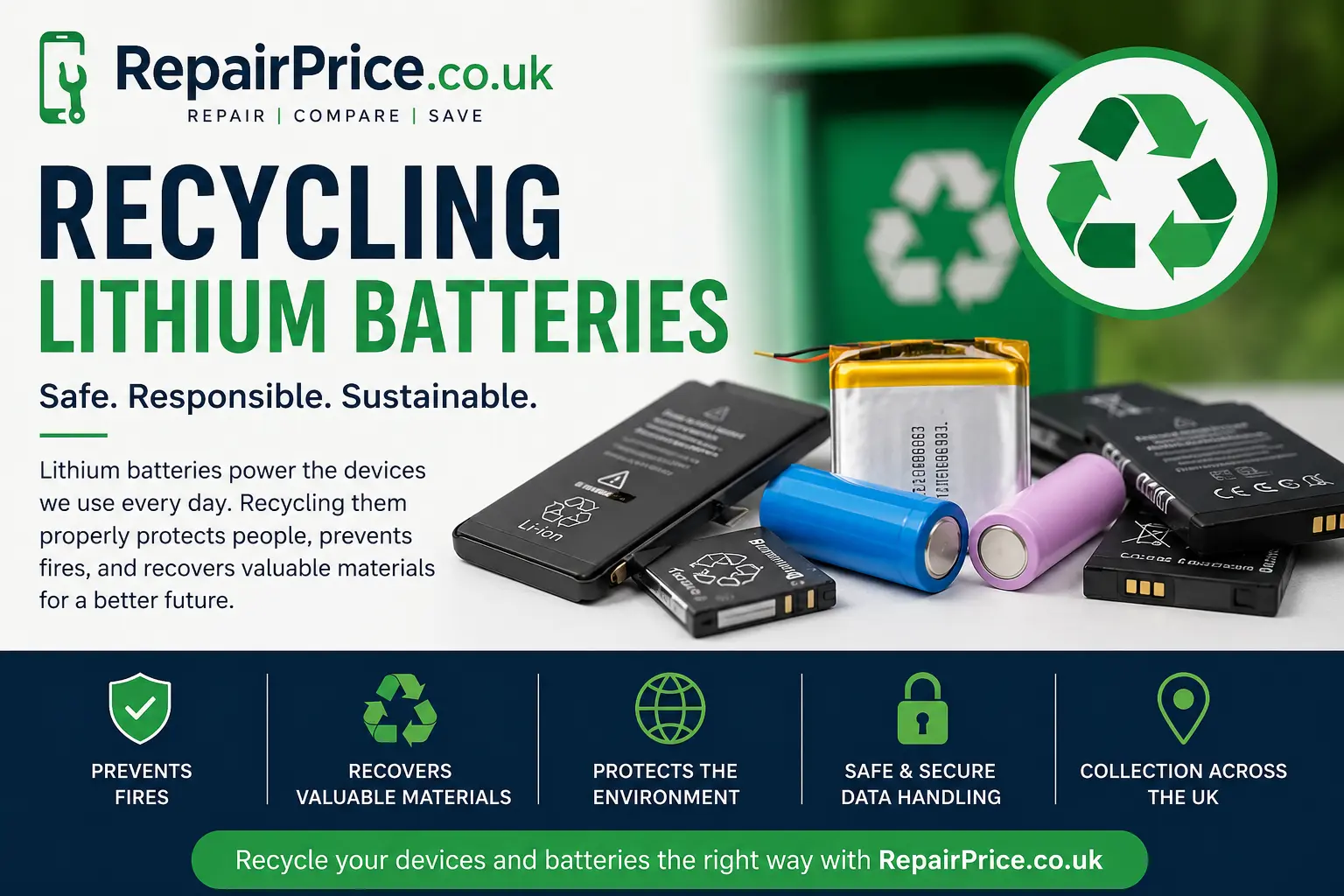
Recycling Lithium Batteries: A Safe and Responsible Guide for UK Households and Businesses
Lithium batteries power many of the devices people use every day, including mobile phones, tablets, laptops, smartwatches, wireless accessories and portable electronics. Although these batteries are compact and efficient, they should never be treated like ordinary household rubbish. Damaged, swollen, punctured or incorrectly discarded lithium batteries can create serious safety risks during storage, transport and waste processing.
Recycling lithium batteries through an appropriate collection service helps recover valuable materials, reduce electronic waste and prevent hazardous battery components from entering landfill. It also gives unwanted devices a better chance of being repaired, reused, refurbished or dismantled responsibly.
RepairPrice helps households and businesses compare repair and recycling options for unwanted electronics. Whether you have a single damaged phone, several old laptops or a collection of battery-powered devices, you can start with our electronics recycling and collection hub to explore suitable recycling routes.
Book Your Lithium Battery Recycling Collection on WhatsApp
Why Lithium Batteries Require Specialist Recycling
Lithium batteries contain materials that require controlled handling. When a battery is crushed, pierced, overheated or exposed to moisture, it can become unstable. This is one reason batteries should not be placed in general household waste, mixed recycling bins or skips containing metal and other bulky materials.
Waste collection vehicles and recycling facilities use compacting, sorting and shredding equipment. A hidden lithium battery can be damaged during these processes, increasing the risk of heat, smoke or fire. Separating batteries and battery-powered devices before collection helps protect waste workers, recycling facilities and the wider community.
Correct recycling also helps conserve resources. Batteries and electronic devices may contain metals and components that can be recovered and processed for future use. Sending them to a responsible recycling route supports a more circular approach than simply burying usable materials in landfill.
Which Devices Commonly Contain Lithium Batteries?
Lithium batteries are found in a wide range of rechargeable electronics. Common examples include smartphones, iPads, Android tablets, laptops, smartwatches, wireless headphones, Bluetooth speakers, digital cameras, handheld gaming devices, power banks and rechargeable tools.
Some batteries are easy to identify and remove, while others are sealed inside the device. You should not attempt to force open a sealed electronic product simply to remove its battery. Damaging the casing, battery pouch or internal wiring may create an unnecessary safety risk.
If the battery remains securely installed, the complete device can usually be assessed through an appropriate recycling service. For example, unwanted smartphones can be directed through our mobile phone recycling service, while older Apple tablets can be handled through the dedicated iPad recycling route.
Other Android and Windows tablets can be submitted through our tablet recycling options. Old notebooks, business computers and portable workstations can be directed to our laptop recycling service.
Warning Signs That a Lithium Battery May Be Damaged
A lithium battery may need urgent professional assessment if the device casing has started to lift, the screen is separating from the frame, the trackpad is raised, the device becomes unusually hot, the battery drains rapidly or the product produces an unusual smell.
A swollen battery should not be pressed flat, punctured or removed using sharp tools. Avoid continuing to charge or heavily use a device when the battery appears physically distorted. Place it away from flammable materials and contact an appropriate repair or recycling provider for guidance.
Do not post visibly damaged or swollen batteries through ordinary delivery services unless the carrier has specifically confirmed that it accepts them and has provided suitable packaging instructions. Transport rules can differ depending on the battery condition, device type and delivery method.
Should You Repair the Device Before Recycling It?
Not every device with a weak battery needs to be recycled immediately. If the product is still useful and the fault is limited to reduced battery life, repair may be the more economical and environmentally responsible option.
A phone with poor battery performance may still have several years of useful life after a professional replacement. You can compare suitable options through our phone repair quotation service. Repairing the handset can reduce the need to manufacture and purchase a replacement device.
Similarly, an iPad or Android tablet that switches off unexpectedly may only require battery testing or replacement. Our tablet repair comparison page can help you request quotations from relevant repair providers.
Smartwatches frequently develop charging, battery health and power-management faults. Before discarding the watch, explore our smartwatch repair options to determine whether a professional repair could restore reliable use.
Repair is generally worth considering when the device remains supported, meets your needs and has no major structural or liquid damage. Recycling may be the better choice when the product is obsolete, extensively damaged, uneconomical to repair or no longer suitable for secure use.
How to Prepare Lithium Battery Devices for Recycling
Before handing over a phone, tablet, laptop or smartwatch, back up any files you wish to keep. Transfer photographs, documents, contacts, account information and authentication details to a secure alternative device or storage service.
Sign out of personal accounts where possible and complete a factory reset. Remove SIM cards and removable memory cards. Business users should follow their organisation’s data-retention and secure-erasure procedures before recycling company equipment.
Keep the device switched off after preparation. Do not tape over ventilation openings or wrap a warm device tightly in insulating materials. Where the battery is removable and undamaged, follow the collection provider’s instructions regarding separation and terminal protection.
Tell the collection or recycling provider if the battery is swollen, leaking, physically damaged, overheating or involved in an impact. Accurate information allows the provider to assess whether specialist handling or collection arrangements may be required.
What Happens to the Circuit Boards Inside Recycled Devices?
A battery is only one part of an unwanted electronic device. Phones, tablets, laptops and smartwatches also contain circuit boards, processors, connectors, memory chips and other reusable or recoverable materials.
Once a device has been accepted for recycling, it may be inspected to determine whether it can be reused, refurbished, dismantled for parts or processed for material recovery. Separating components into appropriate recycling streams can improve recovery and reduce contamination.
Mobile phones and similar compact electronics may contain small, high-grade circuit boards. Businesses and recycling operators can learn more through our mobile phone circuit board recycling service.
Laptops contain larger boards alongside memory, storage, cooling components and internal batteries. For suitable quantities of separated computer boards, visit our laptop circuit board recycling page.
Lithium Battery Recycling for West Yorkshire Customers
RepairPrice connects customers with repair and recycling options across the UK, including Bradford, Leeds, Halifax, Wakefield, Huddersfield and surrounding West Yorkshire areas. Local repair assessment can be useful when you are unsure whether a battery-powered device should be repaired or recycled.
Customers with damaged smartphones in Bradford can compare local options through our Bradford phone repair service. A repair provider may be able to replace the battery, assess charging faults or confirm that recycling is the more practical route.
For tablet battery faults in Leeds, use our Leeds tablet repair comparison page. This may help determine whether an unreliable battery, damaged charging port or internal power fault can be repaired.
Smartwatch owners can explore smartwatch repair options in Halifax, while laptop users can request quotations through our Wakefield laptop repair service.
Customers elsewhere in the region can also compare phone repair services in Huddersfield before deciding whether to retain or recycle a damaged handset.
Why Recycling Is Better Than Sending Batteries to Landfill
Placing lithium batteries in general waste can waste recoverable resources and create unnecessary risks during collection and processing. Batteries can remain hidden inside devices, toys, accessories and small appliances, making them difficult for waste workers to identify before mechanical sorting begins.
Responsible recycling helps separate hazardous components from reusable materials. It also supports repair, refurbishment, parts recovery and controlled dismantling. These outcomes are preferable to allowing complete electronic devices to become mixed with ordinary waste.
For a broader explanation of the collection and processing journey, read our guide to how electronic device recycling works. It explains how unwanted electronics may be assessed, sorted and directed towards reuse or material recovery.
You can also learn more about the environmental and safety consequences in our article explaining why electrical devices should stay out of landfill.
Repair, Reuse or Recycle: Choosing the Right Option
The most responsible choice depends on the age, condition, value and future usefulness of the device. Repair may be appropriate when a replacement battery or charging component can restore reliable operation. Reuse may be suitable when the product still works but is no longer required by its current owner.
Recycling becomes the practical choice when the device cannot be safely used, contains a severely degraded battery, is unsupported, has little resale value or would cost significantly more to repair than replace.
Before making a final decision, read our guide on whether to repair, reuse or recycle unwanted electronics. Comparing all three routes can help you avoid disposing of equipment that still has practical value.
Recycling Lithium Batteries From Multiple Devices
Businesses, schools, landlords, charities and households may accumulate several battery-powered devices over time. A mixed collection could include old phones, damaged tablets, staff laptops, smartwatches, chargers and computer components.
Before arranging collection, create a basic inventory showing the device type, quantity, visible condition and whether any battery appears swollen or damaged. Keep severely damaged items separate from fully intact equipment and clearly inform the recycling provider about their condition.
For business equipment, maintain a record of asset numbers, serial numbers and data-erasure actions where required. This can support internal auditing and demonstrate that equipment has been handled through an organised disposal process.
Request a Repair or Recycling Quotation
RepairPrice makes it easier to compare options before committing to disposal. A repair quotation can help determine whether replacing the battery would extend the life of your phone, tablet, smartwatch or laptop. Where repair is unsuitable, the device can be directed towards a more responsible recycling route.
Provide clear information about the device, battery condition, location and quantity. Mention whether the equipment powers on, whether the battery is removable and whether there are signs of swelling, heat or physical damage.
Request Quotes for Lithium Battery Devices from West Yorkshire Repair Shops
Frequently Asked Questions About Lithium Battery Recycling
Can lithium batteries go in a household recycling bin?
No. Lithium batteries and battery-powered devices should not be placed in ordinary household recycling bins. Use an appropriate battery collection point, retailer take-back service, local authority facility or specialist electronics recycling provider.
Can I recycle a phone with the battery still inside?
In many cases, yes. Modern smartphones often have sealed batteries that should not be forcibly removed by the owner. Tell the recycling provider if the phone is damaged, swollen, overheating or otherwise unsafe.
Should I charge a device before recycling it?
There is normally no need to fully charge a device before recycling it. The most important steps are backing up your information, signing out of accounts, removing removable cards and following the recycling provider’s preparation instructions.
What should I do with a swollen laptop battery?
Stop using and charging the laptop. Do not press, puncture or attempt to flatten the battery. Keep the device away from flammable materials and contact a professional repair or recycling provider for handling guidance.
Is battery replacement better than recycling the whole device?
Battery replacement may be better when the device remains useful, repairable and secure. Recycling may be more appropriate when the product has multiple faults, is obsolete or would be uneconomical to restore.
Choose a Safer Route for Unwanted Lithium Batteries
Lithium batteries should be handled as a separate and important part of electronic waste. Keeping them out of general rubbish reduces avoidable risks and gives valuable materials a better chance of being recovered.
Before disposing of a battery-powered device, consider whether it can be repaired, passed on for reuse or recycled through an appropriate collection service. RepairPrice can help you compare the available routes and connect with suitable repair or recycling providers.
Start with the main RepairPrice recycling service and provide accurate details about your equipment. Responsible preparation and collection can help protect people, prevent waste and keep reusable materials in circulation for longer.