

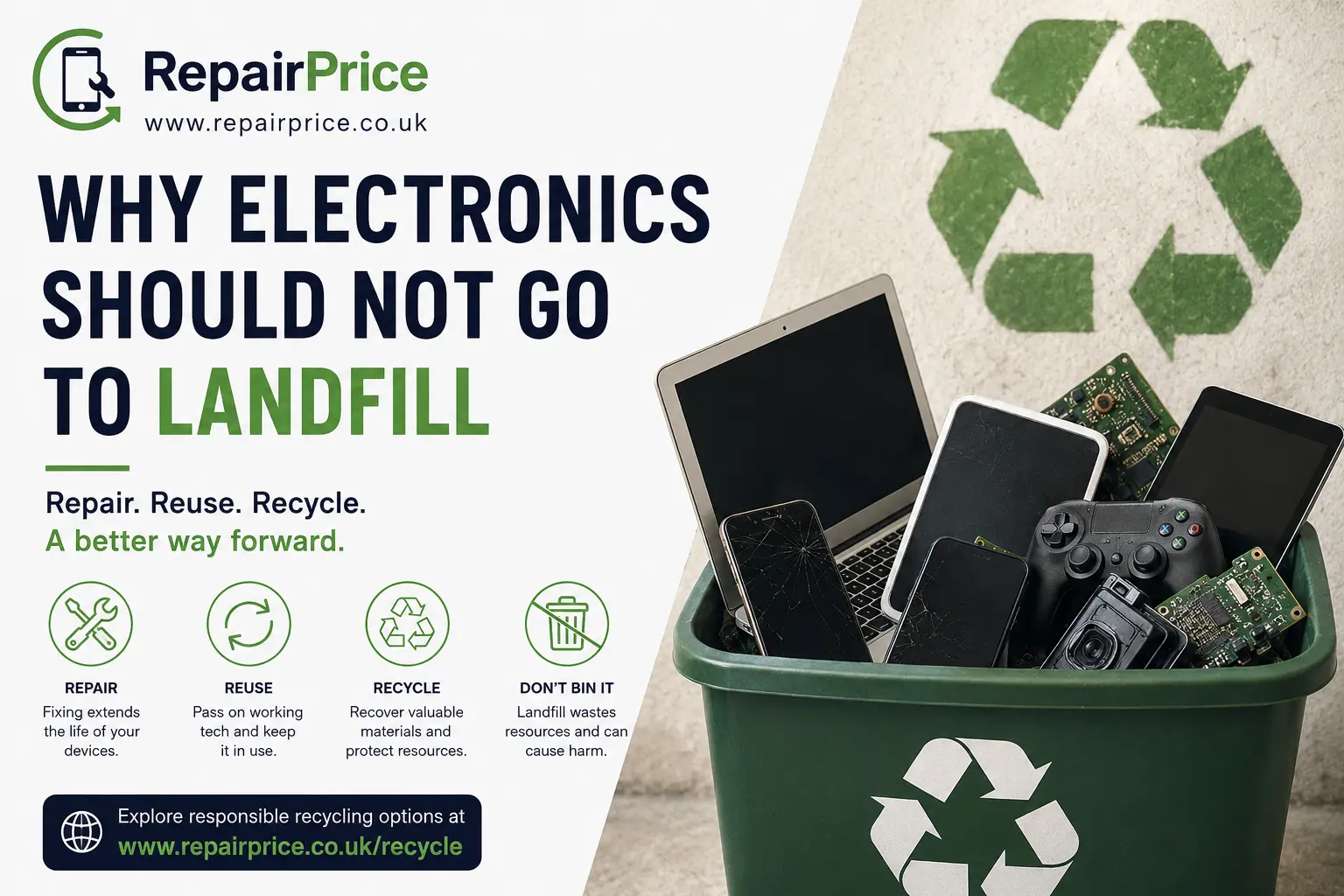
Why Electronics Should Not Go to Landfill
Old phones, laptops, tablets, televisions, games consoles and other electrical devices should never be treated like ordinary household rubbish. Even when an electronic product is broken, outdated or no longer economical to repair, it may still contain reusable components, recyclable metals, circuit boards, batteries and materials that should be recovered through a responsible recycling process.
Throwing electronics into general waste can waste valuable resources and increase the risk of batteries, chemicals and electronic components entering unsuitable waste streams. Choosing repair, reuse or specialist recycling gives your unwanted equipment a more responsible route and may prevent a repairable device from being destroyed unnecessarily.
RepairPrice helps households and businesses compare suitable options for faulty and unwanted electronics. Depending on the condition of your equipment, you may be able to request a repair quotation, arrange responsible recycling or separate valuable circuit boards for specialist processing.
Book Your Electronics Recycling Collection from West Yorkshire on WhatsApp
What Is Electronic Waste?
Electronic waste, commonly called e-waste, includes electrical or battery-powered products that have been discarded, replaced or declared unusable. This can include mobile phones, computers, laptops, tablets, games consoles, televisions, smartwatches, chargers, routers, circuit boards and many other household or commercial devices.
Some electronics reach the waste stream because they are completely damaged. Others are discarded because of a cracked screen, weak battery, faulty charging port, software problem or damaged connector. Many of these faults can potentially be assessed before the device is considered waste.
Understanding the available options is an important first step. Our detailed electronic waste recycling guide for UK households and businesses explains how unwanted electrical equipment can be handled more responsibly.
Why Landfill Is the Wrong Destination for Electronics
Electronic products are made from a complex mixture of plastics, glass, steel, aluminium, copper and other materials. Circuit boards may also contain small quantities of valuable metals that can be recovered through specialist recycling processes. When an entire device is sent to landfill, many of these useful resources can be lost.
Electronics may also contain batteries and components that require controlled handling. Lithium-ion batteries are widely used in phones, laptops, tablets and portable consoles. These batteries should not be crushed, punctured or mixed carelessly with general rubbish because damaged cells may create a fire risk during collection, transportation or waste processing.
Sending electronics through an appropriate collection route allows devices to be inspected, separated and processed according to their material type and condition. This helps keep reusable products in circulation and directs damaged components towards suitable recycling facilities.
Repair Should Be Considered Before Disposal
A device should not automatically be discarded simply because it has developed a fault. Screen damage, charging problems, overheating, battery deterioration and damaged ports are common problems that may be repairable. Obtaining an assessment can help you compare the likely repair cost with the price and environmental impact of replacing the product.
For damaged smartphones, visit our phone repair quotation comparison service. Local repair professionals may be able to assess cracked displays, battery faults, charging issues, water damage and other common problems.
Faulty computers can be submitted through our laptop repair price comparison page. This can be useful for screen faults, keyboard damage, charging problems, overheating, storage failures and motherboard-related issues.
Owners of PlayStation, Xbox, Nintendo and other gaming systems can use our games console repair quotation service before deciding that a faulty console has reached the end of its useful life.
The decision will depend on the age, condition, repair price and usefulness of the device. Our comparison of whether to repair, reuse or recycle unwanted electronics can help you choose an appropriate next step.
Quote from West Yorkshire Repair Shops Before Recycling
Reuse Can Extend the Life of Working Equipment
If an electronic product still works, reuse may be preferable to immediate recycling. A working phone, tablet, laptop or console could potentially be passed to a family member, sold, donated or retained as a spare device. Reuse extends the useful life of the equipment and delays the need to manufacture a replacement.
Before transferring a device to another person, remove personal accounts, back up important files and complete an appropriate factory reset. Computers and storage devices may require additional data-removal measures, especially when they have been used for business, financial or confidential information.
Accessories should also be checked before disposal. Chargers, cables, controllers, keyboards and power adapters may remain useful even when the original device is damaged. Keeping compatible accessories in circulation can reduce unnecessary replacement purchases.
Use a Dedicated Electronics Recycling Route
When repair and reuse are no longer suitable, the equipment should enter a responsible recycling route rather than a general waste bin. RepairPrice provides a central electronics recycling and collection hub where users can explore options for different device categories.
Separating devices by type can make the recycling process easier. It also helps identify equipment containing batteries, data-storage components or valuable circuit boards that may require additional attention.
Mobile Phone Recycling
Unwanted smartphones can contain reusable screens, cameras, housings, batteries, connectors and circuit boards. Even heavily damaged handsets may retain recyclable materials. Use our responsible mobile phone recycling service to find a more suitable route for broken, outdated or unwanted phones.
Tablet Recycling
Tablets should not be placed in household rubbish, particularly when the battery is swollen, damaged or difficult to remove. Our tablet collection and recycling information covers unwanted iPads, Android tablets and other touchscreen devices.
Laptop Recycling
Old laptops can contain storage drives, memory, processors, batteries, cooling components and circuit boards. Data should be removed securely before the equipment changes hands. Visit our laptop recycling and recovery service for faulty, obsolete and unwanted computers.
Console Recycling
Games consoles may still contain reusable drives, cooling fans, power supplies, controllers and internal boards. Our console recycling route for PlayStation, Xbox and Nintendo devices can help prevent unwanted gaming equipment from entering landfill.
Why Circuit Boards Need Specialist Recycling
Printed circuit boards are found inside almost every modern electronic product. They support processors, memory chips, connectors, controllers and other components that allow the device to operate. Because circuit boards are made from several different materials, they require specialist processing rather than ordinary household recycling.
Businesses, repair shops and individuals handling larger quantities of boards can explore our specialist circuit board recycling service. This route is designed for separated electronic boards and related components that may contain recoverable metals and reusable parts.
Higher-grade boards from computing, telecommunications and industrial equipment may need to be sorted into appropriate categories. Our Class 3 high-grade circuit board recycling page provides information for more valuable and component-dense PCB material.
Televisions also contain internal control boards, power boards and signal-processing components. Businesses and repair professionals can review our television circuit board recovery service when processing separated TV boards.
Take Extra Care with Lithium Batteries
Lithium-ion batteries require careful handling because damaged or swollen cells can become unstable. Never intentionally puncture, bend or crush a battery. Do not continue charging a device if the battery is expanding, overheating, producing an unusual smell or forcing the screen or casing apart.
Where it is safe to do so, switch the device off and keep it away from heat, flammable materials and moisture. A damaged battery should be handled through a suitable recycling or repair service rather than placed in a household bin.
Read our guide to recycling lithium batteries from phones, laptops and portable devices for more information about identifying battery damage and choosing an appropriate disposal route.
Electronics Recycling for Households and Businesses
Households may only need to recycle one or two devices at a time, while repair shops, offices, schools, landlords and other organisations can accumulate larger volumes of electronic equipment. A business recycling plan should include secure data handling, equipment inventories, battery separation and records of where the waste has been transferred.
Organisations should avoid mixing electrical equipment with general commercial waste. Separating phones, laptops, monitors, batteries, cables and circuit boards can simplify collection and reduce the possibility of reusable equipment being destroyed.
Before recycling business devices, check whether they contain customer details, staff records, saved passwords, financial information or commercially sensitive files. Data-bearing equipment should be erased or physically processed using a method appropriate to the sensitivity of the information.
Local Repair and Recycling Support in West Yorkshire
RepairPrice connects users with relevant repair and recycling information across West Yorkshire. Seeking a local assessment before disposal may help identify devices that can be repaired, reused or stripped for recyclable components.
Smartphone owners can explore mobile phone repair options from Bradford specialists before sending a damaged handset for recycling.
Gaming systems with HDMI, power, overheating or disc-drive faults can be submitted through our Leeds games console repair comparison page.
For damaged computers, our Halifax laptop repair quotation service can help users compare whether repairing the equipment is practical.
Televisions with backlight, power supply, sound or main-board problems may be assessed through our Wakefield television repair service page.
Tablet users can also review Huddersfield tablet repair options before deciding to replace or recycle their device.
How to Prepare Electronics for Recycling
Start by checking whether the device can still be switched on and whether important files need to be backed up. Remove personal accounts, disable activation locks and complete a factory reset where possible. Phones and tablets may also contain removable SIM cards or memory cards that should be taken out before collection.
Keep damaged batteries separate from loose metal objects such as keys, tools and coins. Do not tape several damaged devices together or place heavy equipment on top of battery-powered products.
Include relevant accessories only when requested by the repairer or recycler. Chargers and power supplies can help with testing, but unrelated cables and packaging may not be required.
For business equipment, create a basic inventory showing the device type, quantity and condition. Identify any equipment containing confidential data or damaged batteries so the receiving service can plan the correct handling process.
Signs That a Device May Still Be Repairable
A cracked screen, worn battery, loose charging port or faulty button does not necessarily mean that the whole device should be recycled. Equipment may also appear completely dead because of a failed power supply, damaged cable, charging socket or internal connector.
Repair may be worth considering when the device is relatively modern, replacement parts are available and the expected repair cost is significantly lower than purchasing an equivalent replacement. Recycling may be more appropriate when the equipment is severely damaged, unsupported, unsafe or uneconomical to restore.
A professional quotation provides useful information before making the final decision. It can prevent a repairable product from being discarded while still allowing genuinely unusable equipment to move into a suitable recycling process.
Choose Repair, Reuse or Recycling Instead of Landfill
Electronics should not go to landfill because they contain useful materials, sensitive components, batteries and parts that require more careful handling than ordinary household rubbish. Repair can extend the life of a faulty product, reuse can keep working equipment in circulation and specialist recycling can recover materials from devices that are no longer usable.
By choosing the correct route, households and businesses can reduce unnecessary waste and make better use of the resources already contained inside their electronics. RepairPrice can help you compare repair services, find category-specific recycling information and arrange responsible handling for unwanted equipment.
Before throwing away a phone, laptop, tablet, television or console, check whether it can be repaired. When repair is not practical, use a recognised electronics or circuit board recycling route rather than placing the device in general waste.