

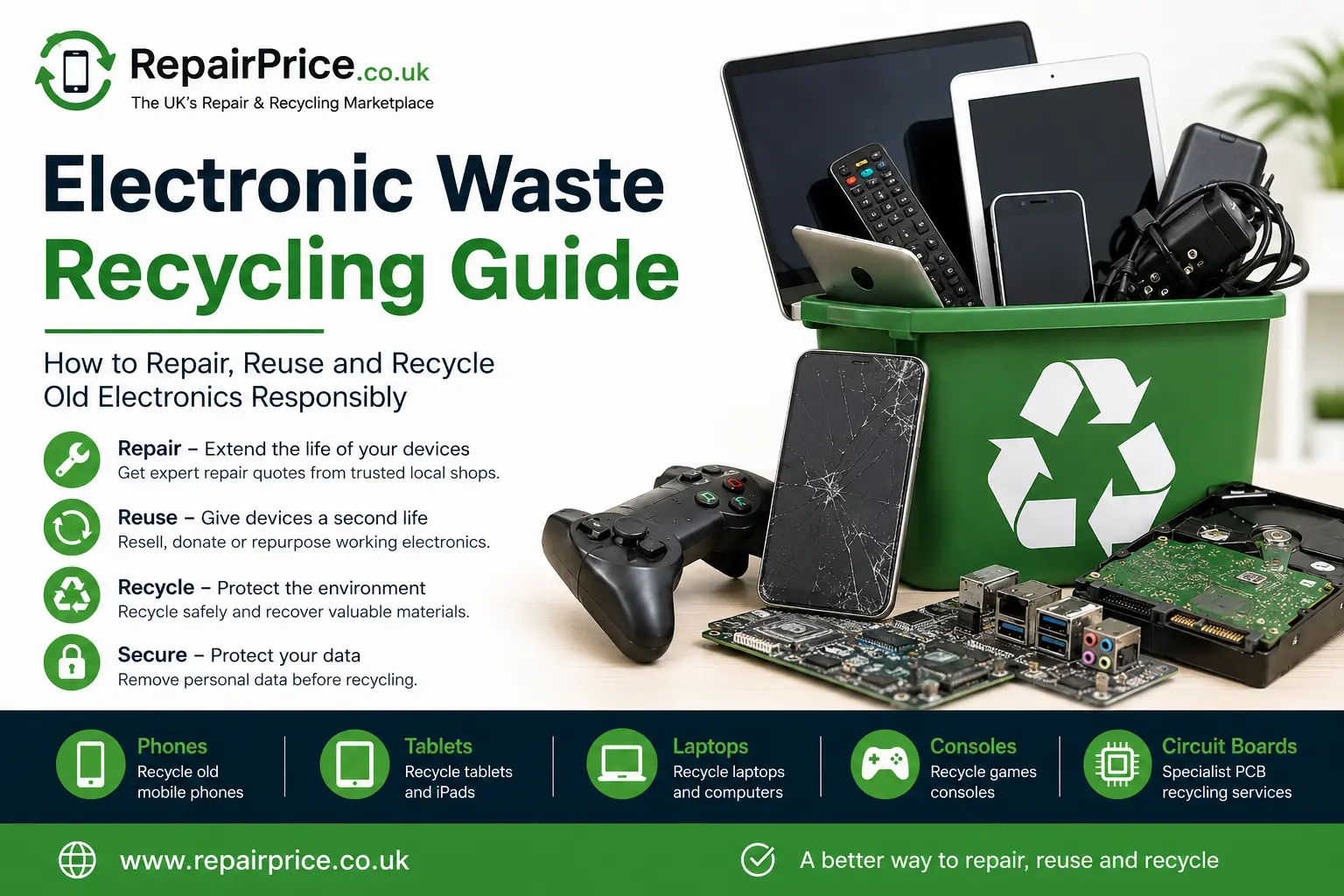
Electronic Waste Recycling Guide: How to Repair, Reuse and Recycle Old Electronics Responsibly
Old phones, laptops, tablets, televisions and games consoles can quickly accumulate in drawers, cupboards, garages and office storerooms. Although these devices may no longer be useful to their owners, many still contain reusable parts, recoverable circuit boards and valuable materials. Choosing the correct repair or recycling route can reduce electronic waste, protect personal data and prevent potentially harmful components from being discarded with general rubbish.
This electronic waste recycling guide explains how to assess unwanted technology, when repair may be worthwhile, how responsible recycling works and where different devices can be directed. RepairPrice helps households and businesses compare suitable repair options while providing clear routes for recycling equipment that has reached the end of its practical life.
Arrange an Electronic Waste Recycling Collection on WhatsApp
What Is Electronic Waste?
Electronic waste, often called e-waste, includes electrical or electronic equipment that is no longer wanted, no longer works or has been replaced by a newer device. Common examples include smartphones, tablets, laptops, desktop computers, televisions, monitors, games consoles, chargers, circuit boards, cables and accessories.
A device does not need to be completely broken to become electronic waste. Many working products are discarded because they have cosmetic damage, weak batteries, outdated software, limited storage or minor faults. Before recycling a device, it is sensible to determine whether it could be repaired, reused, donated, resold or dismantled for recoverable components.
The main electronic device recycling hub provides routes for different categories of unwanted technology. Separating devices by type helps identify the most appropriate handling process and improves the likelihood that reusable parts and materials can be recovered.
Why Electronic Waste Should Not Go in General Rubbish
Electrical devices are made from a complex mixture of plastics, metals, glass, batteries, wiring and electronic components. When these products are placed in household rubbish, valuable resources can be lost and hazardous materials may be handled incorrectly. Batteries can also become damaged during collection or processing, creating avoidable safety risks.
Responsible recycling allows devices to be assessed, sorted and dismantled using a more controlled process. Components that remain usable may be recovered, while circuit boards and other material-rich parts can be directed to specialist recycling streams. This supports a circular approach in which more value is retained from existing products.
For a closer look at the environmental reasons for separating old technology from household waste, read why unwanted electronics should not be sent to landfill.
Repair, Reuse or Recycle: Which Option Is Best?
The correct decision depends on the condition, age, repair cost and future usefulness of the device. Repair is often worth considering when the fault is limited to a replaceable component, such as a battery, screen, charging port, keyboard, fan or power supply. A successful repair can extend the life of the product and delay the environmental impact of manufacturing a replacement.
Reuse may be appropriate when a device still functions but is no longer needed by its current owner. After personal data has been removed, it may be suitable for resale, donation, business redeployment or use as a spare device. Recycling is normally the better route when equipment is severely damaged, obsolete, uneconomical to repair or unsuitable for safe reuse.
Our guide to deciding whether to repair, reuse or recycle an electronic device can help you compare these options before disposing of valuable technology.
Start with a Professional Repair Assessment
A device that appears completely dead may only have a failed battery, damaged charging connection, defective power component or broken display. Obtaining a repair assessment before recycling can prevent a usable product from being dismantled unnecessarily.
Broken smartphones can be directed to the mobile phone repair comparison service, where customers can seek quotes for common faults including damaged screens, battery problems, charging issues and liquid damage. Laptop owners can use the laptop repair service to explore solutions for display faults, overheating, keyboard damage, power problems and motherboard issues.
Televisions can also contain repairable parts. The TV repair quote service can help identify whether a backlight, power board, main board or connection fault may be repairable before the television is sent for recycling.
Repair is not always the correct financial choice. However, comparing a realistic repair quotation with the cost of replacement provides a stronger basis for making an informed decision.
Compare Repair and Recycling Options in West Yorkshire
How the Electronic Waste Recycling Process Works
The recycling process usually begins with collection or delivery to an appropriate recycling provider. Devices are then identified and grouped by category, condition and component type. Equipment that may be suitable for reuse can be separated from items that require dismantling.
Before physical processing, data-bearing equipment should be handled carefully. Phones, tablets, laptops and computers may contain personal documents, photographs, saved passwords, account information or business records. Owners should back up important information, sign out of accounts, remove memory cards and perform an appropriate factory reset where possible.
After assessment, devices may be dismantled so batteries, screens, cables, casings, drives and circuit boards can be processed separately. This is important because each material category may require a different recovery method. The full article explaining how electronic device recycling works provides additional detail about the journey from collection to material recovery.
Recycling Old Mobile Phones
Mobile phones contain compact circuit boards, cameras, batteries, screens, speakers and small quantities of recoverable metals. Even a phone with a broken display or damaged casing may contain working components. Before recycling, remove the SIM card, memory card and any connected account locks where possible.
The dedicated old mobile phone recycling service is suitable for unwanted, damaged and obsolete handsets. Devices that are beyond economical repair may be dismantled so usable parts and electronic components can be separated from general waste.
Customers in Bradford who are uncertain whether a handset should be fixed or recycled can first explore phone repair options from Bradford repair shops. This creates a clear path from fault diagnosis to repair comparison and, where repair is unsuitable, responsible recycling.
Recycling Tablets and iPads
Tablets often become unwanted because of cracked glass, charging problems, weak batteries or outdated operating systems. Some faults can be repaired, but older models may not justify the cost of replacement components.
The tablet and iPad recycling route provides an alternative for devices that are no longer practical to use. Before handing over a tablet, remove personal files, disconnect cloud accounts and disable device-tracking features where possible.
Tablet owners in Huddersfield can also investigate local Huddersfield tablet repair services before deciding whether recycling is the most suitable outcome.
Recycling Laptops and Computers
Laptops contain several components that may remain useful even after the main device has failed. Memory modules, storage drives, screens, keyboards, processors, cooling assemblies and circuit boards may be suitable for reuse or specialist recovery.
Use the laptop recycling collection service for damaged, outdated or unwanted portable computers. Data protection is especially important with laptops. Remove or securely erase storage drives whenever possible, particularly when the device has been used for business, financial or confidential information.
Customers seeking an assessment before recycling can compare options through laptop repair shops serving Leeds. A professional diagnosis may reveal that a device only needs a replacement battery, storage upgrade, charging-port repair or cooling service.
Recycling Games Consoles
Games consoles can fail because of overheating, damaged HDMI ports, disc-drive problems, power faults or motherboard damage. Controllers, internal storage, cooling fans and circuit boards may still have recoverable value even when the console itself cannot be restored.
The games console recycling service provides a responsible option for unwanted PlayStation, Xbox, Nintendo and other gaming equipment. Before recycling, remove discs, external storage, payment information and user accounts.
For devices located in West Yorkshire, console repair services around Halifax can help determine whether a fault is economical to repair before the console enters the recycling process.
What Happens to Circuit Boards?
Circuit boards are among the most important components recovered from electronic equipment. They can contain copper tracks, connectors, processors, memory chips and small quantities of precious or specialist metals. Because circuit boards differ significantly in composition and grade, they should be separated from ordinary household recycling.
The specialist circuit board recycling hub explains the available routes for printed circuit boards recovered from phones, laptops, computers, televisions and communications equipment.
Boards removed from smartphones can be directed to mobile phone circuit board recycling. These compact boards contain densely arranged electronic components and require more specialist treatment than standard metal or plastic waste.
Similarly, the laptop motherboard and circuit board recycling service supports the recovery of boards from damaged notebooks and portable computers. Keeping boards intact and free from unnecessary contamination can make identification and sorting easier.
Preparing Electronic Devices for Recycling
Good preparation protects your information and helps the recycling process operate efficiently. Begin by backing up photographs, documents, contacts and other files you want to retain. Sign out of email accounts, banking applications, cloud services and social platforms before performing a factory reset.
Remove SIM cards, memory cards, external drives, discs and accessories that you plan to keep. Devices should not be deliberately smashed, crushed or dismantled unless you have the knowledge and equipment to do so safely. Damaged lithium batteries can create fire risks, and broken screens or sharp casings can cause injury.
Keep chargers and compatible accessories with the device when they are no longer required. These items may support testing, refurbishment or reuse. When recycling multiple business devices, create an inventory showing the type, quantity and condition of the equipment.
Electronic Waste Services Across West Yorkshire
RepairPrice connects customers with repair routes across West Yorkshire, helping them investigate repair before moving unsuitable equipment into recycling. In addition to Bradford phone and Leeds laptop services, customers can access TV repair support from Wakefield repair providers for televisions with power, display, sound or connectivity faults.
The combination of repair assessment and responsible recycling creates a more practical system for unwanted electronics. Repairable devices can remain in use for longer, while equipment that has reached the end of its useful life can be directed toward suitable material and circuit-board recovery streams.
Electronic Waste Recycling for Businesses
Businesses may generate larger quantities of electronic waste when replacing office phones, laptops, screens, networking equipment or point-of-sale systems. These items should be managed systematically, especially when they contain customer records, employee information or commercially sensitive data.
Before arranging a collection, create a list of the equipment, record any asset numbers and identify devices containing storage media. Separate reusable equipment from damaged items and confirm whether data destruction or drive removal is required.
Regular recycling arrangements can prevent storerooms from filling with obsolete technology. They can also help businesses demonstrate a more responsible approach to resource use while ensuring electrical equipment is not mixed with ordinary commercial waste.
Common Electronic Recycling Mistakes to Avoid
One common mistake is discarding a device before checking whether a straightforward repair could restore it. Another is forgetting to remove personal data, account locks, SIM cards or storage media. These oversights can complicate reuse and may expose private information.
Owners should also avoid placing loose batteries in general rubbish, mixing electronics with household recycling or handing data-bearing equipment to an unidentified collector. Choosing an appropriate service and preparing devices correctly creates a safer, clearer route from ownership to repair, reuse or material recovery.
Choose a More Responsible Route for Unwanted Electronics
Electronic waste should be treated as a resource rather than ordinary rubbish. A damaged device may still be repairable, a working product may be suitable for reuse and an obsolete item may contain valuable components that can be recovered through specialist recycling.
Begin by assessing the condition of the equipment and comparing repair options where appropriate. When repair or reuse is no longer practical, visit the RepairPrice recycling service directory to select the most relevant device category and arrange the next step.
By repairing technology where possible and recycling it responsibly when necessary, households and businesses can reduce waste, recover useful materials and keep more electronic equipment out of landfill.