

How To Recycle Circuit Boards For Metal Recovery
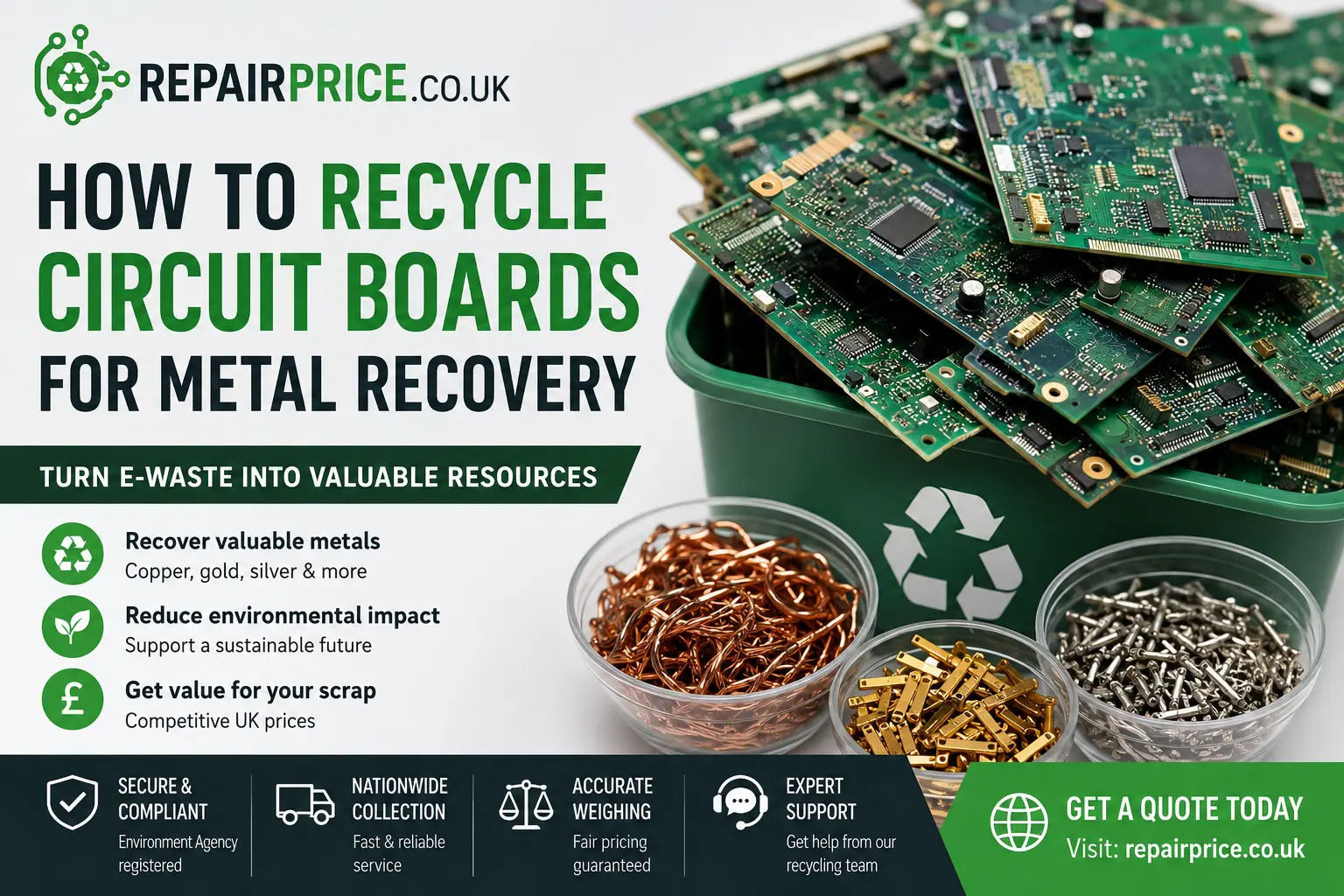
Old circuit boards may look like little more than complicated pieces of electronic waste, but they can contain a mixture of recoverable metals and reusable materials. Printed circuit boards from computers, servers, telecommunications equipment, industrial electronics, mobile phones and other devices can contain copper, gold, silver, palladium and other metals. The amount and potential recycling value varies considerably according to the type, age, construction and grade of the board.
For businesses, repair shops, IT departments and individuals across the UK, separating circuit boards from general electronic waste can make recycling more efficient and may improve the value of suitable material. Rather than attempting unsafe DIY metal extraction, the practical approach is to identify the boards, sort them into appropriate grades and send them through a professional recycling route.
If you already have circuit boards ready for recycling, start by checking our current scrap circuit board price guide for the UK. It provides a useful starting point for understanding the different types of boards that may have recycling value.
Ask About Circuit Board Recycling on WhatsApp
Why Are Scrap Circuit Boards Valuable?
A printed circuit board connects electronic components through conductive pathways, normally using copper tracks combined with a range of components, connectors and contact surfaces. Depending on the equipment the board came from, it may also contain small quantities of precious and non-ferrous metals.
The recoverable material is one reason circuit boards should not automatically be treated as ordinary mixed waste. When boards are collected, graded and processed correctly, specialist recycling processes can separate useful materials from the waste stream and return recovered metals to manufacturing and refining supply chains.
However, not every board has the same composition or value. A densely populated telecommunications or server board can be substantially different from a simple power board. This is why understanding board categories is important before requesting a recycling quotation.
What Metals Can Be Recovered From Circuit Boards?
Copper is one of the most common metals associated with printed circuit boards because it is extensively used for conductive tracks and internal layers. Depending on the board, additional metals may be present in connectors, contacts, solder, processors, integrated circuits and other components.
Potentially recoverable materials can include copper, gold, silver, palladium, tin, aluminium and other metals. The precise composition depends on the equipment, manufacturing period and board specification. High-value metals are generally present in relatively small concentrations, so professional processing normally relies on handling material at scale rather than extracting tiny quantities from individual boards.
Processors may therefore grade boards according to their expected metal content and recovery potential. For a broader comparison of categories, see our printed circuit board recycling price information.
Do Not Burn or Chemically Strip Circuit Boards at Home
Metal recovery from electronic circuit boards should not involve burning boards, heating components in uncontrolled conditions or experimenting with corrosive chemicals. Circuit boards contain a complex combination of resins, plastics, solder, metals and electronic components, and inappropriate processing can expose people and the environment to hazardous substances.
Professional recyclers use controlled processing systems designed for material separation and recovery. For most sellers, the useful part of the process is therefore collection, identification, sorting and grading rather than attempting to extract the metals themselves.
Step 1: Separate Circuit Boards From General E-Waste
The first practical step is to separate circuit boards from mixed electronic equipment where this can be done safely and appropriately. Businesses may generate boards from computers, servers, networking equipment, industrial controls, telecommunications systems and redundant electronic assemblies.
If you have a wider mixture of equipment rather than boards alone, our UK e-waste recycling price information can help you understand the broader recycling options available.
Separating obvious material categories can make it easier to describe your load accurately when requesting a quotation. It can also prevent potentially higher-value circuit boards from becoming mixed with low-grade electronic waste.
Step 2: Identify the Type of Circuit Board
Once the boards have been separated, identify what equipment they came from whenever possible. Origin can provide useful information about the likely grade and composition of the material.
Common categories include computer motherboards, server boards, telecommunications boards, industrial control boards, mobile phone boards, memory modules and general printed circuit boards. If your load consists mainly of computer mainboards, compare it with our scrap motherboard recycling prices.
Loads containing processors and integrated circuits can also be assessed separately. Our CPU and IC recycling price guide explains this specialist category in more detail.
Step 3: Sort Boards Into Similar Grades
Mixing every board into one container can make accurate assessment more difficult. Where practical, group similar boards together. For example, computer motherboards can be separated from low-grade power boards, while memory modules and mobile phone boards can be kept in their own categories.
RAM is a particularly recognisable form of electronic scrap and may be priced separately from ordinary circuit boards. See our scrap RAM recycling price guide when sorting memory modules.
Likewise, compact boards recovered from mobile phones can have different characteristics from larger computer boards. Our mobile phone board recycling prices provide additional guidance for this material.
Step 4: Keep Useful Components and Board Types Identifiable
A recycler needs to understand what is being supplied. Avoid unnecessarily damaging boards simply to make them smaller unless a recycler has specifically requested this. Keeping material identifiable can make grading easier.
This is particularly relevant to specialist categories. Server equipment, for example, may contain distinctive back panels and electronic assemblies that should be assessed separately. You can compare these materials using our server back panel recycling price guide.
Step 5: Weigh Your Circuit Boards
Once material has been separated into sensible categories, record the approximate weight of each group. Weight is particularly useful for commercial loads because scrap electronic material is frequently assessed by grade and quantity.
You do not necessarily need specialist industrial weighing equipment for an initial enquiry. An accurate estimate, combined with a description of the board type and clear information about the source of the material, can help determine the next step. Larger commercial quantities can then be weighed more precisely during the recycling process.
Step 6: Compare the Current Recycling Value
Electronic scrap prices are not permanently fixed. The potential value of circuit boards can change according to board grade, quantity, recoverable metal content, processing requirements and movements in commodity markets.
Instead of assuming that every kilogram of PCB material has the same price, compare the appropriate board category. Our main UK circuit board scrap price page should be used as the central reference point before requesting an assessment.
If you need more detail about how printed boards are handled, continue with our printed circuit board recycling guide.
How Motherboards Differ From General Circuit Boards
Computer motherboards are a specific PCB category and often contain processors, ICs, expansion slots, connectors and other components. Their construction differs from simpler boards found in power supplies and basic consumer electronics.
For this reason, motherboards should ideally remain separated when sufficient quantities are available. Visit our dedicated motherboard value and recycling page rather than automatically treating every motherboard as generic PCB scrap.
Recycling Circuit Boards From Complete Electronic Equipment
Sometimes dismantling individual circuit boards is not practical. A business clearing an office, warehouse or IT facility may have computers, networking equipment, screens, peripherals and other electronics in addition to loose PCBs.
In these circumstances, start with our electronics recycling service information. It provides a broader recycling route for equipment that has not already been separated into specific scrap categories.
This approach can also help businesses create a clearer disposal process: reusable equipment can be identified first, repairable equipment can be considered for repair, and end-of-life material can then move into the appropriate recycling stream.
Circuit Board Recycling in Birmingham
Businesses and individuals producing PCB waste in the West Midlands can find location-specific information through our Birmingham circuit board recycling service guide. This is useful for local enquiries involving scrap boards, electronic assemblies and related material.
Circuit Board Recycling in Nottingham
For material generated in Nottingham and surrounding areas, visit our Nottingham PCB recycling information to explore the relevant local recycling route.
Circuit Board Recycling in Manchester
Manchester businesses handling redundant IT equipment, electronic assemblies or loose PCBs can use our Manchester circuit board recycling page for location-focused information.
Circuit Board Recycling in Sheffield
If your boards originate from Sheffield or the wider South Yorkshire area, see our Sheffield electronic circuit board recycling guide for the next steps.
Circuit Board Recycling in Leeds
Businesses, repairers and individuals in West Yorkshire can find dedicated information through our Leeds PCB recycling service page.
Circuit Board Recycling in Bradford
For circuit boards generated in Bradford, our Bradford circuit board recycling information explains the local route for handling recyclable PCB material.
Repair, Reuse or Recycle?
Not every electronic device containing a circuit board should immediately be dismantled for scrap. Functional equipment may have greater value through continued use, while faulty equipment may sometimes be economically repairable. Recycling is generally the final route when equipment or components are genuinely at the end of their useful life.
If you have a faulty device rather than loose scrap boards, obtaining a repair quotation can help you compare the cost of repair with replacement or recycling.
Quote from (Town) Repair shops
Why Businesses Should Separate Electronic Scrap
Companies can accumulate significant quantities of electronic equipment over time. IT upgrades, server replacements, workshop operations, repair activity and equipment decommissioning can all produce circuit boards and other recyclable electronics.
Creating separate streams for motherboards, RAM, mobile boards, server components and general PCB material can improve inventory control and make recycling enquiries easier to assess. It also prevents useful electronic materials from being mixed unnecessarily with general commercial waste.
Businesses dealing with several categories of obsolete electronics should combine PCB sorting with a broader responsible electronics recycling route so that equipment can be assessed according to its condition and material type.
Preparing Circuit Boards for a Recycling Quote
Before requesting a price, prepare some basic information about your material. Record the approximate quantity or weight, identify the equipment the boards came from and separate obvious board categories where possible. For mixed loads, make a simple list of the main types of electronic material included.
This information can make an initial assessment much more useful. Large commercial loads may require additional information before collection or processing arrangements can be confirmed.
Understanding Printed Circuit Board Recycling Prices
PCB recycling prices depend on more than weight alone. Board density, component population, connector types, metal content and processing costs can all influence grading. This is why two circuit boards of similar physical size may not necessarily have the same recycling value.
For boards that fall specifically into the printed circuit board category, review our latest printed PCB recycling price information. Comparing specialist categories before combining material can help you better understand how your electronic scrap may be classified.
Turn Unwanted Circuit Boards Into a Recycling Opportunity
Recovering metals from circuit boards begins with responsible sorting, not DIY extraction. Identify the equipment, separate the boards, group similar grades, record the quantity and then use an appropriate professional recycling route.
Whether you have a small quantity of boards from repair work or a larger commercial load from IT equipment, server hardware or electronic manufacturing, separating recyclable PCB material can help prevent useful metals from being lost in mixed waste streams.
Start by checking the latest scrap circuit board prices and grading information, then compare the specialist recycling pages for the particular board types you have.
Check Circuit Board Recycling Prices