

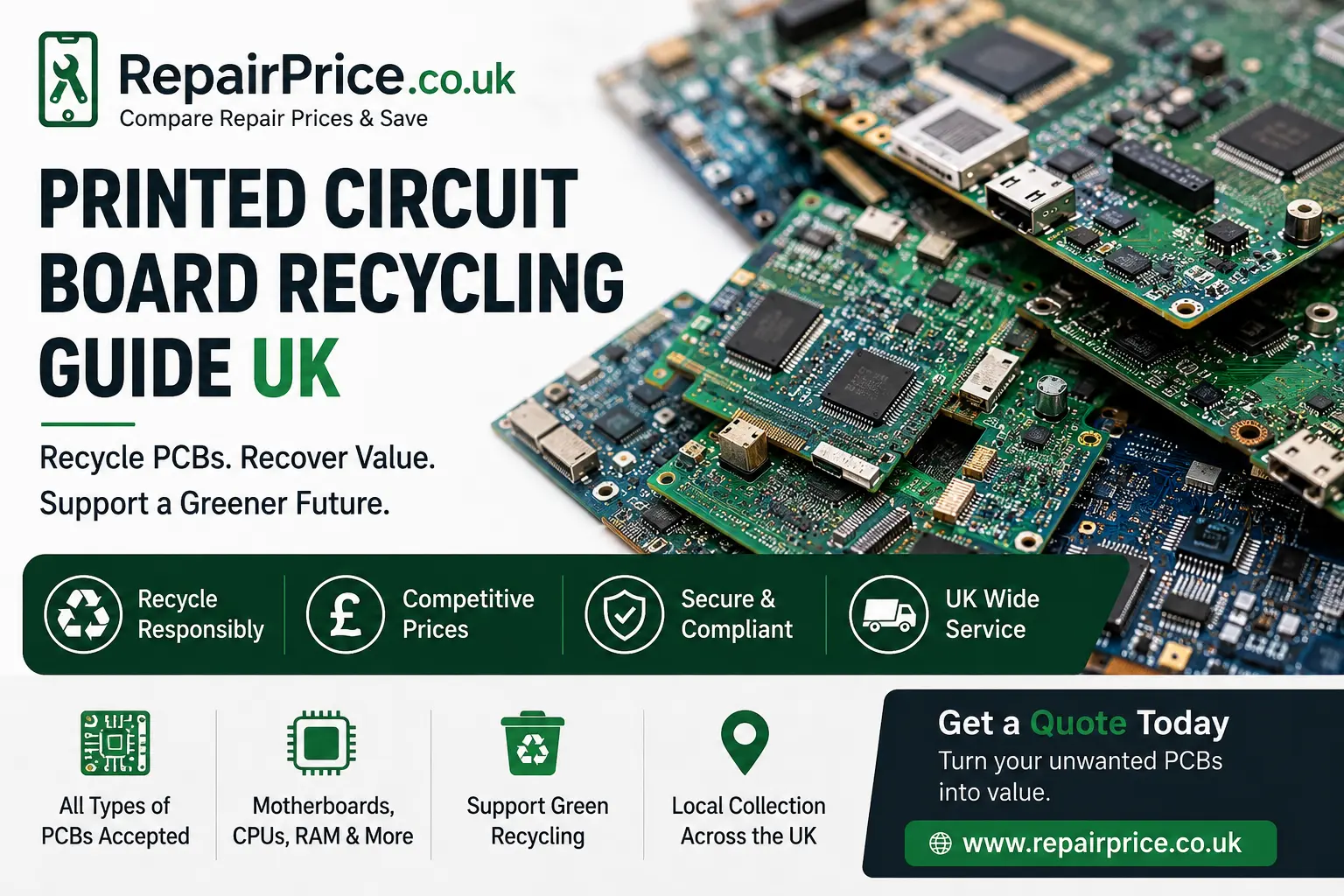
Printed Circuit Board Recycling Guide UK: How to Recycle PCBs and Recover Their Value
Printed circuit boards are found inside almost every modern electronic device, from computers and telecommunications equipment to industrial machinery, servers and consumer electronics. When equipment reaches the end of its useful life, the printed circuit boards inside it may still have recycling value because they contain a mixture of metals, electronic components and recoverable materials.
This UK printed circuit board recycling guide explains what PCBs are, why different boards can have different recycling values, how boards are normally graded, what affects the price you may receive and how to prepare electronic boards before recycling. If you already have material ready for recycling, you can also check our current scrap printed circuit board recycling prices before requesting a valuation.
Whether you have a small quantity of boards from old computers or larger commercial volumes generated through IT upgrades, equipment dismantling or electronic waste processing, separating your material correctly can make it easier to obtain an accurate recycling quotation.
WhatsApp Us About Your Printed Circuit Boards
What Is a Printed Circuit Board?
A printed circuit board, commonly shortened to PCB, is the board used to mechanically support and electrically connect electronic components. PCBs can contain processors, integrated circuits, memory chips, connectors, capacitors and many other components depending on the equipment in which they were originally installed.
They can be found inside desktop computers, laptops, servers, networking equipment, televisions, industrial control systems, telecommunications hardware, medical electronics and countless other devices.
Because boards vary considerably in construction and component density, they should not automatically be treated as one identical scrap category. A densely populated telecommunications or server board, for example, can be very different from a basic low-grade power board.
Why Are Scrap Printed Circuit Boards Recycled?
Electronic boards contain a mixture of materials that can potentially be recovered through specialist recycling processes. Instead of leaving unwanted boards in storage or disposing of them with general waste, recycling allows suitable material to enter an established recovery stream.
The process is particularly relevant for businesses replacing computers, servers, networking hardware or industrial electronics. Organisations may accumulate significant quantities of boards during upgrades, equipment decommissioning and IT asset replacement programmes.
If your material includes a wider mixture of unwanted electronics rather than separated PCBs, our UK electronic waste price information can help you understand the broader recycling categories available.
How Much Are Scrap Printed Circuit Boards Worth?
There is no single price that applies to every printed circuit board. Recycling values can depend on the board category, component density, quantity, condition, contamination and the recoverable material content of the load.
For this reason, checking a specialist price category is generally more useful than relying on a generic scrap electronics figure. Our PCB recycling price guide for UK sellers provides a dedicated starting point for identifying potentially suitable material.
You can also compare broader scrap circuit board price categories when your load contains several different types of electronic boards.
What Determines PCB Recycling Value?
One of the most important factors is the type of board being recycled. Boards removed from different electronic devices can contain substantially different components and materials. High-component-density boards may therefore be placed into a different recycling category from simple or lightly populated boards.
Quantity can also matter. A commercial batch of sorted PCBs is easier to assess than an unknown mixture of complete devices, loose components, metal frames and electronic boards. Keeping similar boards together may make the quotation process more straightforward.
Condition is another consideration. Excessive contamination, attached batteries, large steel assemblies or unrelated waste can complicate grading. Where practical, separating obvious non-PCB material before requesting a quotation can help recyclers understand exactly what is being offered.
Different Types of Printed Circuit Boards for Recycling
PCBs appear in many different forms. Computer motherboards are one of the best-known examples, but recycling loads can also contain server boards, telecom boards, control boards, peripheral boards, power boards and smaller device PCBs.
If you have computer mainboards specifically, visit our motherboard recycling valuation page. Separating these from mixed circuit boards can make it easier to identify the appropriate recycling category.
Processors and integrated circuits may also require separate consideration. Our CPU and integrated circuit recycling information covers these components in more detail.
Similarly, memory modules can have their own recycling classification. Sellers with old computer memory can review our scrap RAM recycling price guide.
Should You Remove Components From Printed Circuit Boards?
In many situations, unnecessary dismantling can make grading more difficult rather than increasing value. Unless you already understand the required recycling specifications, it is usually sensible to identify the board category first and confirm how the recycler wants the material supplied.
Processors, memory and other easily identifiable items may sometimes be separated into their own categories, but indiscriminately stripping components from PCBs does not automatically increase the amount you will receive.
If you want to understand the relationship between complete boards and material recovery, read our guide to recycling circuit boards for metal recovery.
How to Prepare Printed Circuit Boards for Recycling
Start by identifying where the boards came from. Computer motherboards, server boards, telecommunications boards and low-grade electronic boards can have different characteristics, so keeping known categories separate is useful.
Remove unrelated packaging and obvious general waste. Where safe and practical, keep batteries and other potentially hazardous components separate rather than mixing them loosely into a PCB load.
Next, photograph representative examples of the boards. Clear photographs showing both sides of the material can be particularly useful when requesting an initial recycling assessment.
For larger quantities, weigh each separated category where possible. Providing an approximate weight, material description and photographs can help produce a more relevant initial quotation.
Printed Circuit Board Recycling for Businesses
Businesses can generate PCB waste through computer replacement programmes, server upgrades, networking projects, telecommunications maintenance, equipment manufacturing and electrical refurbishment.
Instead of allowing obsolete electronics to occupy valuable storage space, organisations can establish a process for separating reusable equipment from material intended for recycling.
For mixed business electronics, our electronics recycling service information provides a broader route for dealing with unwanted equipment alongside separated circuit boards.
Mobile Phone Boards and Specialist Electronics
Mobile phone circuit boards are physically smaller than many computer PCBs but form a specialist recycling category because of their construction and component density. They should not automatically be mixed with low-grade boards if you want an accurate assessment.
For batches containing handset boards, see our mobile phone board recycling price information.
Server equipment can produce another distinctive category. Backplanes and back panels removed from enterprise hardware may be worth separating from ordinary mixed boards. Our server back panel recycling guide explains this category separately.
PCB Recycling Services Across the UK
RepairPrice provides information designed to help UK households, technicians, repair businesses and commercial organisations identify suitable recycling routes for electronic equipment and circuit boards.
For material in Scotland, visit our Glasgow printed circuit board recycling service. This provides a local route for PCB recycling enquiries from Glasgow and surrounding areas.
Businesses and individuals in the West Midlands can use our Birmingham PCB recycling information when dealing with unwanted electronic boards.
For North West enquiries, our Manchester circuit board recycling service provides location-specific information for PCB material.
South Yorkshire customers can review our Sheffield electronic PCB recycling page before requesting a valuation.
Within West Yorkshire, we also provide dedicated information for circuit board recycling in Bradford and PCB recycling services in Leeds.
What If the Electronics Can Still Be Repaired?
Recycling should normally be considered after determining whether equipment still has a practical repair or reuse option. Some electronics that appear obsolete may only require a replacement component, screen, connector or other repair.
RepairPrice helps users compare repair options before deciding whether equipment should be replaced or recycled. Where a device is no longer economical to repair, its electronic components may then be directed towards an appropriate recycling route.
Quote from Local Repair shops
Understanding Circuit Board Scrap Prices
PCB values should be viewed as material-specific rather than as a fixed universal rate. Market conditions can change, and two batches with the same total weight may have different classifications because the boards themselves are different.
For a broader overview before sorting a mixed batch, check our UK circuit board scrap price comparison. This can help distinguish general board categories before moving into more specialised PCB pricing.
Computer mainboards should be assessed using the relevant scrap motherboard recycling category, while processors can be compared through our processor and IC recycling prices.
Why Sorting Electronic Scrap Matters
Sorting is one of the simplest ways to make a PCB recycling enquiry clearer. A container holding motherboards, RAM, processors, mobile boards, steel cases, cables and general waste is harder to assess than material divided into identifiable groups.
Separate circuit boards from complete equipment where appropriate, and keep specialist materials such as memory, processors and mobile boards in their own groups. If you are unsure how something should be classified, photographs can often help establish the likely category before transport is arranged.
This approach can also help commercial customers maintain more organised electronic waste streams and understand which types of equipment are being generated most frequently.
PCB Recycling and the Wider E-Waste Stream
Printed circuit boards are only one part of electronic waste. Complete equipment can also contain metals, plastics, cables, power supplies, storage devices, batteries and other components requiring appropriate handling.
If your organisation generates mixed electrical equipment alongside PCBs, review our electronic waste recycling value guide and our UK electronics recycling options. These pages provide routes for material that extends beyond circuit boards alone.
How to Request a PCB Recycling Quote
Before making contact, gather basic information about your material. Useful details include the approximate quantity or weight, the type of boards, where they came from and whether the load contains other electronic components.
Photographs are particularly useful. Try to provide clear images of representative boards rather than only photographing sealed boxes or containers. This makes it easier to understand the material you have available.
If you have several categories, list them separately. For example, you might have computer motherboards, RAM modules, processors and mixed peripheral boards. Separating these descriptions can make the initial assessment significantly clearer.
Where to Start With Printed Circuit Board Recycling
If you already know that your material consists primarily of printed circuit boards, start with our dedicated printed circuit board recycling prices page. It is the primary pricing resource connected with this guide.
If you have a mixed load and are unsure how the boards should be classified, first compare the different scrap circuit board price grades. More specialised material can then be separated into motherboard, processor, RAM, mobile board or server board categories where appropriate.
Frequently Asked Questions About PCB Recycling
Can old printed circuit boards be recycled?
Yes. Printed circuit boards from many types of electronic equipment can enter specialist recycling streams. The appropriate category depends on the type, condition and composition of the boards.
Are all circuit boards worth the same amount?
No. Different boards can have significantly different recycling classifications. Component density, board type, contamination and recoverable material content can all influence grading and potential value.
Should I mix motherboards with other PCBs?
Where possible, keeping identifiable motherboard material separate can make grading easier. Motherboards have their own recycling category and can be assessed through our dedicated motherboard price information.
Can businesses recycle large quantities of PCBs?
Yes. PCB recycling can be suitable for commercial quantities generated by IT departments, repair businesses, recyclers, equipment manufacturers, telecommunications companies and organisations replacing electronic hardware.
Do PCB recycling prices change?
They can. Recycling values are influenced by material classification and market conditions, so displayed figures should be checked when you are ready to recycle rather than treated as permanently fixed prices.
What information should I provide for a quote?
Provide the board type where known, approximate quantity or weight, clear photographs and details of any mixed materials. Better information generally makes the initial assessment easier.
Recycle Your Printed Circuit Boards Through the Right Route
Printed circuit board recycling is most effective when the material is identified, separated and directed into the correct recycling category. Instead of treating every electronic board as identical scrap, take time to distinguish motherboards, processors, memory, mobile boards, server boards and other PCB material.
For current information, begin with our scrap printed circuit board recycling price page. For mixed electronic equipment, explore our UK e-waste pricing resource or electronics recycling services.
By sorting boards correctly and supplying clear information about the material available, households and businesses can make better-informed recycling decisions while ensuring unwanted electronics are directed towards an appropriate recovery route.