

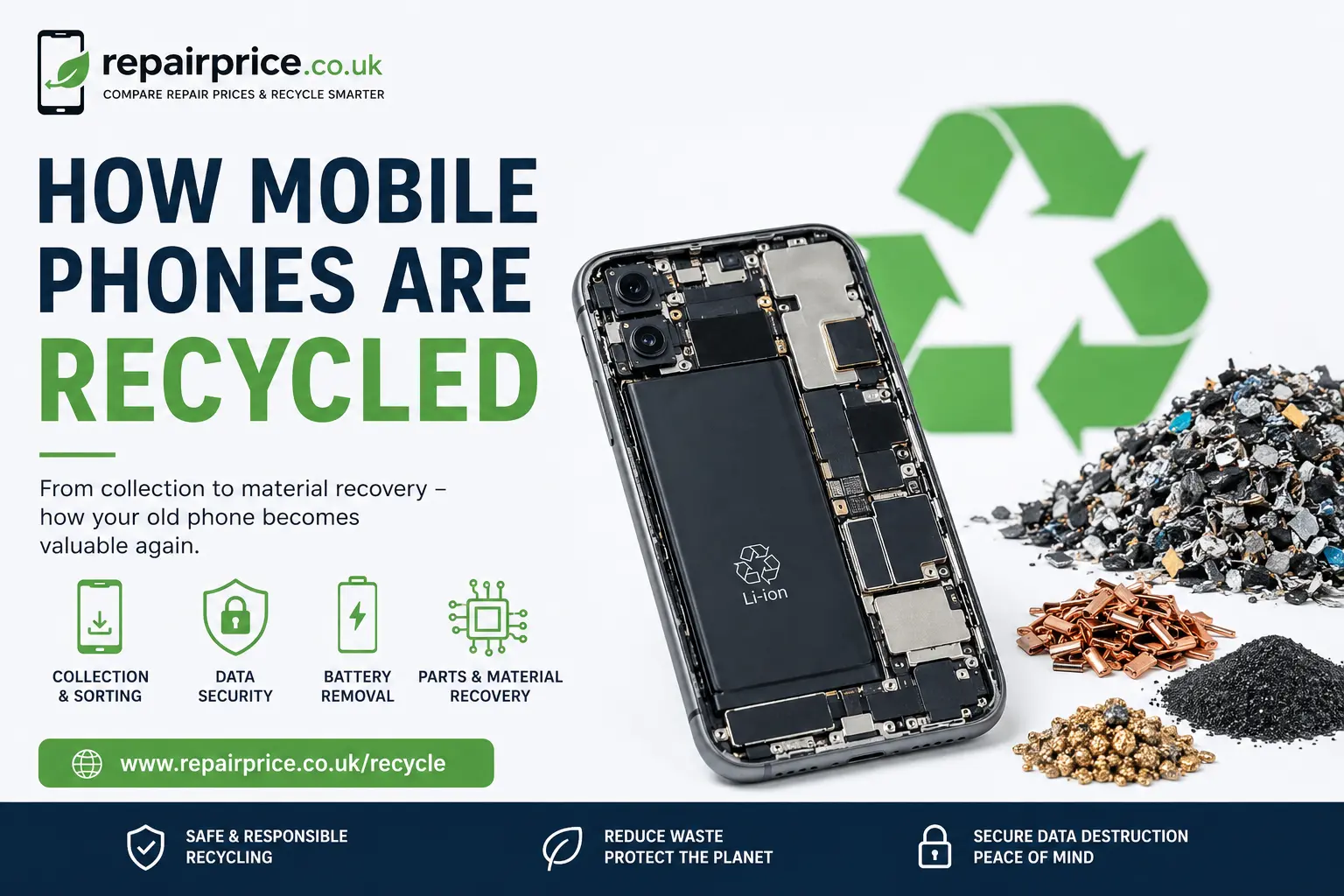
How Mobile Phones Are Recycled: A Complete UK Recycling Guide
Mobile phones contain a complex mixture of reusable components, valuable metals, rechargeable batteries, plastics and electronic circuit boards. When an unwanted handset is recycled through an appropriate collection service, many of these materials can be recovered instead of being lost to landfill. Recycling also helps reduce the risks associated with damaged lithium-ion batteries, stored personal information and unsuitable disposal methods.
This guide explains how mobile phones are recycled, what happens to the battery and circuit board, how personal data should be handled and when repairing a phone may be a better option than recycling it. RepairPrice.co.uk helps individuals, businesses and organisations compare repair options and arrange responsible recycling for unwanted electronic devices throughout the UK, including collection support across West Yorkshire.
Arrange Mobile Phone Recycling by WhatsApp
Why Should Old Mobile Phones Be Recycled?
Millions of mobile phones are replaced because of broken screens, weak batteries, charging faults, water damage, software problems or the release of a newer model. Many of these devices remain stored in drawers for years, while others are placed in general household waste. Neither option allows the materials inside the handset to be recovered efficiently.
Phones should not normally be placed in household rubbish because they contain electronic components and rechargeable batteries that require controlled treatment. A crushed, punctured or overheated lithium-ion battery can become a fire risk during waste collection or processing. Responsible recycling separates the battery from the rest of the device before the handset is dismantled and processed.
Recycling also supports the recovery of copper, aluminium, steel, gold, silver, palladium and other materials found in connectors, circuit boards and internal components. Although each handset contains only a small quantity of some metals, processing large volumes of devices can recover meaningful amounts of reusable material.
For a broader route covering phones, tablets, laptops, consoles and other electronics, visit the UK electronics recycling and collection hub.
Should You Repair or Recycle Your Mobile Phone?
Recycling is not always the first or best option. A phone with a damaged screen, worn battery, faulty charging port, broken camera or software issue may still have many years of useful life remaining. Repairing the device can reduce electronic waste, avoid the environmental impact of manufacturing a replacement and help the owner retain familiar data, settings and accessories.
Before sending a handset for recycling, consider whether the fault can be repaired economically. The mobile phone repair comparison service can help you request quotations from suitable repair businesses. Comparing prices is particularly useful when the handset is relatively new, contains important information or still meets your everyday needs.
Repair may be worthwhile when the main structure of the phone is intact and the fault relates to a replaceable part. Recycling may be more suitable when the handset is badly crushed, severely corroded, repeatedly failing, obsolete, locked beyond recovery or uneconomical to restore.
Some households have several types of unwanted portable electronics. Damaged larger-screen devices can be assessed through the tablet fault and repair quotation page, while wearable devices can be submitted through the smartwatch repair comparison service.
What Happens Before a Phone Is Recycled?
The recycling process begins with collection, identification and initial inspection. The condition, model, storage capacity and visible damage may be recorded. Devices that appear suitable for refurbishment can be separated from handsets that require dismantling for parts or material recovery.
A working or repairable phone may be tested to determine whether it can be reused. Reuse is often preferable to immediate material recycling because it extends the useful life of the complete product. Devices that cannot be restored safely may then move to a controlled dismantling process.
Before handing over a device, remove the SIM card and any removable memory card. Sign out of linked accounts, disable device-tracking services where possible and complete a factory reset. A factory reset is an important step, but organisations handling confidential or regulated information may require a more formal data-destruction process.
Businesses disposing of employee phones should maintain an asset list, record device serial numbers and establish how stored information will be erased or destroyed. Our guide to protecting information before electronic equipment recycling explains why data handling should form part of every disposal plan.
Stage One: Collection and Device Sorting
Collected mobile phones are usually sorted according to their condition and potential next use. Working handsets may be directed towards testing and refurbishment. Non-working devices may be assessed for component harvesting, while severely damaged phones are prepared for material recovery.
Sorting is important because not every phone should follow the same route. A recently released handset with a broken screen may have substantial reuse value. An older phone with extensive liquid damage may be more suitable for dismantling. Accurate sorting helps ensure that reusable devices are not unnecessarily destroyed and damaged devices are not incorrectly returned to circulation.
Individuals and organisations can learn more about the collection and processing route through the dedicated mobile phone recycling service page.
Stage Two: Data Erasure and Security Checks
Mobile phones can contain photographs, messages, saved passwords, banking applications, email accounts, customer details, workplace files and authentication codes. Data security must therefore be treated as a central part of the recycling process rather than an optional extra.
Where a device remains operational, information may be erased using approved software or manufacturer reset procedures. The phone should then be checked to confirm that accounts and accessible user information have been removed. Where a device cannot be powered on, secure physical destruction of the relevant storage component may be required.
Businesses, schools, charities and public-sector organisations should ask how devices will be tracked, stored and processed. They may also need appropriate documentation confirming the collection and treatment of the equipment. The exact requirements will depend on the organisation, the sensitivity of the information and its internal data-retention policies.
Stage Three: Removing the Lithium-Ion Battery
Most modern smartphones contain an integrated lithium-ion or lithium-polymer battery. These batteries are efficient and rechargeable, but they must be handled carefully at the end of the device’s life. A swollen, crushed, punctured or overheating battery should not be pressed, opened or placed near heat sources.
During professional processing, trained personnel may remove the battery using suitable tools and procedures. The battery is then isolated from other materials and sent through an appropriate battery recycling route. Separating it reduces the risk of fire during later shredding, storage and transport.
The battery recycling process may recover materials such as copper, aluminium, cobalt, nickel or lithium, depending on the battery chemistry and the treatment method. For more information about safe handling and recovery, read the UK guide to recycling lithium batteries responsibly.
Stage Four: Dismantling the Mobile Phone
After the battery and any reusable accessories are removed, the handset can be dismantled into separate material streams. Components may include the display assembly, housing, cameras, speakers, vibration motor, charging port, connectors, circuit board, shielding, buttons and internal cables.
Parts that remain functional may be recovered for testing or reuse. This can include cameras, speakers, screens, housings or charging components, although reuse depends on model compatibility, quality and condition. Components that cannot be reused are directed towards specialist processing.
Manual dismantling helps separate higher-value components before bulk material treatment. It can also prevent batteries and other hazardous parts from entering shredding machinery. The exact method varies according to the recycling facility, the phone design and the volume of devices being processed.
Stage Five: Recovering Mobile Phone Circuit Boards
The main circuit board is one of the most material-rich parts of a mobile phone. It carries processors, memory, connectors, communication components and many small electronic parts. Circuit boards can contain copper and small quantities of precious or specialist metals that may be recovered through controlled industrial treatment.
Boards should not be burned, chemically stripped at home or placed in general scrap without appropriate handling. Informal processing methods can release harmful fumes, contaminate surfaces and expose people to unsuitable chemicals or metal residues.
RepairPrice.co.uk provides a dedicated route for recycling circuit boards recovered from mobile phones. Higher-grade electronic boards and densely populated components may also be relevant to the specialist Class 3 circuit board recovery service.
Stage Six: Mechanical Separation and Material Recovery
Once batteries, reusable parts and selected circuit boards have been removed, the remaining phone materials can be reduced and separated. Industrial equipment may use shredding, screening, magnets, eddy-current separation, density separation or optical sorting to divide metals, plastics and other fractions.
Ferrous metals can be recovered magnetically, while non-ferrous metals such as aluminium and copper may be separated using additional processing methods. Plastics can be sorted by type and quality, although not every plastic component is suitable for closed-loop reuse.
The recovered materials are prepared for use in manufacturing or sent to further refining facilities. The overall aim is to return as much material as practical to productive use while minimising the amount that requires disposal.
What Happens to Phone Screens and Casings?
A smartphone display is normally made from several bonded layers, potentially including glass, adhesives, polarising films, touch-sensitive components and display electronics. This mixed construction can make screen recycling more complicated than recycling a simple glass container.
Undamaged display assemblies may be tested for reuse. Broken screens may be processed to recover selected materials, but recovery options depend on the screen technology, contamination level and available recycling infrastructure.
Phone casings can contain aluminium, steel, glass, polycarbonate or mixed plastics. Metal housings are generally easier to place into established recovery streams, while composite and bonded materials may require more specialised separation.
Can Tablets and iPads Be Recycled in the Same Way?
Tablets and iPads follow a broadly similar recycling journey because they also contain rechargeable batteries, displays, storage components, metal housings and electronic circuit boards. However, their larger batteries and screens may require different handling procedures.
Unwanted Android devices and other large-screen electronics can be submitted through the tablet recycling and recovery service. Apple devices can be directed to the more specific iPad recycling collection page.
As with mobile phones, a tablet should be assessed for repair or reuse before it is dismantled. A battery replacement, charging repair or screen repair may extend its useful life and prevent unnecessary disposal.
Mobile Phone Recycling for Businesses
Businesses often replace phones in batches when contracts end, staff leave or equipment is upgraded. A planned recycling process can help the organisation maintain control over data, assets and environmental responsibilities.
Before collection, create an inventory showing the device model, serial number, assigned user and condition. Remove SIM cards, record damaged batteries and identify any devices containing sensitive information. Phones should be stored securely until collection rather than left in open boxes or shared storage areas.
Organisations should also distinguish between devices suitable for reuse and equipment intended for destruction or material recovery. Clear instructions reduce confusion and help the recycling provider apply the correct treatment route.
Businesses with mixed electronic waste can combine mobile phones with tablets, accessories and other suitable equipment, subject to the collection provider’s acceptance criteria. A structured collection can be more efficient than arranging separate disposal for each device type.
Mobile Phone Repair and Recycling Across West Yorkshire
RepairPrice.co.uk helps customers connect with repair services and explore responsible recycling options across Bradford, Leeds, Halifax, Wakefield, Huddersfield and surrounding West Yorkshire areas. Local repair quotations can help determine whether a handset is worth restoring before it enters the recycling stream.
Customers in Bradford can compare suitable services through the Bradford mobile phone repair quotation page. This may be useful for broken screens, battery faults, charging issues, camera problems and other common defects.
For customers in Leeds, the Leeds phone repair comparison service provides a route to request prices before deciding whether to repair, replace or recycle a device.
Phone owners in Calderdale can use the Halifax handset repair request page, while residents and businesses elsewhere in the county can explore the Wakefield phone repair service listings or the Huddersfield mobile repair quotation route.
Request Phone Repair or Recycling Quotations
Common Mobile Phone Recycling Mistakes
One of the most common mistakes is leaving personal accounts signed in. Before recycling a working handset, back up required information, sign out of services, disable activation locks where appropriate and complete a factory reset.
Another mistake is placing a damaged phone in general waste. Waste vehicles and sorting equipment can crush the battery, increasing the risk of fire. Phones should be kept separate and taken through an appropriate electrical recycling route.
Users should also avoid posting visibly swollen or seriously damaged batteries without first confirming the carrier’s rules. Lithium batteries are subject to transport restrictions, and unsuitable packaging can create safety risks.
Finally, do not assume that every unwanted handset must immediately be destroyed. Repair, refurbishment, parts recovery and material recycling are different stages of the circular economy. The best route depends on the device’s condition, age, security requirements and potential for reuse.
How Mobile Phone Recycling Supports the Circular Economy
The circular economy aims to keep products, components and materials in use for as long as practical. Mobile phone recycling contributes by creating several possible routes for an unwanted device. A functional phone may be reused, a faulty handset may be repaired, working components may be harvested and remaining materials may be recovered.
This hierarchy is more efficient than treating every device as waste. Extending the life of a complete handset can reduce demand for new manufacturing, while recovering components can reduce the need to produce replacement parts. Material recycling is then used for equipment that cannot reasonably return to service.
To understand how phones fit into the wider electronic waste system, read the complete guide to electronic waste recycling in the UK.
Prepare Your Phone for Recycling
Start by backing up photographs, contacts, messages and any files you want to retain. Transfer authentication applications and remove the phone from linked banking, email and workplace accounts. Sign out of the device manufacturer’s account and disable any activation-lock or tracking feature where possible.
Remove the SIM card, memory card, protective case and accessories unless the recycler has agreed to accept them. Complete a factory reset and check that the setup screen appears when the handset restarts.
If the phone has a swollen battery, cracked casing, burn marks or unusual heat, stop using and charging it. Keep the device away from flammable materials and seek advice from a suitable recycling provider before moving or packaging it.
Arrange Responsible Mobile Phone Recycling
Recycling an unwanted mobile phone is more than placing it into a collection box. A responsible process should consider reuse potential, repair opportunities, data security, battery safety, component recovery and circuit board treatment.
RepairPrice.co.uk can help you explore repair quotations before disposal and direct unwanted devices towards suitable recycling services. Whether you have one damaged handset or a larger quantity of business phones, planning the process carefully can protect personal information, reduce waste and recover valuable materials.
Begin with the main electronic device recycling service, or use the dedicated phone recycling page for a more specific collection route. By choosing repair when practical and recycling when a handset has reached the end of its usable life, you can make a better-informed and more environmentally responsible decision.