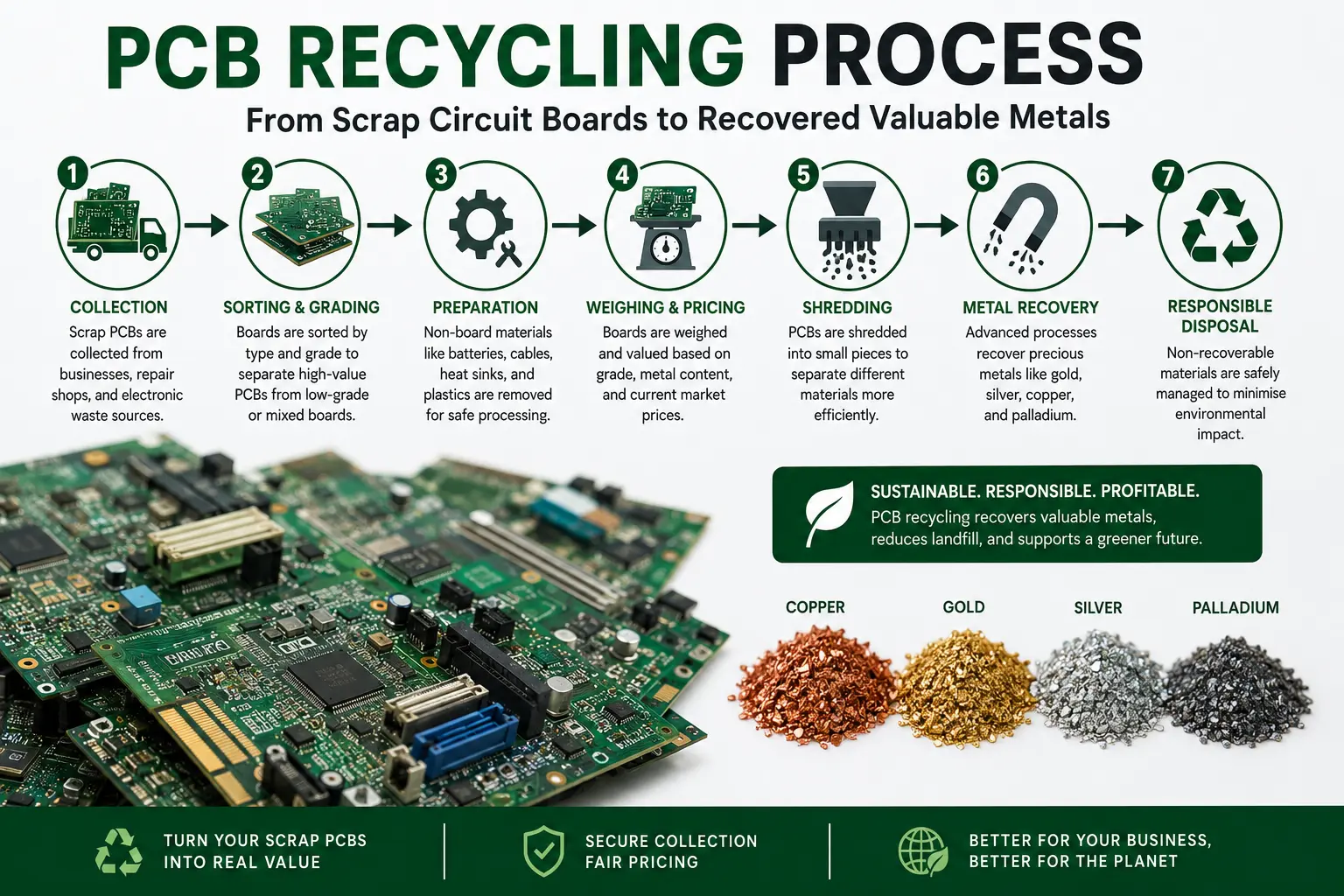
PCB recycling is the process of collecting, sorting, grading, and processing printed circuit boards so valuable metals can be recovered instead of being lost in landfill. For businesses, repair shops, IT departments, manufacturers, and individuals with old electronics, understanding how PCB recycling works helps you sell scrap circuit boards more confidently and choose a recycler that pays fairly.
Printed circuit boards are found inside computers, laptops, servers, phones, tablets, telecoms equipment, TVs, industrial electronics, game consoles, printers, and control units. These boards can contain copper, gold, silver, palladium, tin, aluminium, and other recoverable materials. The exact value depends on the board type, metal content, condition, and volume.
High-grade boards such as server boards, telecom boards, and motherboards usually hold stronger recycling value than low-grade mixed boards. If you want to understand current value factors before selling, our guide on scrap motherboard price checks explains how grade, demand, and board quality influence payment.
The recycling process begins with collection. Scrap circuit boards may come from repair shops, computer refurbishers, data centres, offices, schools, factories, or electronic waste clearances. A reliable recycler will separate PCBs from general e-waste because circuit boards need specialist handling and grading.
Businesses looking for a direct route can use our dedicated PCB recycling UK service for organised collection, sorting, and recycling support. For companies based in the capital, our London PCB recycling service helps streamline local pickup and assessment.
Once collected, boards are sorted into categories. This is one of the most important stages because different PCBs carry different recovery potential. Common categories include computer motherboards, server boards, telecom boards, mobile phone boards, laptop boards, power supply boards, TV boards, printer boards, and mixed low-grade boards.
Correct sorting improves recycling efficiency and can also increase the return you receive. Clean, separated boards are easier to value than mixed electronic scrap. If you have motherboards specifically, our blog on how to sell scrap motherboards explains the preparation steps that can help avoid undergrading.
Before processing, recyclers may remove batteries, steel frames, plastics, heat sinks, cables, and other attached materials. These items can affect weight, safety, and valuation. Lithium batteries, in particular, must be handled separately because they can present fire risks if crushed or processed incorrectly.
This stage helps ensure the PCB recycling stream remains focused on recoverable circuit board material. It also supports compliance with responsible recycling standards by keeping hazardous or unsuitable components out of the wrong processing line.
After sorting and cleaning, the boards are weighed and priced according to grade. Pricing is usually based on material type, metal recovery potential, volume, and current market conditions. Higher-grade boards normally attract stronger prices because they contain better concentrations of valuable metals.
To compare value categories before sending material, visit our circuit board recycling prices page. This helps sellers understand why one batch of boards may be worth more than another, even when the weight looks similar.
Once boards have been graded and prepared, they move into mechanical processing. This can involve shredding or size reduction to break the boards into smaller pieces. The purpose is to separate metals, fibres, resins, and other materials so recovery can continue more efficiently.
Specialist recycling equipment may use magnets, density separation, screening, and other techniques to divide material streams. Ferrous metals, non-ferrous metals, and precious-metal-bearing fractions can then be directed into further recovery routes.
The most valuable part of PCB recycling is metal recovery. Circuit boards can contain copper tracks, gold-plated contacts, silver-bearing components, and other precious metals. These materials are recovered through specialist industrial processes designed to extract useful metals while reducing waste.
This is why circuit boards should not be treated as ordinary rubbish. Even small boards can contain recoverable resources, and large batches from repair shops or IT clearances can represent significant recyclable value. For a broader overview of recycling routes, see our circuit board recycling hub.
Not every part of a PCB can be reused as a high-value metal. After recovery, remaining materials must be handled responsibly. A professional recycling process aims to minimise landfill, separate usable streams, and dispose of residues through compliant routes.
Choosing a specialist recycler helps protect your business from poor disposal practices. It also supports better environmental outcomes by ensuring electronic scrap is processed through appropriate recycling channels rather than being exported or dumped irresponsibly.
Before booking a collection, keep boards dry, separate high-grade boards from low-grade boards where possible, remove loose batteries, and avoid mixing PCBs with general rubbish. If you have a large quantity, store boards in boxes, crates, or palletised containers so they can be weighed and inspected quickly.
Repair shops, IT asset teams, electronics workshops, and refurbishers often generate repeat PCB scrap. Setting up a regular recycling route can turn unwanted boards into a more predictable revenue stream. Our scrap motherboard recycling UK service is designed for sellers who want a simple way to recycle valuable board material.
London businesses often need fast collection because storage space is limited. Whether you are clearing a repair shop, upgrading office IT equipment, or handling redundant electronics, separating PCBs before collection can help improve assessment and payment speed.
For local support, visit our London PCB recycling collection page. This service is suitable for scrap circuit boards, motherboards, mixed PCBs, and electronic board waste from commercial and trade sources.
Electronic waste is one of the fastest-growing waste streams, and circuit boards are among the most important components to recover correctly. Recycling PCBs reduces the need for new raw material extraction, keeps valuable metals in circulation, and helps prevent hazardous materials from entering unsuitable disposal routes.
For repair businesses, recycling also creates a stronger circular workflow. Devices that cannot be repaired can still provide value through parts recovery and board recycling. This helps turn dead stock, broken electronics, and stripped devices into a cleaner and more profitable recycling stream.
If you have old circuit boards, computer motherboards, server boards, telecom boards, or mixed PCB scrap, the best next step is to separate the material and request a valuation. Repair Price helps sellers move from unwanted electronics to organised recycling with clear service routes, collection options, and board-focused recycling support.
Start from our Repair Price homepage to explore recycling services, or visit the PCB service pages linked above to arrange a more targeted quote for your scrap circuit boards.