

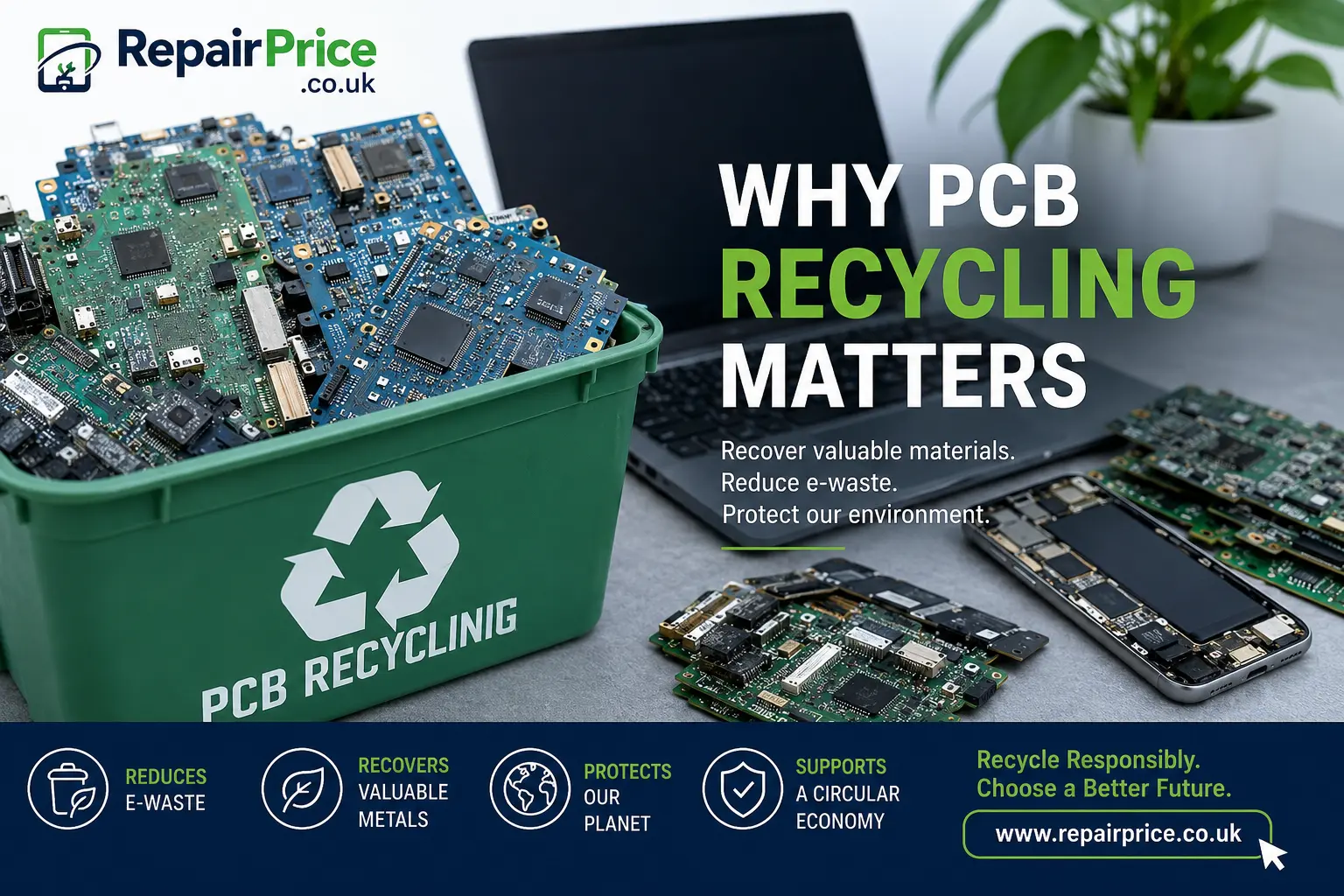
Why PCB Recycling Matters: Protecting Resources, Data and the Environment
Printed circuit boards are found inside almost every modern electronic device, including mobile phones, laptops, televisions, computers, servers, routers and telecommunications equipment. When these products reach the end of their useful life, their circuit boards should not be treated as ordinary rubbish. PCB recycling matters because circuit boards contain reusable metals, specialist components and materials that require controlled processing.
Discarding circuit boards incorrectly can waste valuable resources and introduce hazardous substances into the environment. Responsible recycling helps recover useful materials, reduces dependence on newly mined metals and supports a more circular approach to electronics. Whether you have a single unwanted device, a collection of damaged boards or regular commercial electronic waste, choosing a specialist recycling route can create environmental and financial value.
RepairPrice helps households, repair businesses, offices, schools, landlords and other organisations find practical recycling options for unwanted electronics and separated circuit boards. Start by visiting our UK circuit board recycling service to learn how different types of PCBs can be assessed and prepared for responsible processing.
Book Your UK PCB Recycling Collection on WhatsApp
What Is a Printed Circuit Board?
A printed circuit board, commonly called a PCB, is the platform that connects and supports the electronic components inside a device. It may contain processors, memory chips, capacitors, connectors, resistors, relays and other components. Conductive pathways allow electrical signals and power to move between these parts so the device can perform its intended functions.
PCBs vary considerably in size, construction and material value. A basic board from a household appliance may have fewer valuable components than a densely populated board from a server, computer or telecommunications system. The age, condition, grade, origin and component density of a board can all affect how it should be sorted and recycled.
Devices should not automatically be dismantled by untrained individuals. Batteries, damaged capacitors, sharp metal housings and stored electrical charge can create safety risks. Where possible, complete devices should be handled through a suitable recycling service or assessed by a repair professional before dismantling.
Why PCB Recycling Is Important
PCB recycling is important because electronic equipment contains finite resources. Producing new electronics requires the extraction, refining and transportation of raw materials. When reusable materials are recovered from old circuit boards, some of that demand can be reduced. Recycling cannot eliminate the need for mining, but it can help keep existing materials in productive use for longer.
Circuit boards can contain copper, aluminium, tin, nickel and small quantities of precious metals. The exact composition depends on the type and grade of board. Our guide to valuable metals found in circuit boards explains why some PCBs are more sought after than others and how professional sorting can improve material recovery.
Responsible processing also helps keep unsuitable electronic waste away from landfill and uncontrolled disposal routes. Circuit boards are complex products made from metals, plastics, resins and electronic components. They require specialist separation and treatment rather than being placed in household waste or mixed commercial bins.
Recovering Valuable Materials from Old Electronics
One of the strongest reasons to recycle PCBs is the opportunity to recover useful materials. Circuit boards often contain copper in their conductive tracks and may include gold-plated contacts, silver-bearing components and other recoverable metals. Although an individual board may contain only small quantities, the value becomes more significant when boards are collected and processed in volume.
Professional recyclers can grade boards before sending them through appropriate recovery processes. High-grade computer, server and telecommunications boards are usually separated from lower-grade household appliance boards. Effective grading prevents valuable material from being diluted within mixed electronic waste and helps recycling facilities choose suitable processing methods.
For a broader explanation of sorting, preparation and recovery, read our complete circuit board recycling guide. It covers common board types, recycling considerations and practical steps for businesses or individuals managing unwanted PCBs.
Reducing the Environmental Impact of Electronic Waste
Electronic waste is one of the most complicated waste streams because devices combine many different materials in compact housings. Throwing an unwanted electronic product into general waste can prevent useful materials from being recovered. It may also increase the risk of batteries, circuit boards and other components being handled through inappropriate disposal routes.
Recycling supports a circular economy by moving products and materials away from a simple take, use and discard model. A device may first be repaired and reused. If repair is no longer practical, usable parts may be recovered. The remaining circuit boards and electronic materials can then be directed towards specialist recycling.
Our article explaining why electronics should not go to landfill provides additional guidance on responsible disposal and the environmental reasons for keeping electrical equipment separate from general household and commercial waste.
Repair Before Recycling Whenever Practical
Recycling is essential, but it should not always be the first option. Extending the life of a working or repairable device can conserve more of the energy and materials already used to manufacture it. A broken screen, weak battery, damaged charging port or faulty internal component does not necessarily mean the entire product has reached the end of its life.
Before recycling a smartphone, compare repair options through our phone repair quotation service. Repairing a suitable handset can delay the need to manufacture and purchase a replacement while helping the owner retain familiar settings, applications and accessories.
Laptops may also remain useful after a screen replacement, battery change, storage upgrade or charging repair. Our laptop repair comparison page can help users explore local repair options before deciding whether recycling is necessary.
Televisions can develop power supply, backlight, main-board and connectivity faults that may be repairable. Owners can use our TV repair quote service to compare potential solutions before sending the complete television for recycling.
When repair costs are uneconomical, replacement components are unavailable or the device is too damaged to reuse safely, recycling becomes the responsible next step. This repair-first approach helps useful equipment remain in circulation while still ensuring that genuinely end-of-life electronics are processed correctly.
Request Quotes from UK Repair and Recycling Services
Why Different Circuit Boards Need Different Recycling Routes
Not all circuit boards should be grouped together. Their construction, component density and material composition can vary significantly. Separating boards by source can make storage, grading and recycling more efficient. It can also help a recycling provider understand what is included in a collection before arranging transport or processing.
Mobile Phone Circuit Boards
Mobile phone boards are compact and densely populated with processors, memory, connectors and communication components. Their small size can make manual sorting difficult, especially when batteries, screens and housings remain attached. Our mobile phone PCB recycling service explains how unwanted handset boards and related mobile electronics can enter a suitable recycling stream.
Laptop Circuit Boards
Laptop motherboards contain processors, memory connections, charging circuitry and multiple controller components. Damaged laptops may also include separate Wi-Fi boards, storage controllers and charging boards. Businesses and individuals handling these materials can review our laptop motherboard recycling options.
Desktop Computer Circuit Boards
Desktop PCs can contain several recyclable boards, including motherboards, graphics cards, network cards, sound cards and other expansion components. Separating these from metal cases, power supplies and storage devices may improve collection organisation. Visit our desktop PC circuit board recycling page for information about recycling computer PCBs.
Television Circuit Boards
Modern televisions may contain a main board, power supply board, timing controller board and additional interface components. These boards can vary widely according to the television brand, size and display technology. Our television PCB recycling service covers boards recovered from damaged or end-of-life TVs.
Telecommunications Circuit Boards
Telecommunications equipment can include boards from routers, switches, network infrastructure, communication cabinets and exchange systems. These materials may need secure handling and careful inventory control, particularly when removed from business networks. Learn more through our telecom circuit board recovery service.
Recycling Complete Devices Instead of Separated Boards
Many households and businesses do not have separated circuit boards. Instead, they have complete phones, laptops, computers, chargers and other electrical products. These items should still be kept away from general waste. A complete-device recycling route can be safer and more practical than dismantling equipment without the correct tools or knowledge.
Our main electronic device recycling service helps users explore recycling options for unwanted electrical equipment. Complete devices may be assessed for reuse, parts recovery, refurbishment or material recycling depending on their age and condition.
Old smartphones can contain personal data, rechargeable batteries and reusable components. Before disposal, owners should back up important information, remove accounts and follow the manufacturer’s reset process. Our responsible phone recycling page provides a dedicated route for unwanted or damaged handsets.
Businesses replacing workplace computers should also consider data protection, inventory records and the condition of each machine. Our laptop reuse and recycling service can support the responsible handling of obsolete, damaged or surplus portable computers.
PCB Recycling for Businesses and Organisations
Businesses can generate electronic waste during office upgrades, equipment replacement, repair work, property clearance or IT infrastructure changes. Repair shops, schools, warehouses, telecommunications companies, facilities managers and public organisations may accumulate circuit boards over time. Storing them without a plan can occupy valuable space and make later sorting more difficult.
A structured recycling process should begin with an inventory. Record the approximate quantity, device source and condition of the materials. Keep loose boards separate from batteries, fluorescent lamps, liquids and general waste. Where data-bearing devices are involved, establish whether secure erasure or physical data destruction is required before collection.
Businesses should also avoid mixing high-grade computer and telecom boards with low-grade electrical boards where practical. Clear photographs and accurate descriptions can help a recycling service assess the material before providing collection guidance. Large or recurring quantities may benefit from labelled containers and a regular collection arrangement.
Data Security Must Be Considered
Circuit boards themselves do not always store personal information, but many electronic products contain separate storage components. Phones may use integrated flash memory, while laptops and PCs can include solid-state drives or hard drives. Network equipment may retain configuration details, passwords or business information.
Deleting files manually is not always enough to make data permanently inaccessible. Before equipment leaves your control, identify all data-bearing components and choose an appropriate erasure or destruction method. Organisations should maintain records showing what equipment was transferred and what data-handling process was requested.
Where a circuit board includes soldered storage chips, specialist advice may be necessary. Do not assume that removing a hard drive automatically removes every piece of stored information from a device. Proper asset identification is an important part of responsible business electronics recycling.
PCB Recycling and Repair Services in West Yorkshire
RepairPrice connects users with repair and recycling options throughout the UK, including West Yorkshire. Local assessment can be useful when a device may still be repairable, while specialist collection may be more appropriate for larger quantities of separated boards or complete electronic equipment.
Phone owners in Bradford can compare services through our Bradford mobile phone repair page before deciding whether a handset should be recycled. This can help prevent devices with straightforward faults from entering the waste stream prematurely.
Businesses and residents looking for computer support can explore laptop repair services across Leeds. Where a machine is beyond economical repair, its storage, battery, motherboard and other components can be directed towards suitable reuse or recycling routes.
Television owners can also review TV repair options in Wakefield before disposing of a faulty set. A professional diagnosis may identify a replaceable board or component, reducing unnecessary electronic waste.
How to Prepare Circuit Boards for Recycling
Begin by identifying whether you have complete devices, partially dismantled equipment or loose circuit boards. Do not break boards, burn components or use chemicals to try to recover metals. Informal recovery methods can create toxic fumes, sharp fragments and contaminated waste while recovering materials inefficiently.
Keep boards dry and protected from unnecessary damage. Use sturdy containers that prevent small components from spilling during handling. Separate batteries because damaged lithium batteries can present a fire risk and may require a different collection process.
For a commercial collection, provide an honest description of the materials. Include approximate weights or quantities, the source of the boards, whether complete devices are included and whether there are any batteries or data-bearing items. Photographs can help a service provider understand the collection before giving instructions.
What Happens After Circuit Boards Are Collected?
After collection, circuit boards may be inspected, sorted and graded. Reusable equipment or components can sometimes be separated for refurbishment. Boards intended for material recovery may be processed using combinations of mechanical separation and specialist metallurgical techniques.
The objective is to separate useful metals and other recoverable materials from the mixed construction of the board. The exact method depends on the grade, volume and composition of the PCB. Professional recycling facilities use controlled processes that are very different from unsafe informal methods such as open burning or uncontrolled chemical stripping.
Material recovery is only one part of the process. Responsible operators must also manage residues and non-recoverable fractions correctly. This is why circuit boards should be directed to established recycling channels rather than sold or handed to unknown collectors without understanding where the material will go.
Choosing Between Repair, Reuse and Recycling
The best environmental outcome depends on the condition of the device. Working electronics may be suitable for continued use, resale or donation. Faulty products may benefit from professional repair. Devices that cannot be repaired economically may still provide reusable components. Recycling should capture the remaining materials after higher-value reuse opportunities have been considered.
This hierarchy avoids treating every unwanted electronic product as immediate waste. It also helps households and organisations make better purchasing and disposal decisions. Extending product life, recovering working parts and recycling end-of-life materials can work together as part of the same responsible electronics strategy.
Arrange Responsible PCB Recycling
PCB recycling matters because circuit boards contain useful resources that should not be lost through general waste or uncontrolled disposal. Correct recycling can support metal recovery, reduce environmental harm, improve business waste management and provide a responsible destination for boards that can no longer be reused.
Before recycling, check whether the complete device can be repaired. When repair is no longer practical, separate batteries and data-bearing components where safe to do so, record what you have and contact an appropriate collection or recycling service. Clear information about quantities, board types and device sources can make the process faster and more efficient.
RepairPrice can help you move from uncertainty to action. Explore our PCB and device recycling pages, compare repair options where appropriate and request support for unwanted circuit boards or electronic equipment. By choosing repair, reuse and responsible recycling, you can keep valuable resources in circulation while reducing the amount of electronic waste sent through unsuitable disposal routes.