

TV Backlight Repair: Causes, Symptoms, Costs and Professional Repair Options
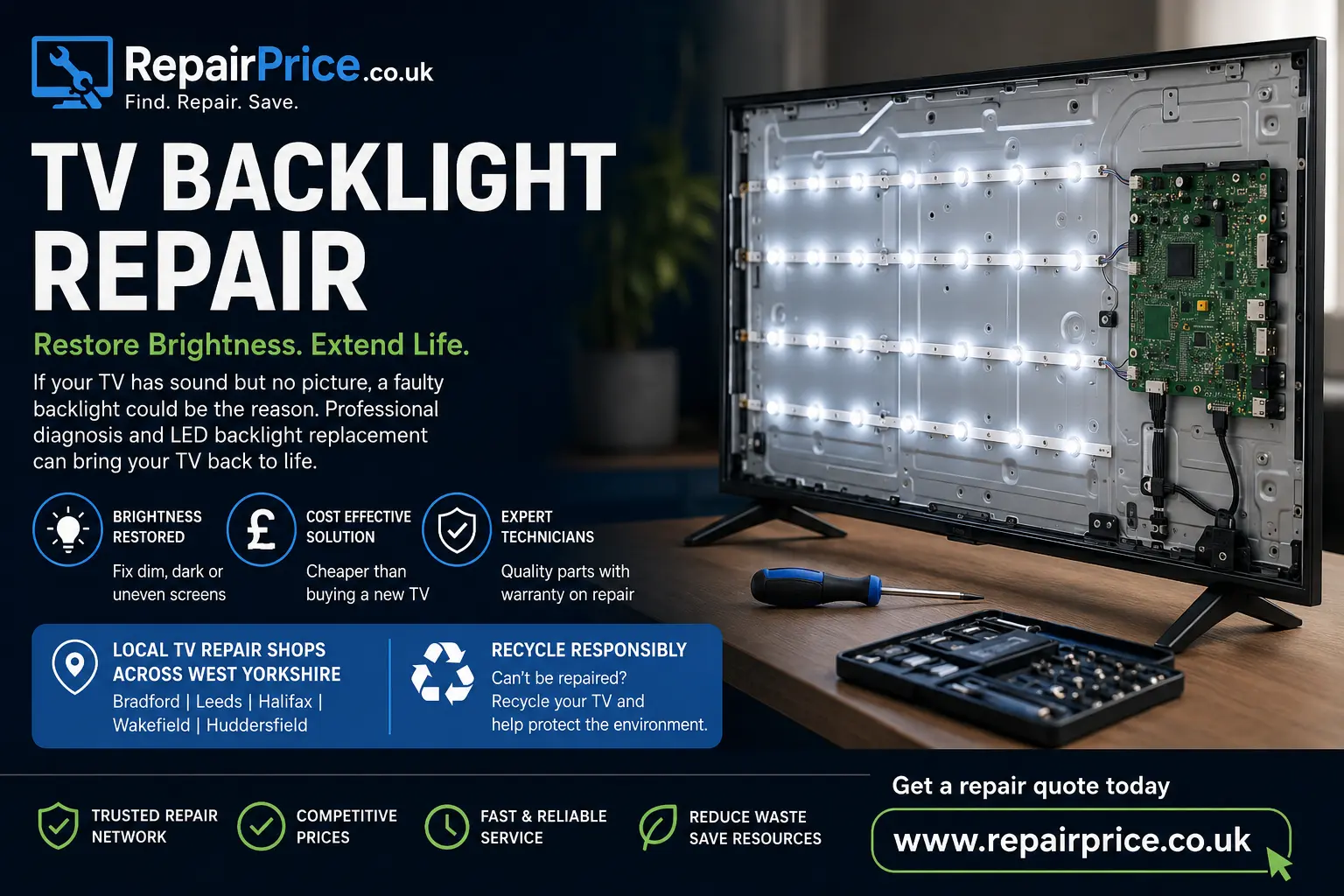
A television that produces sound but displays a black, extremely dim or uneven picture may have developed a backlight fault. The backlight sits behind the LCD panel and provides the illumination required to make the image visible. When one or more LED strips fail, the television may appear completely dead even though its main electronics, speakers and display panel are still operating.
Backlight failure is one of the most common faults found in modern LED televisions. Fortunately, it does not always mean that the entire television needs replacing. A professional technician may be able to replace the failed LED strips, investigate the backlight driver circuit and restore normal brightness without the cost of purchasing a new TV.
RepairPrice.co.uk helps customers compare options from independent repair businesses. Submit the details of your television, describe the symptoms and request an assessment from suitable repair shops through our dedicated TV repair quotation service.
Request a TV Backlight Repair Quote
Ask About TV Backlight Repair or Recycling on WhatsApp
What Is a TV Backlight?
Most modern LED televisions use an LCD panel to create the picture. The LCD layer does not generate enough visible light by itself, so a set of LED strips is installed behind or around the display panel. These LEDs illuminate the image, allowing colours, menus, programmes and connected devices to be seen clearly.
Depending on the design of the television, the LEDs may be arranged directly behind the panel or positioned around its edges. Direct-lit televisions usually contain several horizontal or vertical strips, while edge-lit models use LEDs positioned along one or more sides. Both systems can develop faults as the LEDs age or if they are repeatedly operated at maximum brightness.
A backlight system also depends on a driver circuit that controls the voltage supplied to the LEDs. This circuit may be built into the power supply board or installed as a separate component. A proper diagnosis therefore needs to distinguish between failed LED strips, damaged connectors, a defective driver circuit and other faults that can produce similar symptoms.
Common Signs of TV Backlight Failure
The most recognisable symptom is a television that has sound but no visible picture. You may hear a programme, menu tones or audio from a connected console while the screen remains black. In some cases, the picture appears briefly when the television is switched on and then disappears after one or two seconds.
Another common sign is a dark section across part of the screen. One side may appear noticeably dimmer than the other, or the display may contain shadowed horizontal bands. Bright spots can also develop when a diffuser lens becomes loose or displaced above an individual LED.
Backlight problems can also cause the picture to flicker, pulse or change brightness unexpectedly. A protection circuit may shut the lighting system down after detecting an incorrect voltage from a damaged LED strip. This can make the fault appear intermittent even though one or more LEDs have already failed.
If you can see a faint moving image when shining a torch carefully against the screen, the LCD panel may still be producing a picture while the backlight is not illuminating it. This simple observation can indicate a lighting fault, but it should not be treated as a complete diagnosis because power supply, mainboard and panel problems can sometimes create similar behaviour.
Why Do TV LED Backlights Fail?
LEDs have a finite operating life. Heat, component quality, operating hours and brightness settings all influence how long the backlight lasts. A television used for many hours every day at its highest backlight setting will generally place more stress on the LEDs than a television operated at a moderate brightness.
Heat can accelerate the deterioration of individual diodes. Televisions installed close to radiators, fireplaces or poorly ventilated cabinets may run hotter than intended. Dust accumulation and restricted airflow can also raise internal temperatures and contribute to premature electronic failure.
In some cases, one LED fails open-circuit and prevents an entire strip or group of strips from illuminating. In other televisions, a failing LED draws an abnormal current and causes the driver circuit to activate its protective shutdown system. This is why replacing only one visibly damaged diode may not provide a dependable long-term repair.
Power surges, deteriorated connectors and faults within the LED driver section can also interrupt the backlight supply. Before replacing any components, a technician should test the output from the power board and examine the condition of the complete lighting system.
Can a TV Backlight Be Repaired?
Many backlight faults can be repaired, but the suitability of the job depends on the television’s design, age, screen size, parts availability and overall condition. Backlight replacement normally requires the television to be dismantled so the LCD panel and internal diffuser sheets can be removed safely.
The display panel is thin, fragile and expensive. Even a small amount of uneven pressure can crack it. The diffuser layers must also be returned in the correct order and orientation to prevent marks, shadows or uneven illumination. For these reasons, backlight replacement is usually better handled by an experienced TV technician with suitable tools and a clean working area.
A repairer may recommend replacing the complete set of LED strips rather than changing a single failed strip. The remaining LEDs have normally completed the same number of operating hours, so replacing the full set can reduce the risk of another strip failing shortly afterwards.
Owners of Samsung televisions can explore dedicated support through the Samsung TV fault and repair page. Customers with an LG model can use the LG television repair quotation section, while Sony owners can find relevant options through our Sony TV diagnostic and repair service.
How Is a TV Backlight Fault Diagnosed?
A technician will normally begin by confirming whether the television powers on and whether audio is present. The screen may then be examined for a faint image, temporary illumination, dark zones or flashing. These observations help narrow down the possible cause before the television is opened.
Internal testing may include checking the LED driver output, inspecting power supply voltages and testing the backlight strips with an appropriate LED tester. The repairer may also examine the mainboard control signal that tells the power supply to activate the backlight.
Not every black-screen television has failed LEDs. A damaged power board, faulty mainboard, loose display cable or defective LCD panel can also prevent an image from appearing correctly. Our guide to frequent television faults and their symptoms explains several other problems that may need to be ruled out.
If the television does not switch on, repeatedly clicks or has no standby light, the issue may be linked to the power supply rather than the LEDs. Read the TV power supply repair guide for information about capacitors, voltage rails, standby problems and power-board diagnosis.
How Much Does TV Backlight Repair Cost?
The price of backlight repair varies because televisions differ considerably in size and construction. A small television with easily available LED strips may cost less to repair than a large, thin or premium model requiring extensive dismantling.
Labour is a major part of the repair cost. Reaching the LEDs involves removing the rear cover, electronic boards, frame, LCD panel and diffuser layers. Large screens may require two technicians or specialist lifting equipment to reduce the risk of panel damage.
Replacement-part quality can also affect the price. A quotation may include compatible LED strips, manufacturer-specific parts or a complete matched strip set. It is sensible to ask whether the proposed price includes parts, labour, testing, reassembly and any available repair warranty.
Providing the television’s full model number helps repairers identify the correct backlight kit. The model code is usually printed on a label attached to the rear casing. Include clear details about whether the television has sound, whether the picture flashes briefly and whether only part of the screen is dark.
Is Backlight Repair Worth It?
Repair may be worthwhile when the screen panel is intact, the television otherwise works correctly and the expected cost is reasonable compared with replacement. Larger or higher-quality televisions can be particularly expensive to replace, making a backlight repair an attractive option.
The age of the television should still be considered. If it has several unrelated faults, damaged connections, impact marks or severe screen defects, replacing it may offer better value. A technician can help identify whether the dark picture is caused by the backlight or by a more expensive panel failure.
A cracked LCD panel should not be confused with a backlight problem. Cracks, coloured lines, ink-like patches and impact points usually indicate physical panel damage. Our TV screen damage and repair guide explains the differences between display-panel faults and repairable electronic problems.
Should You Replace TV Backlights Yourself?
Backlight replacement videos can make the process look straightforward, but dismantling a television screen carries significant risk. The LCD panel can crack when lifted, flexed or placed on an uneven surface. A replacement panel can cost more than the television is worth and may not be readily available.
The diffuser sheets beneath the panel can attract dust, fingerprints and debris. If they are bent, reversed or incorrectly aligned, the repaired television may display bright areas, shadows or visible marks. Internal power supply components may also retain dangerous electrical charge after the television has been disconnected.
Basic external checks are safer. You can try a different wall socket, disconnect external devices, restart the television and review its brightness or energy-saving settings if the menu remains visible. Avoid opening the casing unless you have the necessary technical training and understand the electrical and panel-handling risks.
TV Backlight Repair in West Yorkshire
RepairPrice.co.uk can help customers find television repair options in several West Yorkshire areas. When submitting an enquiry, include your town, television make, model number, screen size and a detailed description of the fault.
Customers in Bradford can request help through our Bradford television repair comparison page. This can be useful for TVs that have sound but no picture, dark screen sections or flickering illumination.
For customers across Leeds and surrounding districts, visit the Leeds TV repair enquiry service to provide details of the backlight symptoms and compare available repair options.
Television owners in Calderdale can use the Halifax TV technician matching page. Accurate model information helps repair shops check whether suitable LED strips are available before arranging the work.
Residents seeking support in Wakefield can submit their fault through the Wakefield television repair network. Mention whether the picture appears briefly at startup or whether one area of the display is darker than the rest.
Customers in Kirklees can explore local options through our Huddersfield TV repair quotation page. Photographs or a short description of the screen behaviour may help repairers assess the likely cause.
Related Electronic Repair Services
A television fault may not be the only issue affecting your home entertainment equipment. If a computer connected to the television is damaged, overheating or failing to start, our laptop repair comparison service can help you request an assessment from suitable repair businesses.
Gaming consoles can also produce black screens because of HDMI port damage, overheating, power faults or internal board problems. Use the console repair quotation hub when a PlayStation, Xbox or Nintendo system is no longer displaying correctly.
For cracked displays, charging faults and battery problems affecting portable devices, visit the tablet repair service directory to compare repair possibilities for iPads, Samsung tablets and other models.
What Happens to a Television That Cannot Be Repaired?
If the LCD panel is cracked, essential parts are unavailable or the repair cost is uneconomical, the television should not automatically be placed in household waste. Televisions contain circuit boards, metals, plastics, wiring and other materials that may be recovered through appropriate treatment.
Our electrical recycling information hub explains how unwanted electronics can be directed towards more responsible reuse and recycling routes. Working accessories, stands, remote controls and internal components may sometimes be reusable even when the complete television cannot be restored.
Printed circuit boards can contain recoverable metals and should be handled through appropriate recycling channels. Learn more about the treatment of television boards on our TV circuit board recycling service page.
Repairing a backlight can extend the life of a television and delay the environmental impact associated with manufacturing and transporting a replacement. When repair is not practical, responsible recycling provides a better route for the materials contained within the device.
Customers disposing of other unwanted technology can also review our laptop reuse and recycling options for old computers, damaged notebooks and redundant business equipment.
How to Reduce the Risk of Future Backlight Failure
After a successful repair, reducing the television’s backlight level may help lower heat and electrical stress. The ideal setting depends on the room, but maximum brightness is often unnecessary for normal evening viewing.
Use the television in a ventilated position and avoid blocking vents with decorations, fabric or tightly fitted furniture. Keep the unit away from strong heat sources and allow space around the rear casing for warm air to escape.
Power-saving and automatic brightness settings can reduce output in darker rooms, although some viewers prefer to adjust these controls manually. A technician may recommend a suitable brightness level after replacing the LED strips.
A surge-protected power supply may offer additional protection against some electrical disturbances, but it cannot prevent normal LED ageing. Switching the television off when it is not being watched can reduce unnecessary operating hours.
Information to Include in Your Repair Request
Before requesting a quotation, locate the complete model number on the rear label and note the approximate screen size. State whether the standby light works, whether the television produces sound and whether a picture appears for a moment before going dark.
Explain whether the entire display is affected or only one section. Mention any flickering, bright spots, blue-tinted illumination or previous repairs. These details help technicians distinguish between LED-strip failure, power-board trouble and screen-panel damage.
Do not remove the television’s rear cover before requesting professional assistance. An opened or partly dismantled television may be harder to transport safely, and accidental panel damage can turn a repairable lighting problem into an uneconomical screen replacement.
Request a TV Backlight Repair Assessment
A dark screen does not always mean that your television has reached the end of its useful life. When the LCD panel is still producing an image, replacing the backlight strips or repairing the LED driver circuit may restore the display and provide many more hours of use.
RepairPrice.co.uk allows you to describe the fault and request quotations from relevant repair shops. Include the make, model, screen size, location and symptoms so that repairers can provide a more informed response.
Where repair is practical, restoring the television may save money and reduce electronic waste. Where it is not economical, responsible recycling can help recover useful components and materials rather than sending the complete device into general waste.